
Fluorescence Microscope
Fluorescence microscopes designed for observing specimens that emit light under ultraviolet or blue excitation, with stable infinity optical systems and interchangeable eyepiece and objective configurations.
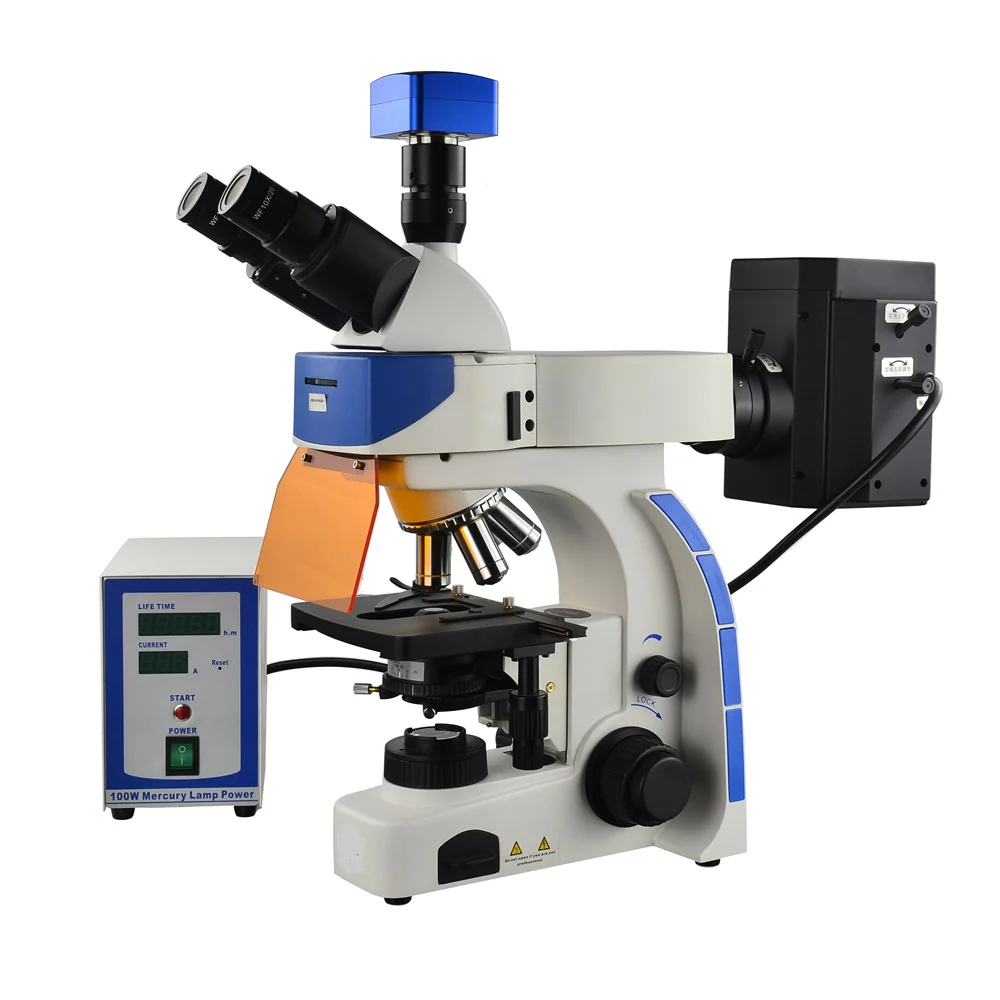
The Fluorescence Microscope range covers 3 catalogue items, grouped into Upright Fluorescence Microscope, Inverted Fluorescence Microscope. Models in this range include XUF100 Upright Research Fluorescence Microscope; XIF200 Inverted Research Fluorescence Microscope; XIF100 Inverted Research Fluorescence Microscope. Every item is listed with the specification published for it, so a model can be compared on working distance, magnification, interface and fitment rather than on a description.
Choose the Fluorescence Microscope Family
1 productsUpright Fluorescence Microscope
Upright fluorescence microscope designed for biological and material sample inspection using fluorescent excitation and emission filters. Built for research, teaching and quality control in labs requiring high-contrast imaging of stained or naturally fluorescent specimens.
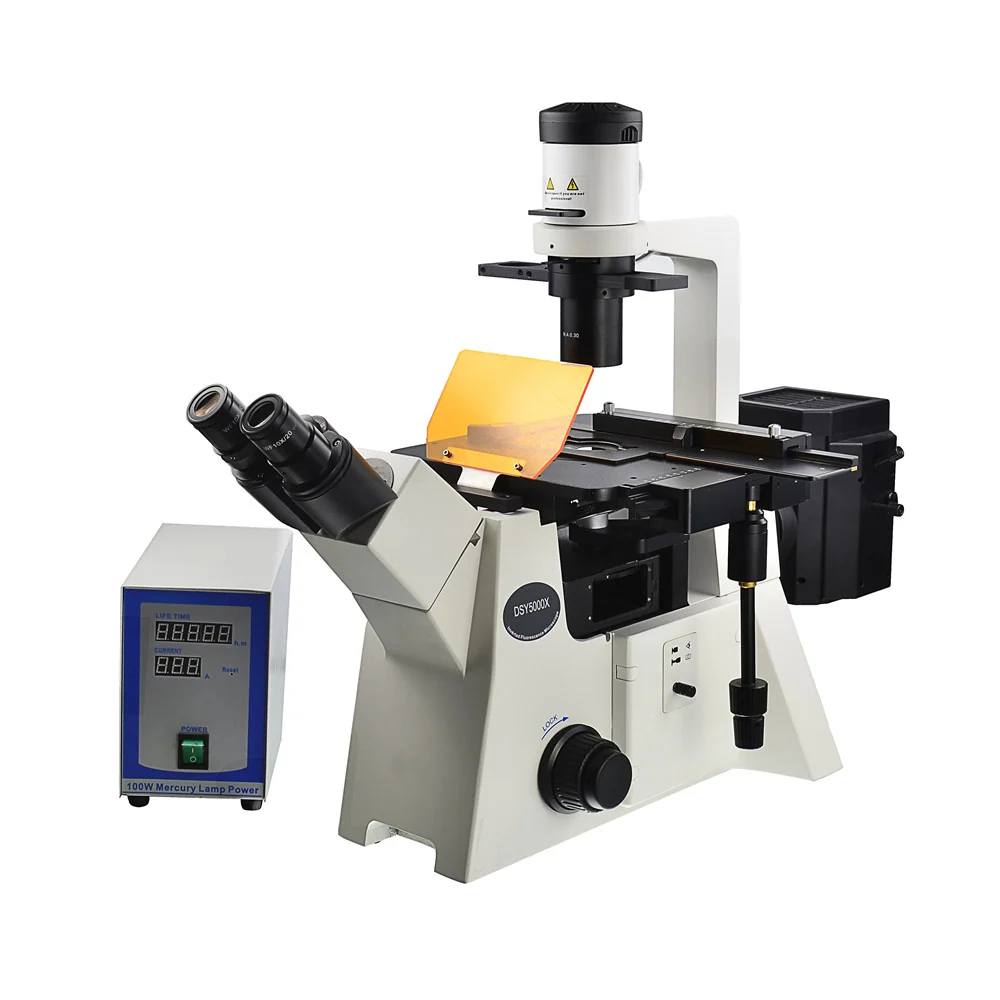 2 products
Inverted Fluorescence Microscope
Inverted fluorescence microscopes designed for observing live cells, tissue cultures and fluorescently labelled samples on culture dishes or slides mounted on a stage below the objective lens.
What Goes Wrong Without the Right Fluorescence Microscope
- Standard brightfield microscopes cannot detect weak fluorescence signals from biological or material samples
- Non-infinity optical systems cause image distortion and focus drift during extended observation
- Fixed eyepiece configurations limit flexibility when switching between users or inspection tasks
- Lack of stable, one-piece construction leads to misalignment after transport or handling
- Inadequate eye-point height forces users to strain when viewing from seated or standing positions
Who Buys From This Category
- Clinical and research laboratories analyzing fluorescently labeled cells or tissues
- University teaching labs demonstrating fluorescence principles in biology or chemistry
- Material science labs inspecting phosphorescent coatings or doped semiconductors
- Veterinary pathology labs identifying fluorescent markers in tissue sections
- Geology and mineralogy labs examining fluorescent minerals under UV light
Why These Items
- Infinity optical system ensures consistent image quality across all magnifications and objective lenses
- One-piece frame construction prevents misalignment and maintains optical stability
- 360° rotatable and 30° inclined observation tubes allow flexible positioning for multiple users
- Diopter-adjustable eyepieces accommodate individual vision differences without refocusing
- High eye-point design allows comfortable viewing with or without glasses, reducing operator fatigue
Where These Are Used
- Observing fluorescently stained cancer cells in a tissue section under UV excitation
- Inspecting a phosphorescent coating on a metal surface for uniformity and defects
- Teaching students how fluorescence reveals cellular structures not visible in brightfield
- Checking a mineral sample for natural fluorescence under a UV lamp in a geological lab
- Documenting the distribution of fluorescent markers in a polymer matrix using a trinocular port
Before You Order
- Compare the Fluorescence Microscope models on the figure that decides the job, not on the headline magnification
- Confirm the interface dimension against equipment you already own before ordering
- Send the task as well as the model number so the configuration can be checked
- Ask for written confirmation of any figure a tender or audit depends on
Frequently Asked Questions
What is the difference between an infinity and a finite optical system in fluorescence microscopes?
An infinity optical system uses parallel light rays to reduce aberration and maintain focus across magnifications, while finite systems introduce distortion and require frequent refocusing.
Can I use a fluorescence microscope with standard brightfield objectives?
Yes, but only if the objectives are compatible with the infinity optical system and have the correct tube lens focal length.
Do these microscopes come with a built-in UV or blue light source?
No. The microscope supports external fluorescence illumination systems, which must be selected and mounted separately.
Is the trinocular port usable for camera attachment with fluorescence imaging?
Yes. The trinocular port allows connection to a digital camera for capturing fluorescence images, provided the camera is compatible with the optical path.
Can I switch between binocular and trinocular configurations?
Yes. The model supports both binocular and trinocular tube options, and the configuration can be changed based on inspection needs.
Get A Price On Fluorescence Microscope
Send the model numbers you are considering, or describe the task and let us shortlist them for you.