Metal Resin and Vacuum Brazed Bonds Compared
Four manufacturing routes put diamond onto a tool, and they produce genuinely different tools. This is what each is good at and where each stops.
Sintered metal bond
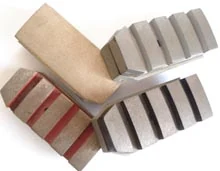
Diamond is mixed into a metal powder and pressed under heat, so crystal is distributed through the whole depth of the segment. As the segment wears, new crystal keeps appearing. This is the longest-life construction and the basis of most of our blade, fickert, roller and cup wheel programmes.
It needs pressure and usually water to work properly. Under-powered machines cannot open a sintered bond, which is why machine power belongs in the enquiry.
Resin bond
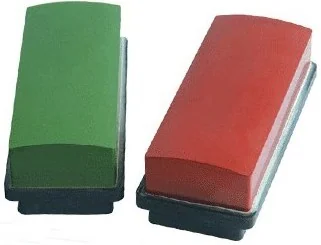
The matrix is a resin rather than a metal, so it yields slightly under load and releases crystal earlier. That produces a finer scratch pattern than metal bond at the same grit, which is why resin tools own the fine end of every sequence: resin fickerts after metal fickerts, resin squaring wheels after peripheral wheels, resin glass wheels after metal bond rough grinding.
Shorter life is the trade. Resin tools are finishing tools, not removal tools.
Electroplated
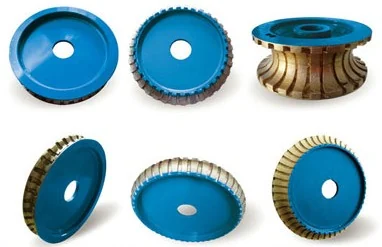
A single layer of crystal is plated onto a steel form. Because there is only one layer, life is short, but the crystal stands proud and holds very fine detail. That makes it the right route for intricate profile wheels and small-diameter tools where a sintered segment could not hold the shape.
We offer profile wheels either sintered or electroplated for exactly this reason: production volume versus profile detail.
Vacuum brazed
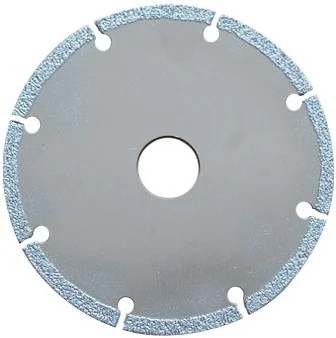
Crystal is brazed to the steel in a vacuum furnace, chemically bonded rather than held mechanically, again in a single layer. Fully exposed crystal cuts fast and cool from the first pass and tolerates dry use, in almost any material, which is why the brazed programme is the renovation and site-work answer: one blade or bit through tile, brick, stone and concrete.
Life is much shorter than sintered. The brazed range is bought for versatility and dry running, not for cost per cut in production.
Choosing between them
Production volume in a known material, wet: sintered metal bond. Fine finishing steps: resin bond. Fine profiles and short runs: electroplated. Unknown mixed material, dry, on site: vacuum brazed.
Most plants end up using three of the four. The mistake is buying one route for everything — brazed tools in production, or sintered tools for dry site work.