
- Home
- Granite Slab Production
From Granite Block to Polished Slab in One Tooling Programme
The granite slab chain has seven tooling decisions in it, and they interact. A fast sawing choice that leaves a rough surface loads the calibrating station; an aggressive fickert leaves marks the polishing heads have to chase. This is how we specify the chain as a whole.
The 7 Decisions in This Chain
Block cutting
900-3500 mm block blades with segment specification set against your saw power, or loose segments if you re-tip your own.
Slab sawing
Multi-saw blades supplied as matched sets so kerf and diameter stay uniform across the spindle, with multi-saw segments for re-tipping.
Calibrating
Diamond rollers from 400 to 600 mm bringing every slab to the same thickness before the line.
Rough and medium grinding
Magnesite abrasives for rough calibrating and metal bond fickerts on 140 and 170 mm bases.
Fine grinding
Resin bond fickerts leaving a finer scratch pattern so the polishing step has less to correct.
Polishing
Polishing buffs and flexible pads for the slab face and the profiled edges.
Edge and cut-out work
Bridge-saw edge cutting blades, cup wheels, profile wheels, finger bits and core bits in the fabrication shop.
What We Supply Into It
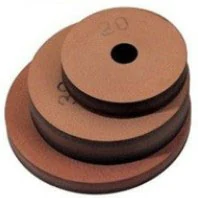
Polishing Wheels
10S BD BK and wool felt wheels for the glass polishing sequence
Browse category →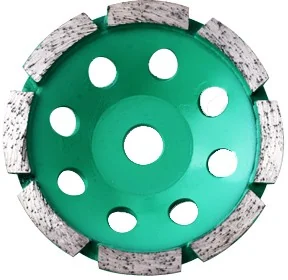
Diamond Grinding Cup Wheel
Cup wheels for grinding granite marble and engineered stone
Browse category →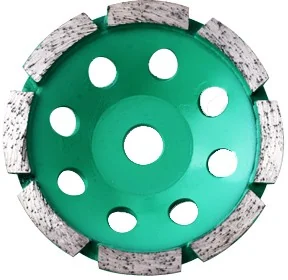
Diamond Grinding Cup Wheels
Cup wheels for concrete grinding and surface preparation
Browse category →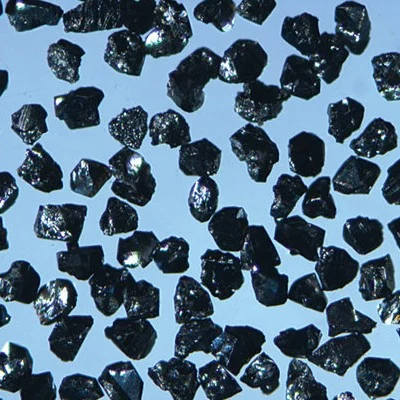
CBN Powder
CBN powder for tool making and ferrous grinding
Browse category →
Cerium Oxide Polishing Powder
Cerium oxide polishing powder for glass polishing lines
Browse category →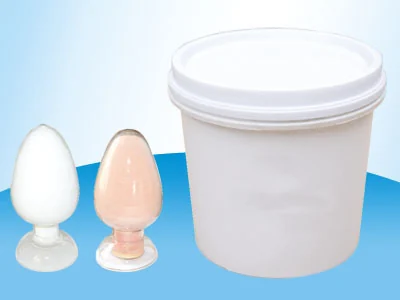
Cerium Oxide
Rare earth cerium oxide grades for glass and optical polishing
Browse category →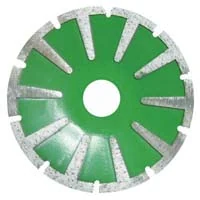
Concave Dry Diamond Blade
Curved-body blades for dry curve cutting in natural stone
Browse category →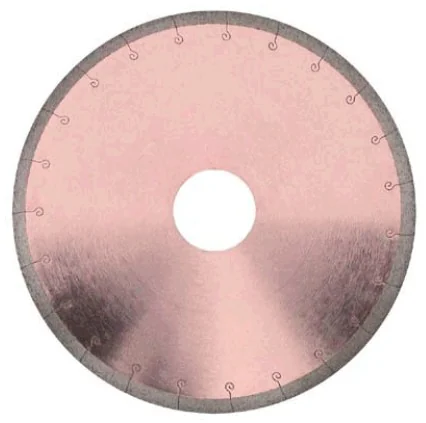
Diamond Cutting Blades
Tile cutting blades for porcelain glazed and rustic tiles
Browse category →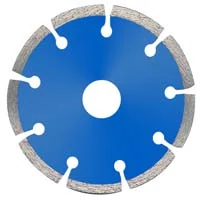
Small Diamond Saw Blades
Angle-grinder and table-saw blades for granite marble and engineered stone
Browse category →What Happens After Your Enquiry
1. Application review
Material, machine, power, cut geometry, current tool life and failure mode.
2. Specification
Matrix hardness, diamond concentration and grit, segment height, welding method.
3. Sample and trial
A sample batch with trial parameters agreed in advance.
4. Production
A signed-off specification becomes your item number for repeat orders.
Related Industry Pages
Technical Reading
- How to Choose a Diamond Blade Bond for Granite Marble and Engineered Stone
- Continuous Turbo and Segmented Rims Explained for Stone and Tile Cutting
- Mesh Size and Grit Selection for Diamond and Abrasive Tools
- Metal Bond Resin Bond and Vacuum Brazed Diamond Tools Compared
- Catalogue and specification sheets
Granite Slab Production — Questions We Get
Can you quote the whole line at once
Yes, and that is the better way to do it. Send your station list and machine models and we will quote the sequence.
How do I decide between multi-saw and multi-wire
Wire loses less stone to kerf; blades are more forgiving on hard or fractured blocks. Tell us the stone and we will give you a view.
Do you supply consumables for existing heads
Yes. Send the head type or the tool being replaced.
Specify granite slab production with us
Send your station list, machine models and the material you process.