Mesh Size and Grit Selection Guide
Two numbering systems run through every diamond tool catalogue, including ours. Getting them straight is the difference between a sequence that works and one that fights itself.
Reading a mesh size like 30/40
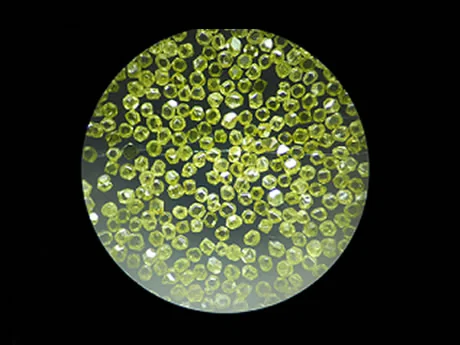
A mesh pair describes the sieve range the crystal passed: it went through a 30-mesh screen and was held on a 40-mesh screen. Bigger numbers mean smaller crystal. So 30/40 is a coarse crystal for fast aggressive cutting, and 70/80 is finer, slower and leaves a better surface.
This is the convention used on our vacuum brazed programme, where blades run 30/40, 40/45 and 70/80, and on the powder programme where you tell us the mesh size you need.
Reading a grit number like 400#
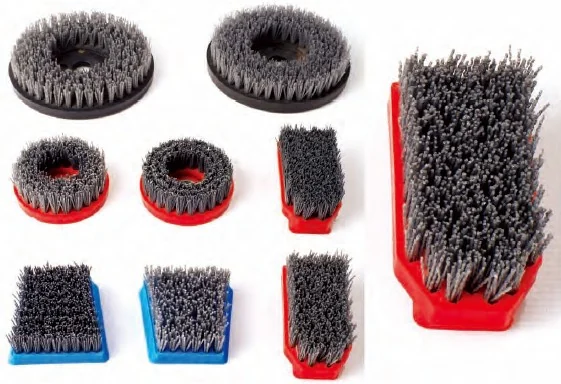
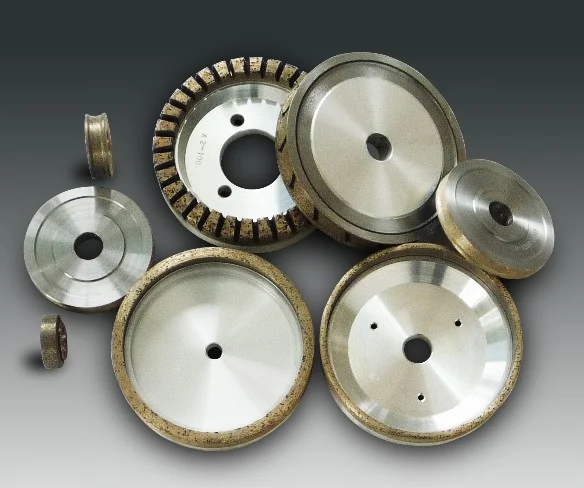
Single grit numbers with a hash mark come from the abrasive trade rather than the diamond trade, and they run the same direction: higher number, finer abrasive. Our grinding brush series runs 36# at the coarse end through to 1500#, and the glass wheel grades quote 80#, 100# and 120# for rough grinding.
Both systems are just particle size. Neither tells you about bond hardness, concentration or geometry, which is why a grit number alone never specifies a tool.
Building a ladder that does not skip
Each step in a finishing sequence has to remove the scratch pattern left by the one before. Roughly, doubling the grit number per step is safe. Tripling it means the finer tool spends its life chasing scratches it was never meant to remove, and you lose more time than you saved.
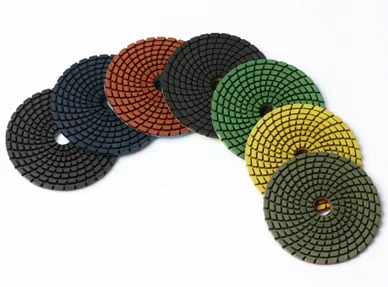
A typical stone sequence runs coarse metal bond, fine metal bond, coarse resin, fine resin, then buff. A glass edge runs rough metal bond at 80-120, fine and finish resin bond, then the polishing wheels and cerium oxide.
Where coarse is the right answer
Stock removal: flattening a slab, removing a coating, calibrating a tile body. Here surface finish is irrelevant because two more stations follow. Using a fine tool for stock removal wastes tool life and machine time.
Hard abrasive material: coarse crystal has more mass behind each cutting point and survives longer in granite and reinforced concrete.
Where fine is the right answer
Anywhere the surface is the product: the last two steps of any polishing sequence, chip-free cutting on brittle material, and chamfering a visible edge.
Fine also means slow, so on production lines the fine stations are the ones that set line speed. That is an argument for getting the coarse stations right, not for skipping the fine ones.