Diamond Core Bit Drilling Troubleshooting
Core drilling failures look alike from the operator's seat and have quite different causes. These are the patterns, in the order you should check them.
The bit stops cutting and the surface is shiny
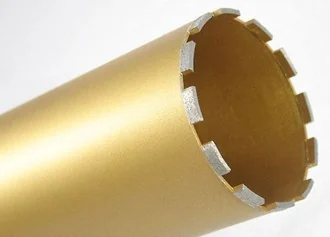
A glazed crown means the matrix is not wearing, so no new crystal is arriving. Either the bond is too hard for the material, or the machine is not applying enough pressure to open it.
Check machine power and feed before changing the bit. Under-powered drilling glazes even a correctly specified bond. If pressure is right, move a grade softer.
Segments wear out unusually fast
Soft abrasive material — green concrete, sandstone, soft block — cuts the matrix as fast as the crystal, so the segments go quickly. Move to a harder matrix, and confirm you are using the right series: the green concrete blades and bits carry protection segments for exactly this.
A segment comes off the tube
This is a joint failure, not a wear failure. Reinforcement in the hole, a bit binding in the cut, or drilling hard material with a silver-welded bit that should have been laser welded.
For reinforced concrete, use the laser-welded option. If the bit binds, look at hole alignment and rig rigidity before blaming the bit.
The hole wanders or the bit binds
Almost always the rig rather than the bit: anchor movement, a worn spindle bearing, or starting without a guide. Core bits cannot correct a hole once it is off line.
Binding also happens when the core is not free to move, particularly in a deep hole where slurry has packed around it.
Dry drilling that ends badly
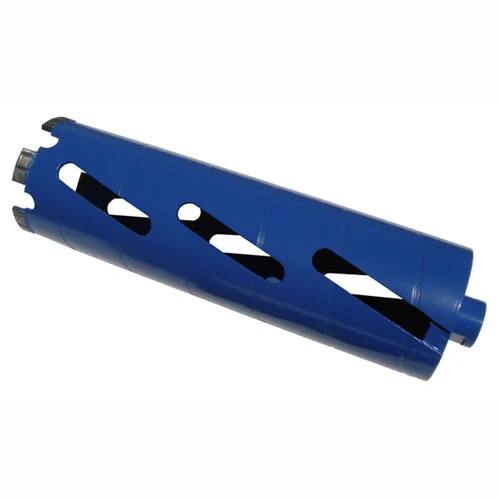
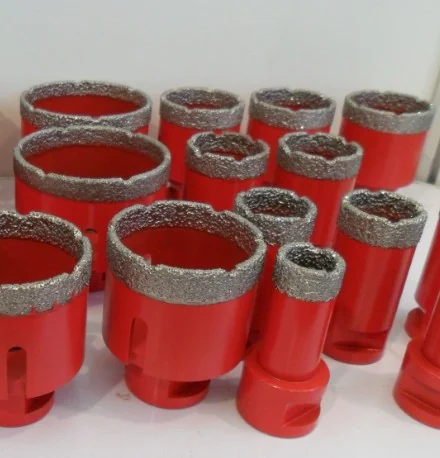
Dry drilling means the bit has to survive its own heat. Use the dry series or the vacuum brazed bits, keep the dust extracted, let the bit free-run between holes, and accept shorter life than wet drilling.
Using a wet bit dry is the fastest way to lose both the segments and the tube.
What to tell us when asking for a replacement
The material and, for concrete, the reinforcement density. The machine, its power and the rig. Hole diameter and depth. Wet or dry. And the failure mode from the list above — that is what points at the fix.