Every ACP cladding project starts with one decision that shapes everything downstream — the joint system. Should panels sit flush against each other in a continuous plane, or be separated by a deliberate gap? The choice affects fabrication, substructure, weather performance, installation speed and how the building looks in ten years.
Flush-joint: the seamless look
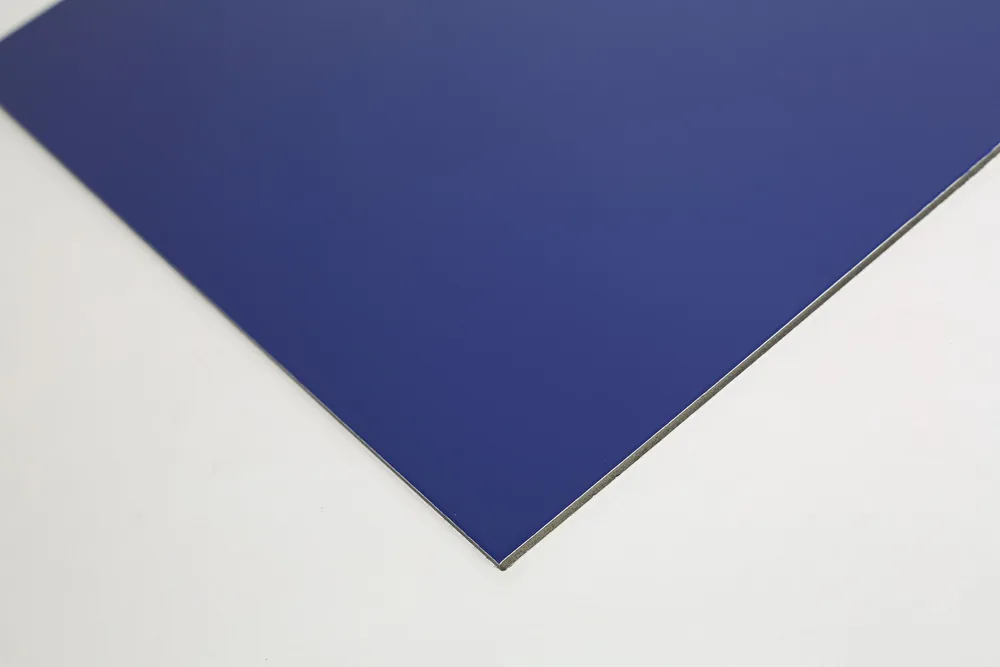
Panels are fabricated with folded edges — router-grooved and bent, typically to 90° — and mounted so adjacent panels touch. The visible face becomes one continuous surface with no gaps and no shadow lines.
- Visual effect: monolithic, flat and clean. Works best with matte and solid colours.
- Weather sealing: excellent. Folded edges and closed corners shed water; with sealant at key points the substructure is fully protected.
- Fabrication: more work per panel. Four routed and folded edges each, and dimensions must be precise — a 2 mm error shows as a visible step.
- Cost: higher fabrication labour per panel, offset by a simpler substructure.
- Best for: low and mid-rise buildings, column covers, soffits, interior feature walls and signage.
Open-joint: the rhythm of shadow lines
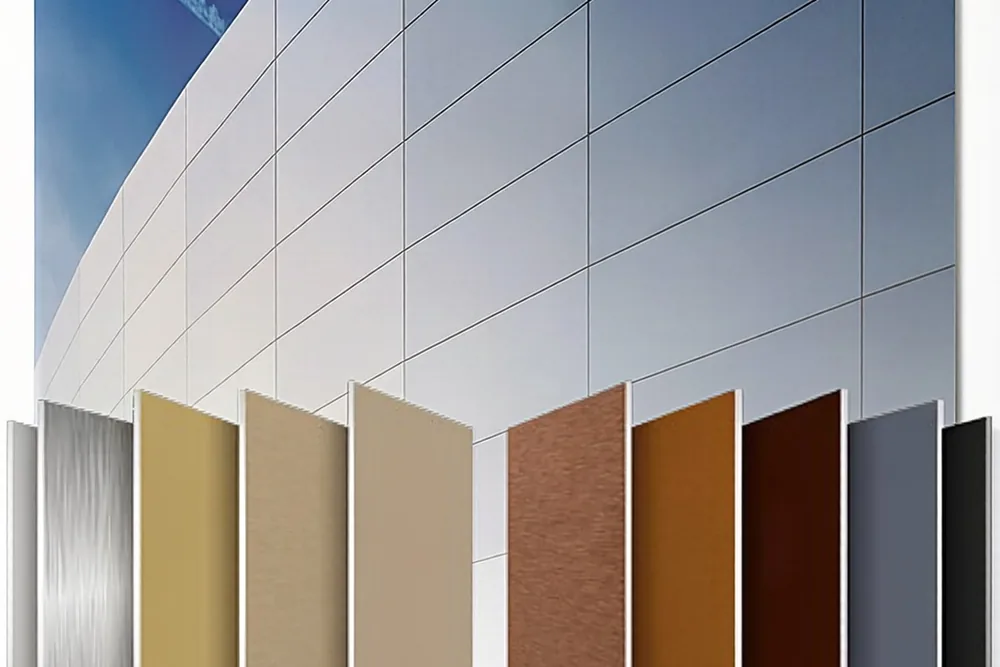
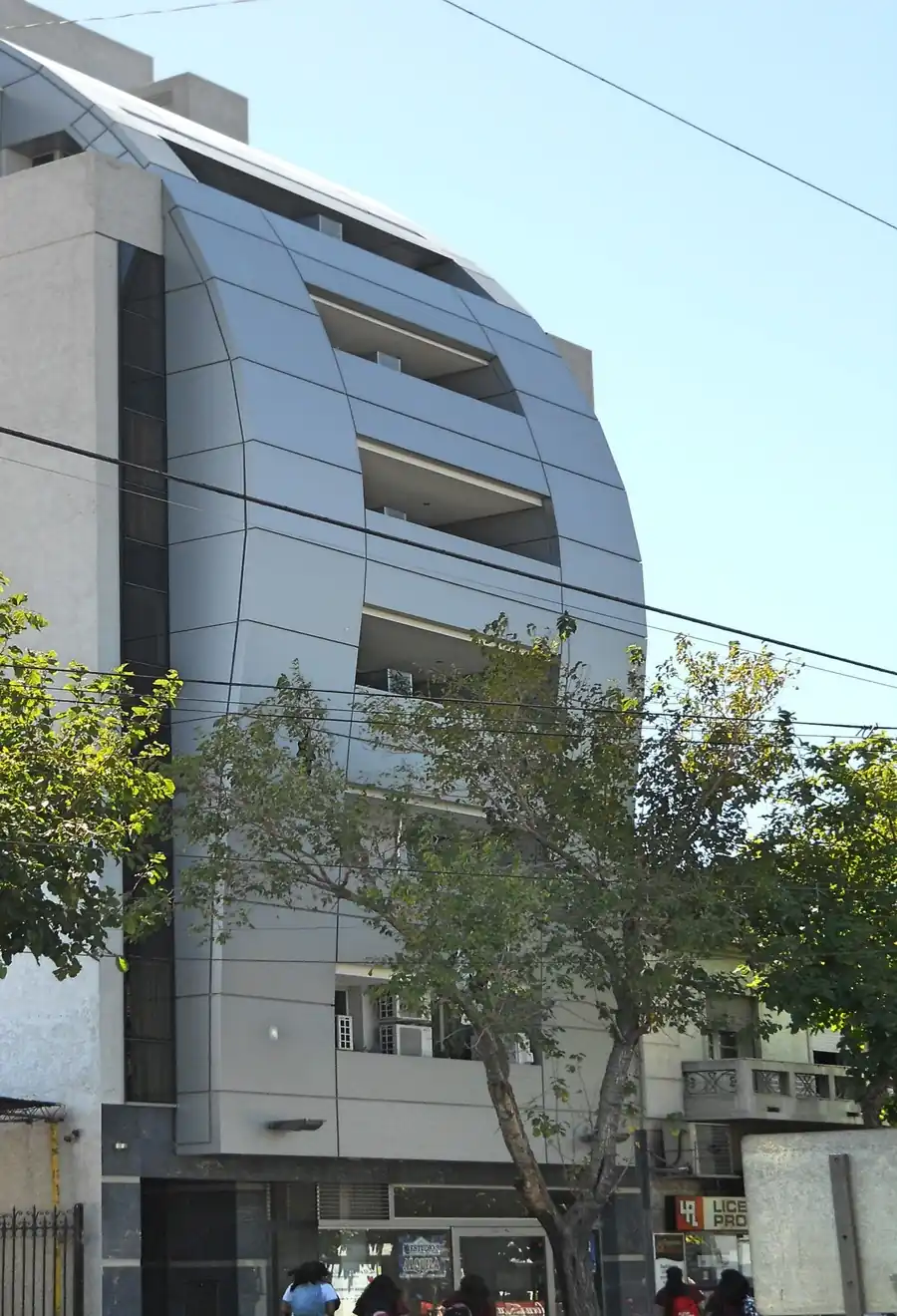
Panels are cut flat with no folding and hung on a clip or hanging-ball system, leaving a deliberate 8–16 mm gap. The gaps create vertical or horizontal shadow lines that give the facade rhythm and scale.
- Visual effect: structured, architectural, modern. Metallic and mica finishes come alive because the joints break up reflections.
- Weather sealing: the gap is intentional, so the weather barrier lives one layer behind — a waterproof membrane or sealed back-pan. This has to be designed in.
- Fabrication: much simpler. Flat-cut panels, no folding, and a 2 mm error disappears into the joint.
- Cost: lower fabrication cost, plus the cost of the back-pan or membrane layer.
- Best for: high-rise curtain walls, large-format facades, ventilated rainscreen systems.
Side by side
- Installation speed: open-joint wins. Flat panels on clips go up 30–40% faster than folded panels aligned to a perfect plane.
- Wind resistance: flush-joint systems with continuous folded edges generally test stronger. In typhoon regions we recommend flush-joint with stiffeners, or open-joint with verified clip pull-out tests.
- Maintenance: open-joint gaps collect dust and can streak after rain on light colours. Flush-joint is easier to keep looking new.
- Thermal movement: aluminium expands. Open joints absorb movement naturally; flush joints must be engineered with adequate panel counts and fixing flexibility.
Our recommendation by project type
- Interior, retail and signage: flush-joint with PE or HDPE coating.
- Low-rise commercial exterior: flush-joint with PVDF.
- High-rise or large facade with metallic finishes: open-joint with PVDF or FEVE and a designed weather barrier.
- Coastal and typhoon zones: either works, but the fixing system matters more than the joint.
The joint system is decided on the drawing board, not on the scaffold. Changing it after fabrication is close to impossible — decide it with your panel supplier, early.
Send us your elevation drawings and we will recommend a joint system, panel sizes and fixing detail for the project.