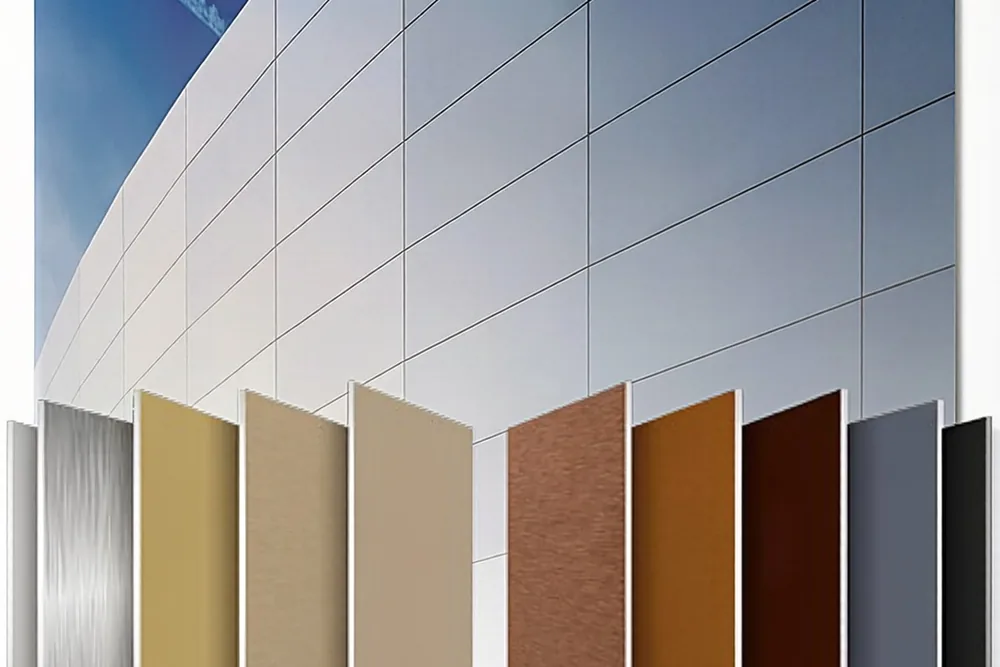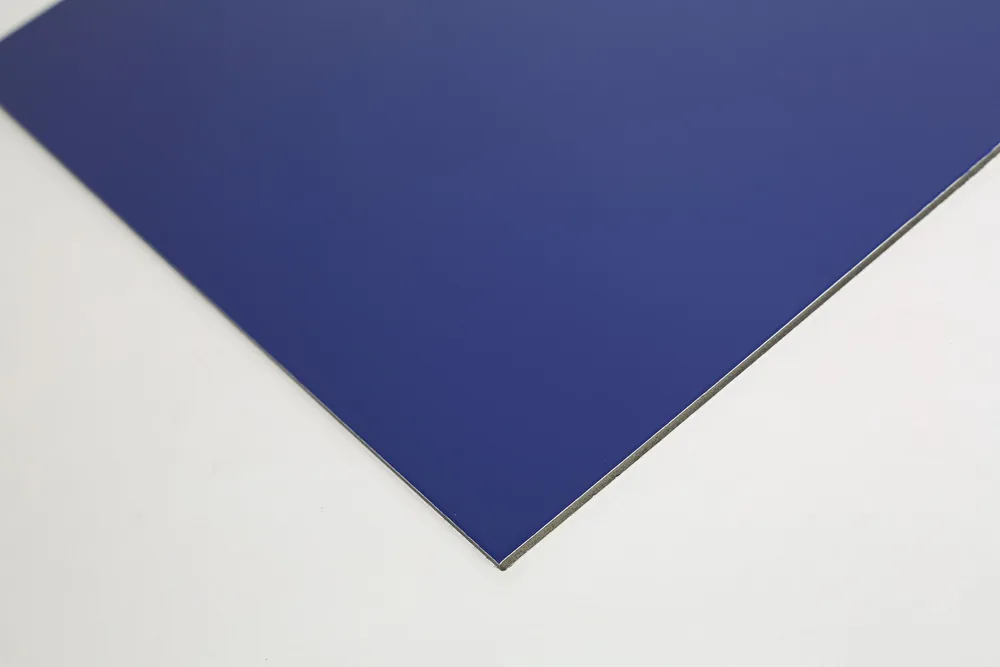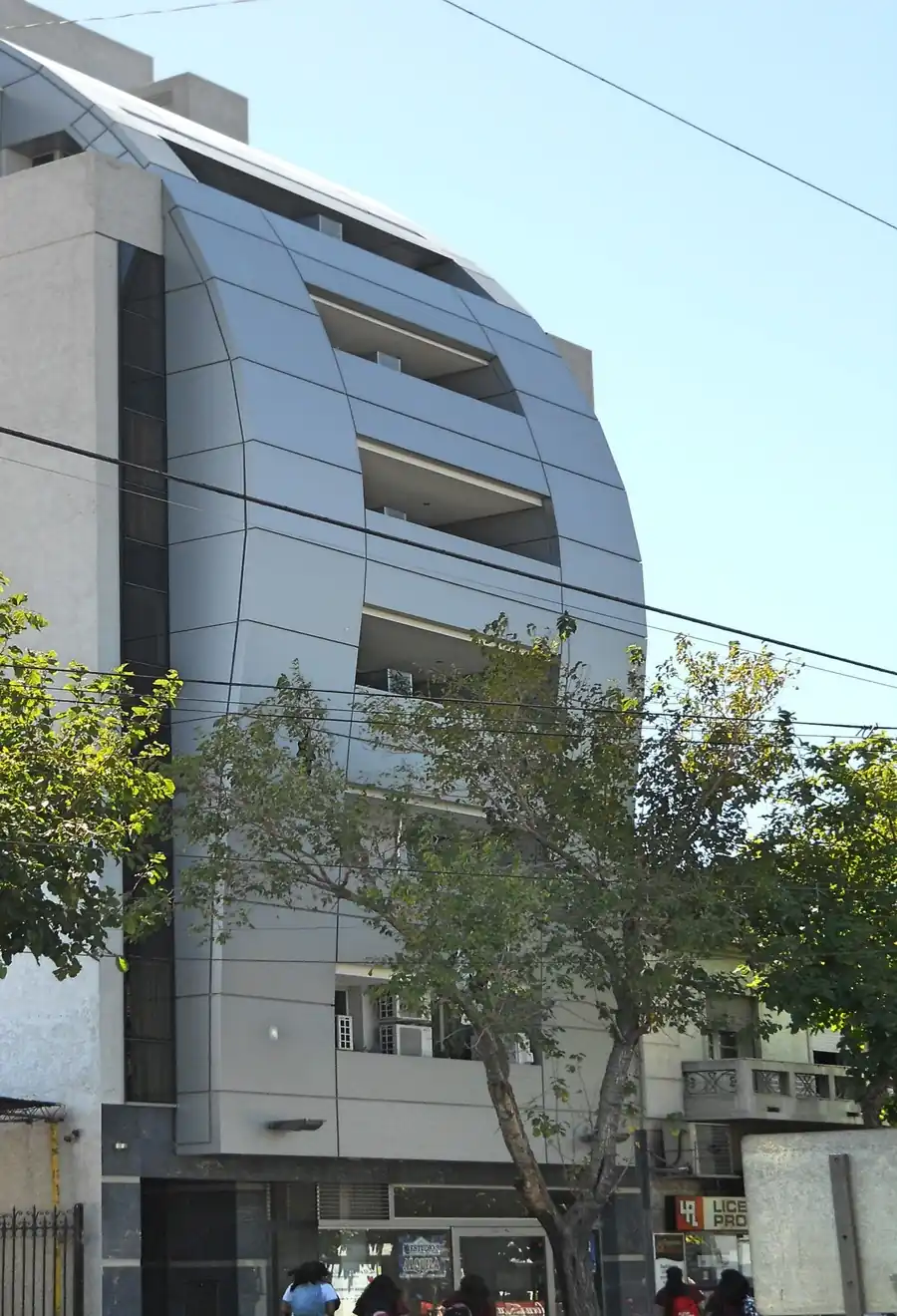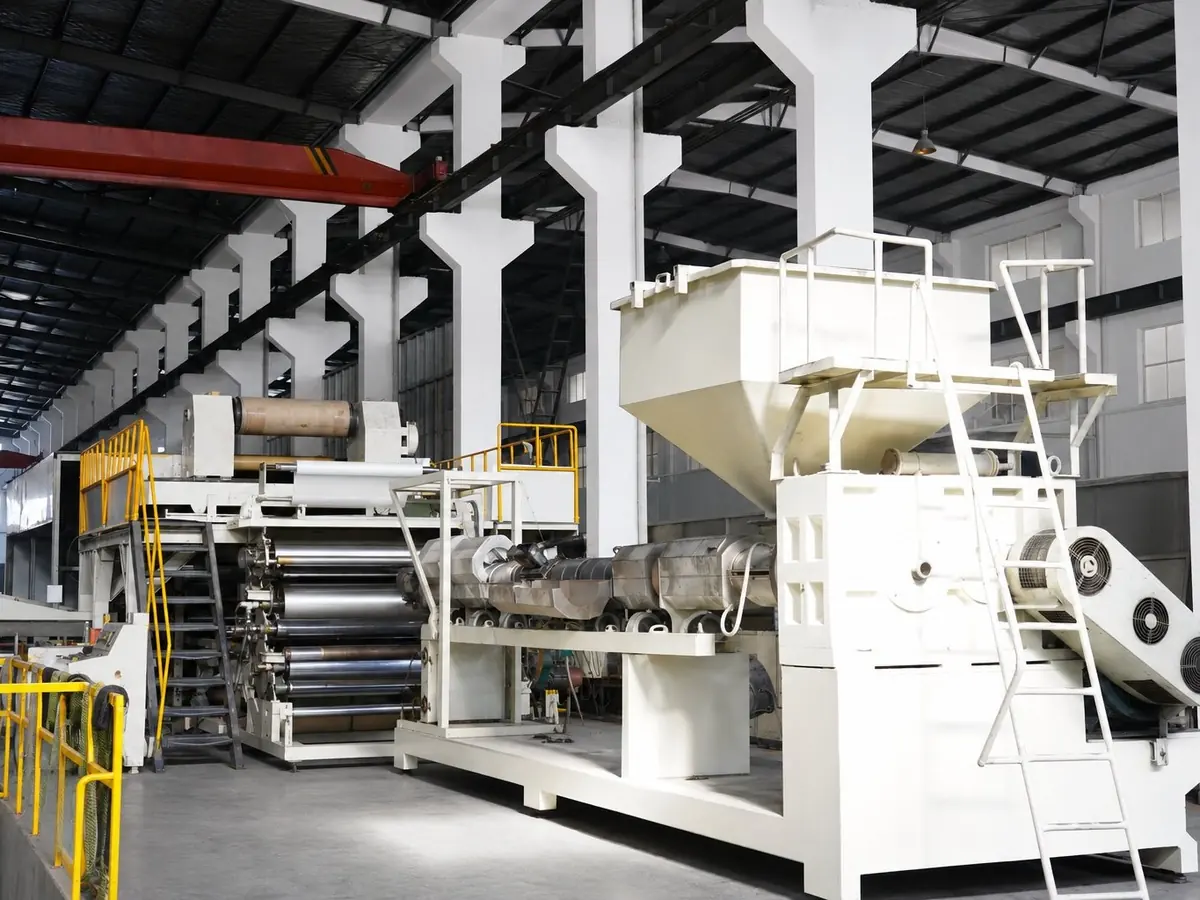
This is the sequence a panel follows from mill coil to a wrapped pallet, and the number that proves each stage was run correctly.
Stage 1 — coil pre-treatment
Coil is degreased and chemically converted on the chemosynthesis line, forming a dense honeycomb oxide film. The proof is adhesion: solvent resistance at 100 rubs without exposing the base coat, and a boiling water test of two hours with no change.
Stage 2 — precision coating
A three-roller reversal coater applies primer and top coat in a sealed, dustless environment, followed by a multi-zone curing oven. The proof is film thickness at ≥ 25 μm — measured at 27–30 μm on our test sample — and pencil hardness of HB or better, typically H.
Stage 3 — lamination
Skins, core and adhesive polyolefin film pass through heat and pressure to become one panel. The proof is 180° peel strength: specified at ≥ 7.0 N/mm, measured at 11.2 N/mm, with bending strength at 121 MPa against a 100 MPa specification.
Stage 4 — inspection and packing
Appearance, dimensions, coating, mechanical and weathering properties are checked against the full test regime before packing. Salt spray runs 3000 h to grade 1; accelerated weathering runs 4000 h with a measured colour difference of 1.24 against a limit of 4.0.
- Nude packing: panels stacked on a wooden pallet, wrapped in protective film, steel strapped. The economical option for full containers.
- Wooden-pallet packing: cardboard corner protection on every panel edge, wrapped pallet, for longer storage or break-bulk. Adds about 3% to cost.
- Custom crating available for LCL shipments.
What the container holds
For 1220 × 2440 × 4 mm panels with 0.5 mm skins, a 20ft container holds approximately 3,500 m² — around 1,200 panels — nude packed, or about 3,300 m² in wooden-pallet packing. A 40ft HQ container holds about 8,500 m². Exact loading depends on thickness, length and whether crates are requested.