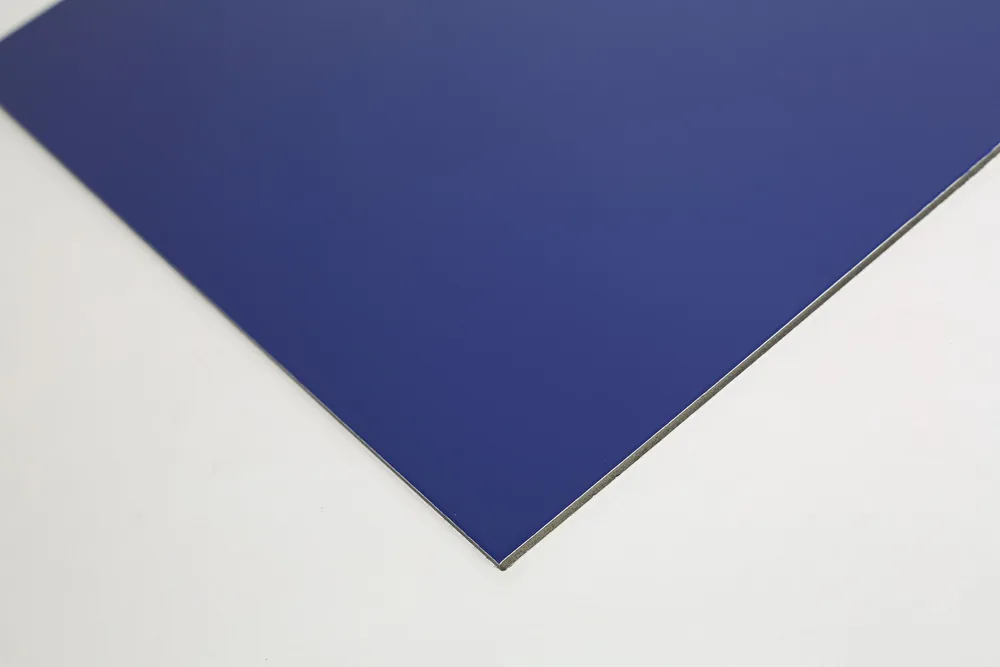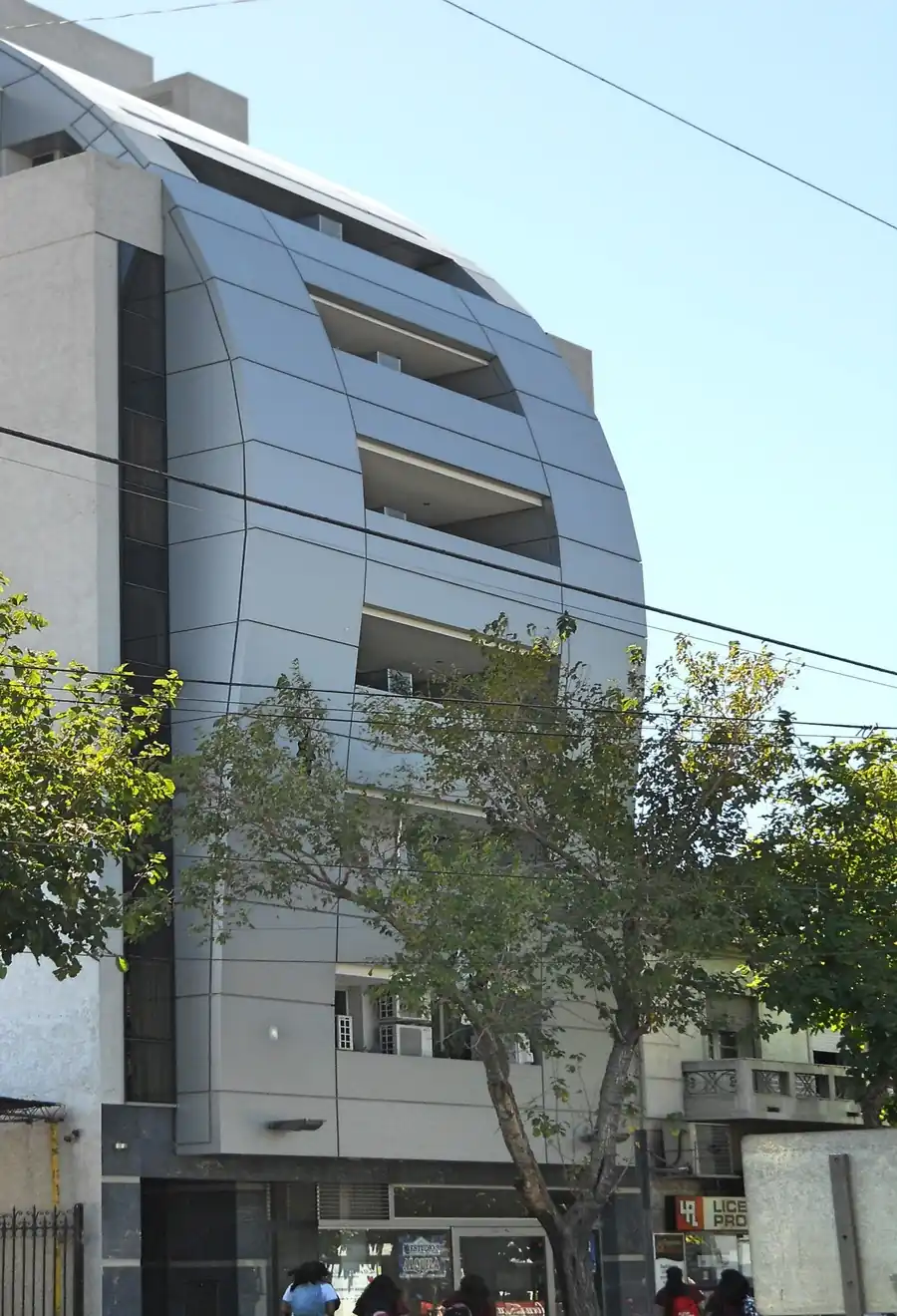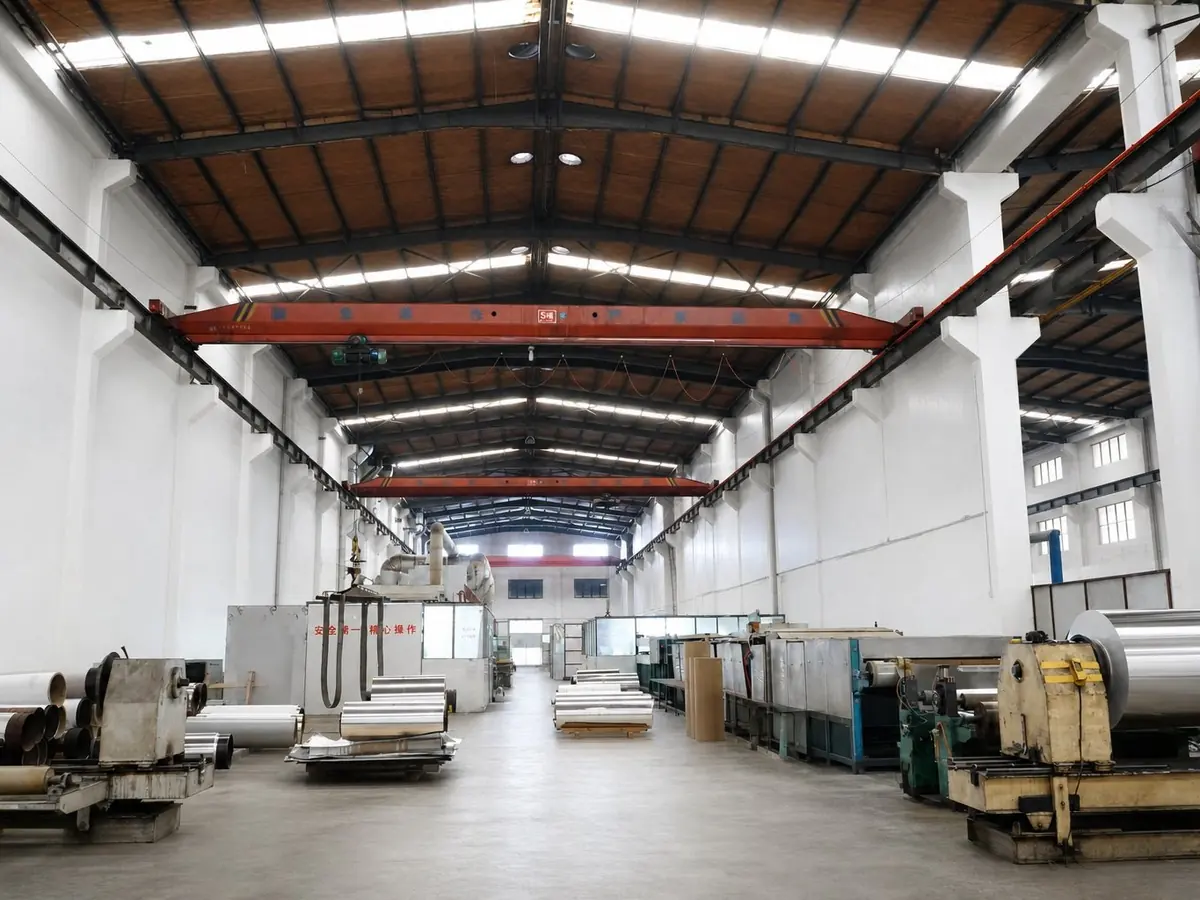
A composite panel is three materials and two bonds. Everything that decides whether it lasts twenty years outdoors happens in how those bonds are made — which is why we run all three stages ourselves rather than buying coated coil and laminating it.
Line 01 — chemosynthesis
Aluminum coil arriving from the mill carries rolling lubricants and surface deposits. Our chemosynthesis line, using qualified industrial chemicals and advanced technology from Henkel, Germany, cleans these away and forms a dense honeycomb oxide film on the metal surface. That film is the bonding medium between paint and metal. Skip it, or run it badly, and the coating is sitting on the surface rather than keyed into it.
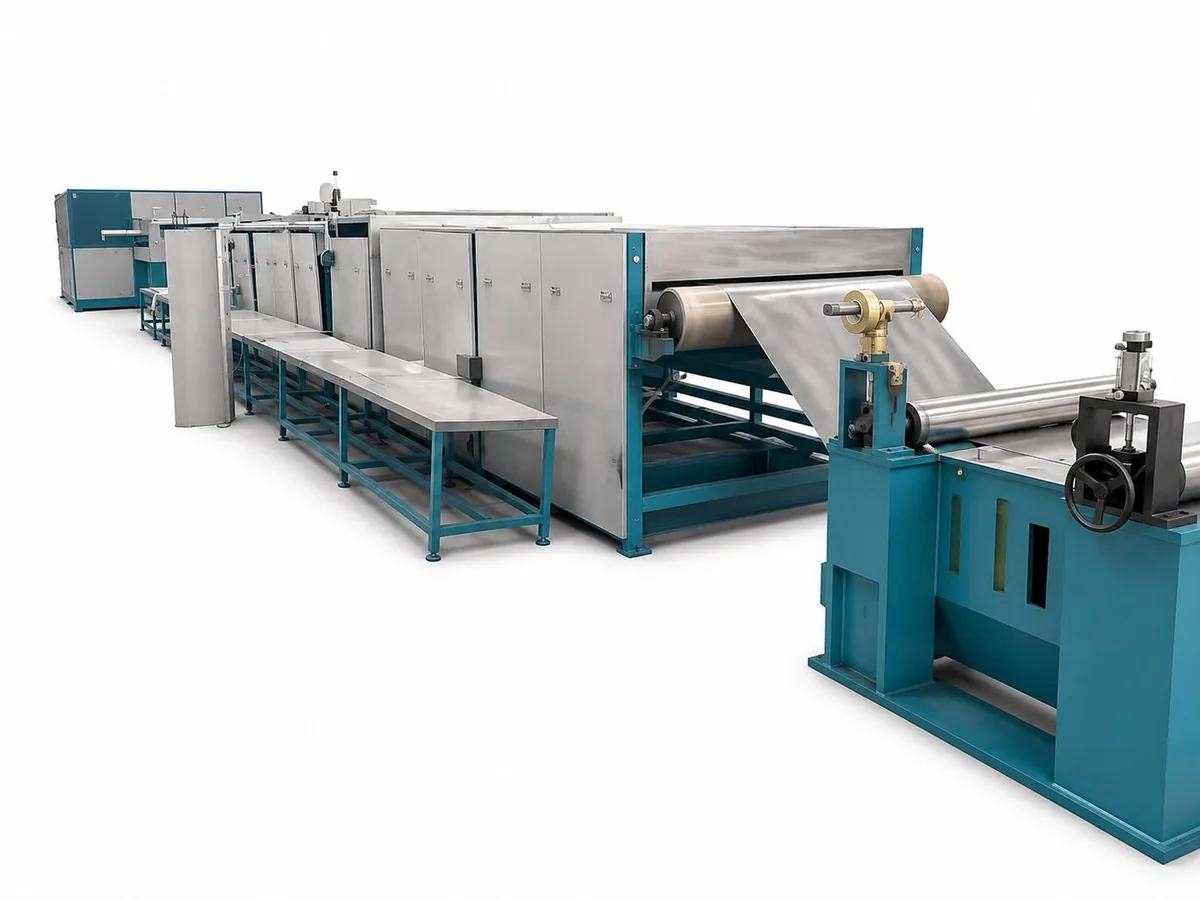
Line 02 — precision coating
Our three-roller reversal precision coating machine applies coatings to chemically treated aluminum and stainless steel coils in a sealed, dustless environment. Film thickness, oven temperature and curing time are controlled through the run, delivering solvent resistance, hardness, flexibility, gloss and adhesion. PVDF, FEVE, polyester and custom colour matching are all handled here, at 25–30 μm final film thickness.
Line 03 — lamination
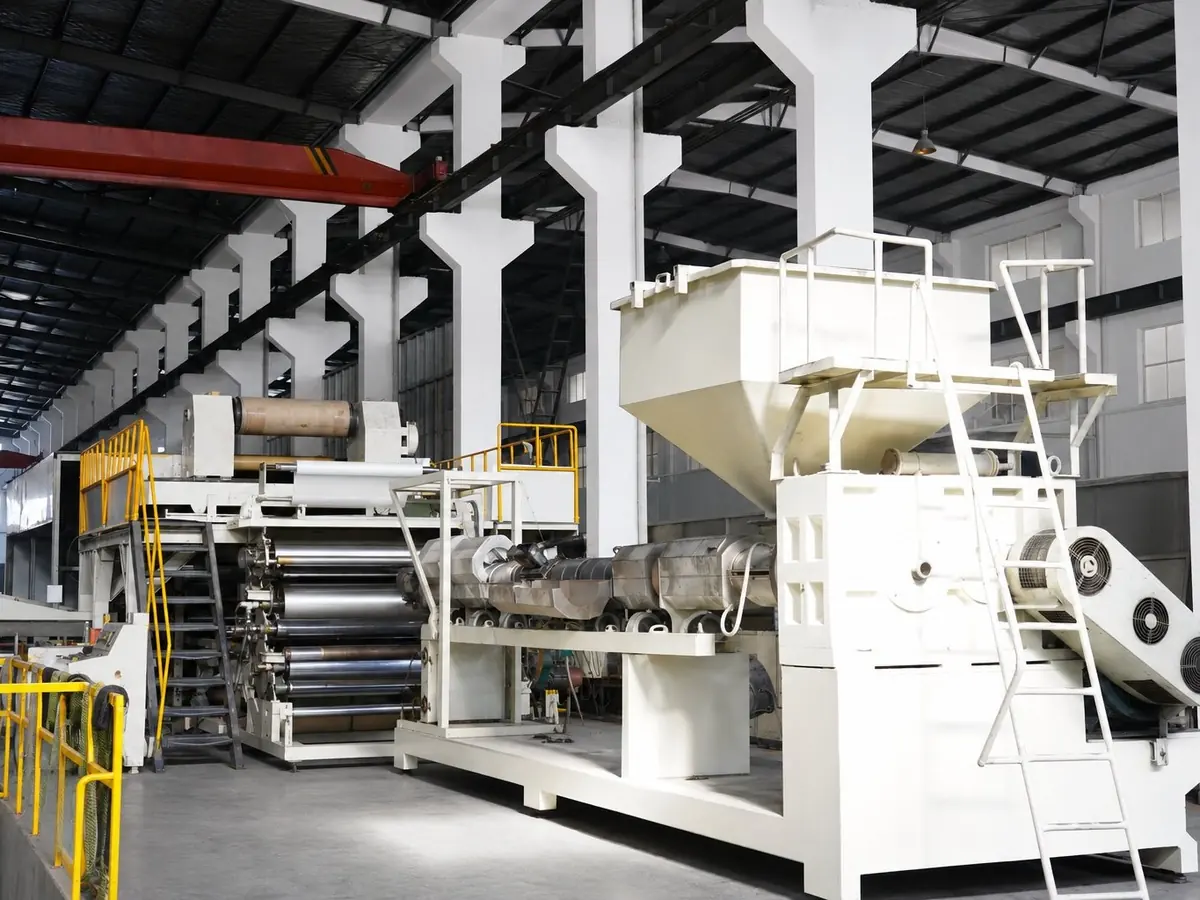
Under high temperature and pressure, metal sheets, core material and adhesive polyolefin film are laminated into one panel with a guaranteed flat surface and a stable bond. Peel strength is the number that shows whether the bond is real: the specification is ≥ 7.0 N/mm at 180°, and our tests measure 11.2 N/mm — above the quality benchmarks of imported panels.
What gets tested before it ships
Every production run is checked against the full test regime — appearance, coating, mechanical and weathering properties. Coating thickness is verified per batch at ≥ 25 μm. Pencil hardness is HB or better, typically H. Boiling water for two hours: no change. 5% hydrochloric acid and 5% sodium hydroxide for 24 hours: no change. Solvent resistance at 100 rubs without exposing the base coat. Salt spray 3000 h at grade 1. Accelerated weathering 4000 h with a colour difference of 1.24 against a limit of 4.0.
The part that does not appear on a spec sheet
Most of our factory operators have been with us for over twenty years. On a coating line that shows up as consistency between batches — the thing a specification cannot guarantee and a customer notices immediately when a second container does not match the first.