
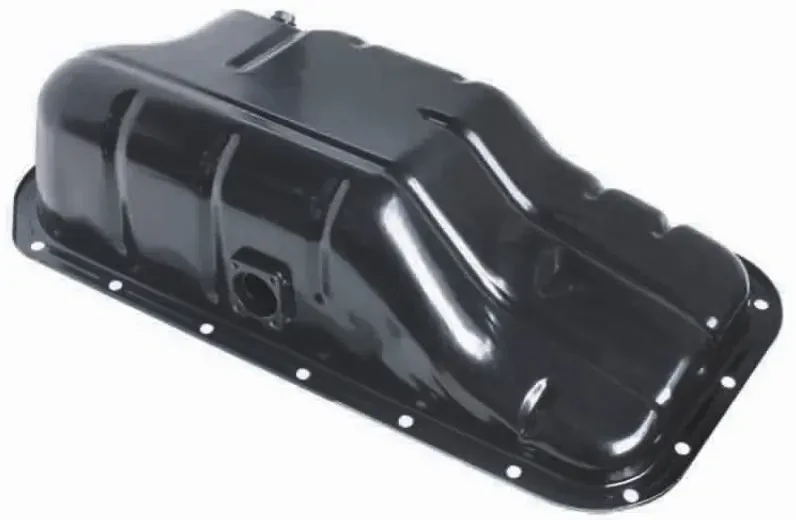
An oil pan problem shows up as oil on the ground, not as smoke or a burning smell. That is the useful diagnostic: a leak that drips onto the driveway without ever touching a hot surface is usually coming from the pan or its gasket, because the pan sits below and away from everything hot.
Published on the original RUIFAN website, 11 August 2009: You will know you have a bad oil pan by noticing oil that has physically leaked onto the ground. With oil pan problems, you will usually not get the smell of burning oil or see any oil contact with the motor. The pan is designed to keep the large quantity of oil stored there away from your engine block. Oil pans will often get dented. There is usually no cause for alarm as the oil pan is sturdy enough to handle it. You would only need to act if you noticed it has been jarred loose, has an oily seal meaning there is a possible leak coming, or actually see oil leaking from a puncture or something similar.
What to Check, in Order
- Clean the underside of the pan and the flange completely, then run the engine and look again. A dirty pan tells you nothing.
- Trace the wet line upwards. Oil runs down, so the highest wet point is the source, not the lowest.
- Check the flange seam all the way round, including the back edge where the pan meets the bell housing.
- Check the drain plug and its washer. A weeping drain plug is not a pan failure.
- Check the depth and location of any dent against the oil pump pickup position.
When a Dent Is Not a Problem
The original guide is right that most dents are not an emergency. A drawn steel pan is designed to deform. A shallow dent in the flat floor of the sump, away from the pickup, changes nothing you can measure.
When to Replace Instead of Repair
- The flange is no longer flat and the pan will not seal against a new gasket
- A dent has reduced sump volume or sits close to the pump pickup
- The drain boss thread is stripped or the boss itself is cracked
- An aluminum casting shows any crack, however fine
- Corrosion has thinned the metal at the seam or around the drain boss
One Thing Worth Ruling Out First
A rear main seal leak and a pan gasket leak both put oil on the ground in roughly the same place. Before condemning the pan, confirm the oil is not arriving from above via the bell housing joint. Replacing a sound pan does not fix a crankshaft seal.
More From the Knowledge Centre
Upper and Lower Two Piece Oil Pans
What an upper pan does that a lower sump does not, and how to avoid ordering the wrong half of a two-piece system.
Die Casting Sand Casting and Gravity Casting for Engine Parts
The three casting methods listed in the RUIFAN process sheet, what each one is good for, and how the choice shows up in the finished part.
Deep and Shallow Draw Stamping for Oil Pans
How a steel pan is drawn, where the metal thins, and why draw depth is the constraint that decides tooling.
About This Guide
Where does the information in this guide come from?
Content marked as published on the original RUIFAN website is reproduced from the archived site with the date it carried. Everything else is general engineering background written for this site. Company facts, capacities and certifications are only stated where RUIFAN recorded them.
Can RUIFAN help me identify a part I cannot name?
Yes. Send the number on the old part, the vehicle and engine code, and photographs of the flange face and drain boss side. We check it against the 136 catalogue records and tell you if it is there.
Do you publish the catalogue data behind these guides?
Yes. Every reference has its own page carrying the OE number, alternate numbers, notes and application table the original database stored for it.
What if the part I need was never in the catalogue?
The original RUIFAN site stated the factory develops oil pans and other aluminum castings from customer-supplied samples or drawings.
Put This Into an Enquiry
Send the reference, the vehicle and the quantity. We will confirm against the catalogue before quoting.