
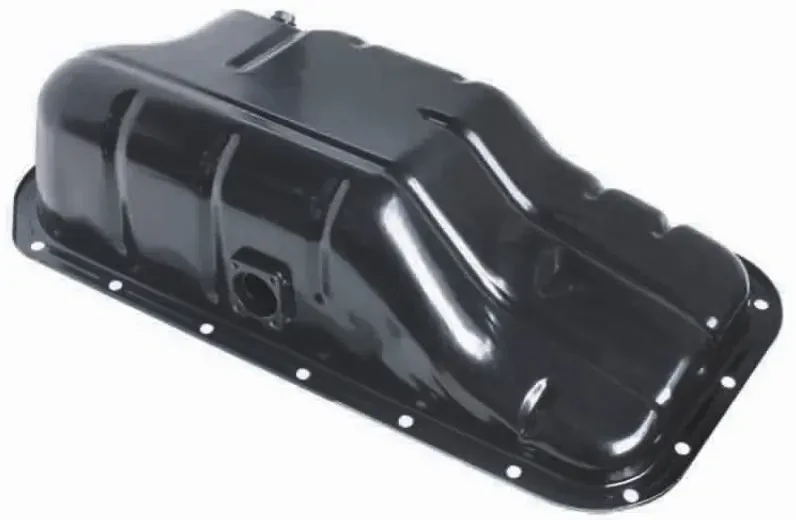
Drawing pulls a flat steel blank down into a die to form a hollow shape. A shallow draw does it in one stroke. A deep draw needs several, because the metal can only thin so far per operation before it splits. Draw depth relative to blank diameter is the constraint that decides the whole tool set.
What Happens to the Metal
As the blank is pulled into the die, metal in the flange is compressed circumferentially while metal in the wall is stretched. The wall thins, most severely just above the punch radius, and that is where a badly set tool splits. The flange, meanwhile, wants to wrinkle, which is what the blank holder pressure exists to prevent.
Getting both right at once — enough blank holder pressure to stop wrinkling, not so much that the wall tears — is the whole craft of the operation.
Shallow Versus Deep
| Shallow draw | Deep draw | |
|---|---|---|
| Operations | Single | Two or more, with redraws |
| Wall thinning | Minor | Significant, must be controlled |
| Annealing | Rarely needed | Sometimes needed between operations |
| Tooling | One die set | Progressive or transfer tooling |
| Typical pan use | Shallow main body | Deep sump section at the pickup end |
Many pans combine both: a shallow-drawn main body with a separately drawn deep section welded in, because drawing the whole profile in one piece to the depth the pickup needs would thin the wall past its limit.
Where Stamped Pans Fail in Service
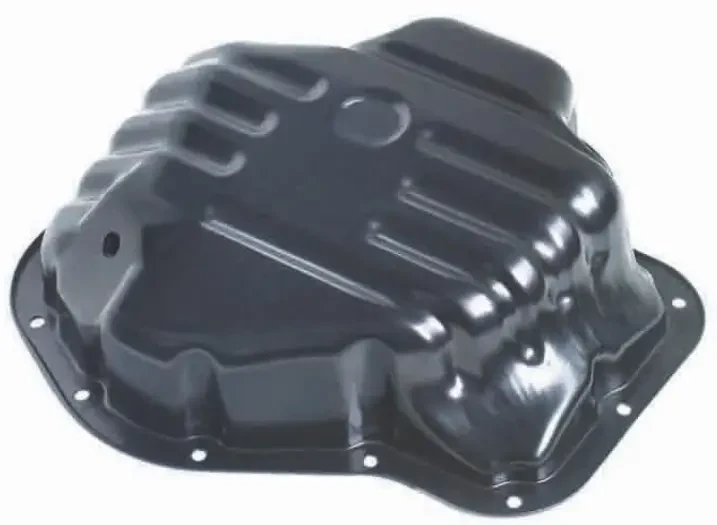
- At the weld between main body and deep section, if the weld was undercut
- At the drain boss, where the thread is formed or welded into thinner material
- At the flange, if it has been distorted by over-torque or by prising
- Through corrosion at the seam, where coating coverage is hardest to achieve
What to Specify
Material grade and thickness, coating type, flange flatness tolerance and the weld standard for the deep section. The RUIFAN process sheet lists deep and shallow draw stamping among its manufacturing methods; the specific grades and coatings for a given programme are agreed per order and were not recorded in the archived catalogue.
More From the Knowledge Centre
Do They Make Different Oil Pans
Why engine code, sensor-hole configuration and drain-plug position decide fitment, and how to use an OE number properly.
Stamped Steel vs Cast Aluminum Oil Pans
How a drawn steel pan and a cast aluminum sump differ in structure, failure mode and repairability, and what that means when you source a replacement.
How to Read an OE Oil Pan Number
Reading VW-group, Toyota 12101, Honda 11200 and PSA oil pan numbers, and what each segment actually tells you about fitment.
About This Guide
Where does the information in this guide come from?
Content marked as published on the original RUIFAN website is reproduced from the archived site with the date it carried. Everything else is general engineering background written for this site. Company facts, capacities and certifications are only stated where RUIFAN recorded them.
Can RUIFAN help me identify a part I cannot name?
Yes. Send the number on the old part, the vehicle and engine code, and photographs of the flange face and drain boss side. We check it against the 136 catalogue records and tell you if it is there.
Do you publish the catalogue data behind these guides?
Yes. Every reference has its own page carrying the OE number, alternate numbers, notes and application table the original database stored for it.
What if the part I need was never in the catalogue?
The original RUIFAN site stated the factory develops oil pans and other aluminum castings from customer-supplied samples or drawings.
Put This Into an Enquiry
Send the reference, the vehicle and the quantity. We will confirm against the catalogue before quoting.