
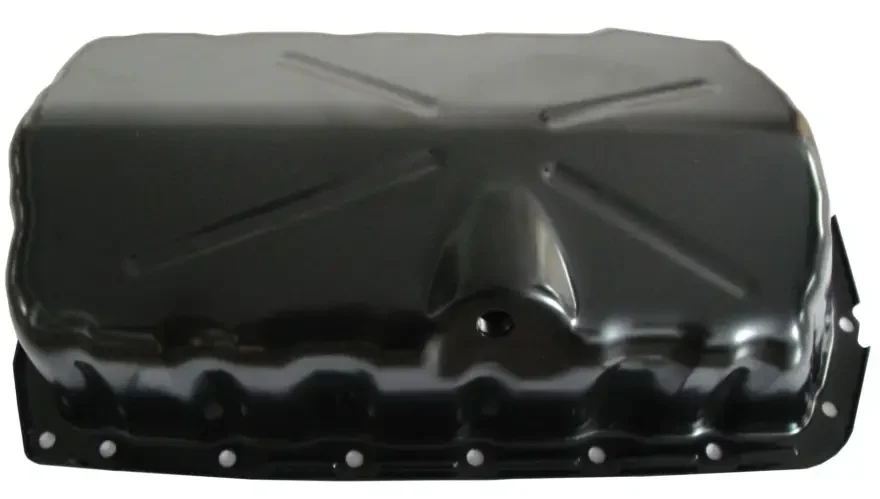
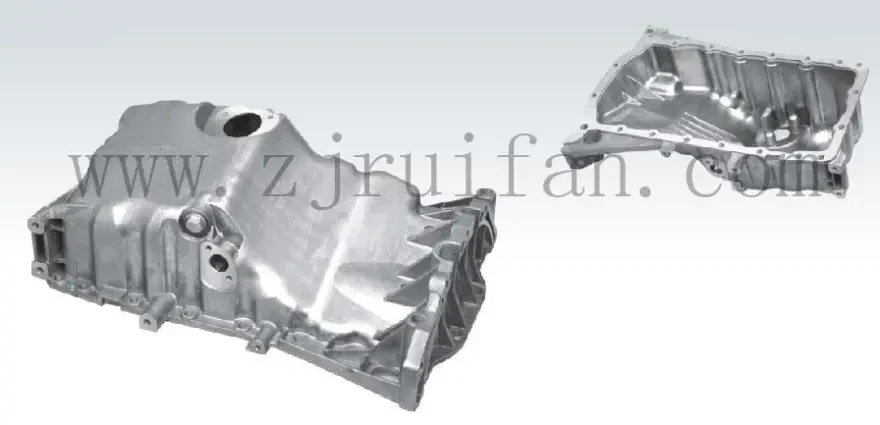
A drawn steel pan is pressed from sheet and is light, cheap at volume and dents rather than cracks. A cast aluminum pan is stiffer, sheds heat better and can carry structural load between the block and the gearbox, but it cracks instead of denting and cannot be straightened. Which one you need is decided by the engine, not by preference.
How Each One Is Made
A steel pan starts as a flat blank and is drawn into shape over one or more press operations. Deep sections need more than one draw, because the metal can only thin so far in a single stroke before it splits. The flange is formed and pierced, and on many designs a separate deep section is welded to a shallower main body.
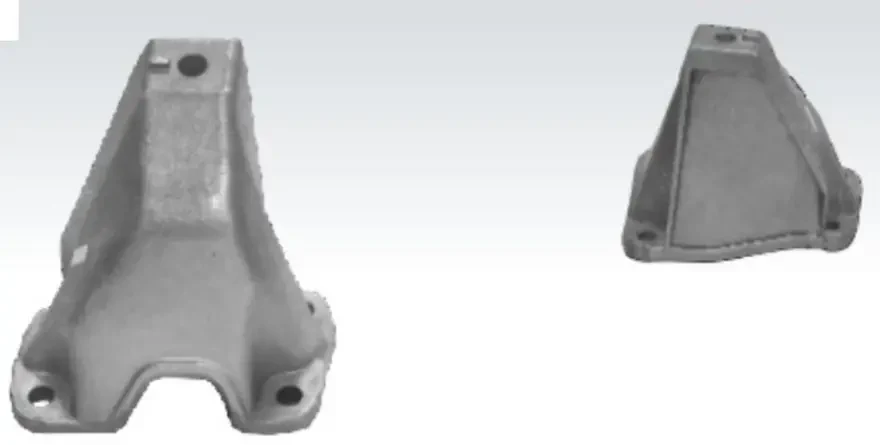
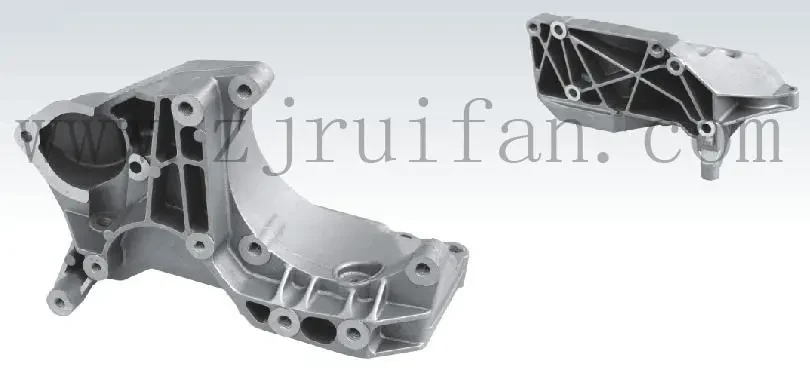
An aluminum pan starts as molten metal. Die casting forces it into a steel die under pressure and gives the tightest tolerances and the best surface. Sand casting uses an expendable mould and suits lower volumes and heavier sections. Gravity casting sits between the two. All three are listed in the RUIFAN process sheet.
| Drawn steel | Cast aluminum | |
|---|---|---|
| Weight | Lower for the same volume | Higher unless wall section is optimised |
| Stiffness | Low — relies on the block | High — can be a structural member |
| Heat dissipation | Moderate | Better |
| Impact behaviour | Dents, usually repairable | Cracks, not repairable in service |
| Corrosion | Needs a coating | Self-passivating |
| Tooling cost | Lower at volume | Higher, especially for die casting |
| Typical use | Transverse small and mid-size petrol and diesel | Engines where the pan ties block to bell housing |
What This Means When You Source a Replacement
Do not substitute across materials. If the original is a structural aluminum pan, a steel replacement of the same profile will flex at the bell housing joint and the seal will not survive. If the original is steel, an aluminum copy adds cost and weight for no benefit.
One record in the RUIFAN catalogue, oil pan 06A 103 598, is noted in the archive as a steel oil pan for MK4 VW Golf, Jetta and New Beetle 2.0 and 1.9 TDI applications. That kind of note in the record is what tells you which side of this line a part sits on.
Checking a Casting on Arrival
- Flange flatness across the full perimeter, checked on a surface plate or a known-flat bench
- No visible porosity on the sealing face
- Drain boss thread clean and square to the boss face
- Section thickness consistent where the casting carries load
- No cracks radiating from bolt holes
More From the Knowledge Centre
What Is an Oil Pan
What an oil pan is, where it sits on the engine and what it does — the original RUIFAN explainer, kept as it was published in 2009.
What Can Go Wrong With My Oil Pan
Impact damage, worn gaskets and contamination — the three failure modes the original RUIFAN guide identified, with sourcing notes added.
How Will I Know I Have a Bad Oil Pan
How a failing oil pan announces itself, why a dent is usually not an emergency, and when replacement is the right call.
About This Guide
Where does the information in this guide come from?
Content marked as published on the original RUIFAN website is reproduced from the archived site with the date it carried. Everything else is general engineering background written for this site. Company facts, capacities and certifications are only stated where RUIFAN recorded them.
Can RUIFAN help me identify a part I cannot name?
Yes. Send the number on the old part, the vehicle and engine code, and photographs of the flange face and drain boss side. We check it against the 136 catalogue records and tell you if it is there.
Do you publish the catalogue data behind these guides?
Yes. Every reference has its own page carrying the OE number, alternate numbers, notes and application table the original database stored for it.
What if the part I need was never in the catalogue?
The original RUIFAN site stated the factory develops oil pans and other aluminum castings from customer-supplied samples or drawings.
Put This Into an Enquiry
Send the reference, the vehicle and the quantity. We will confirm against the catalogue before quoting.