
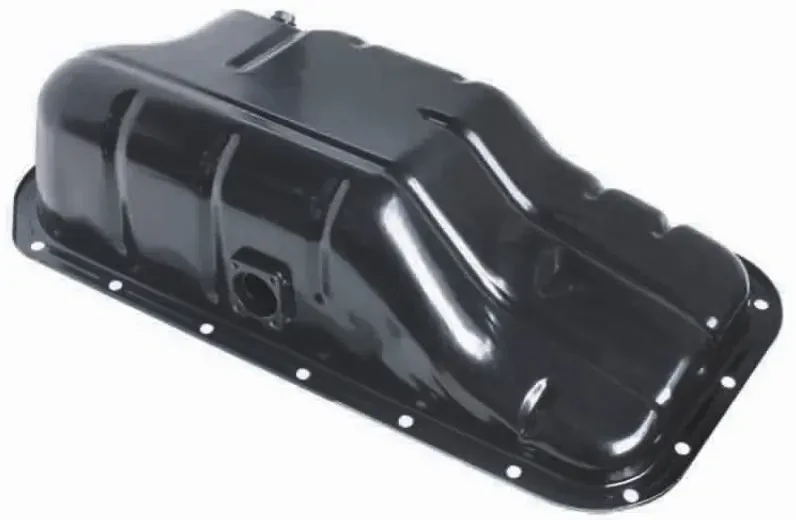
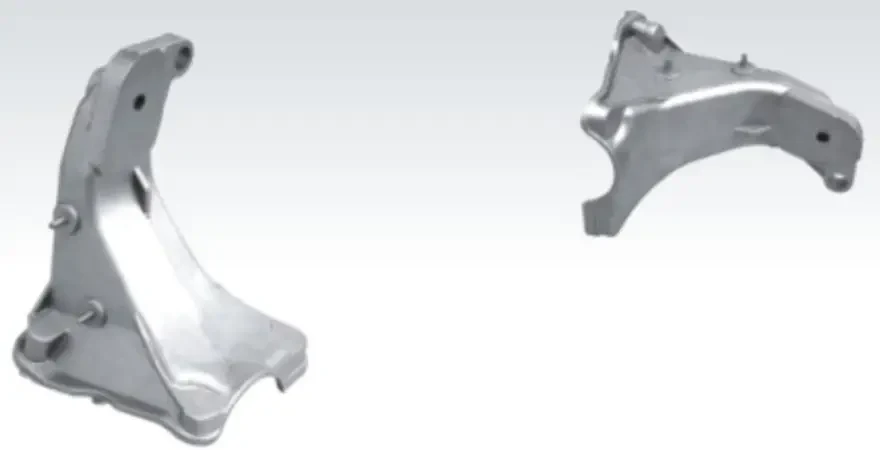
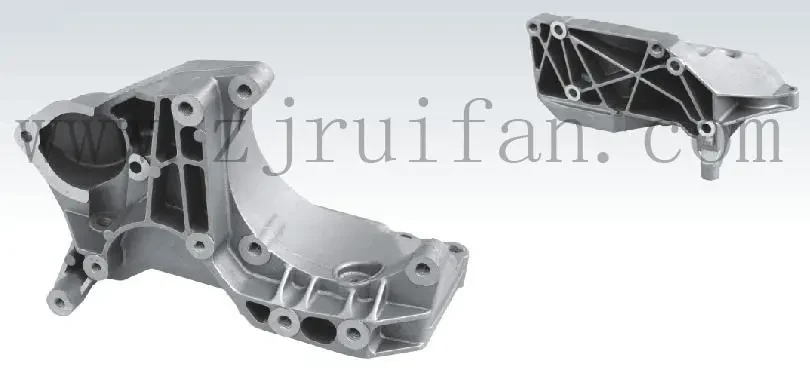
A two-piece system has an upper pan — usually a stiff aluminum casting bolted directly to the block and often to the gearbox bell housing — and a lower sump that bolts to it and holds most of the oil. They are different parts with different numbers, and the upper one is the structural half.
What the Upper Pan Does
The upper pan is a load path. It ties the bottom of the block to the bell housing, adding stiffness to the whole powertrain assembly and reducing the bending that the crankshaft main bearings would otherwise see. It frequently carries the oil pump pickup mounting, windage control features and sometimes the oil level sensor.
Because it is structural, it is always a casting, and its flange flatness matters in two directions at once: against the block above and against the lower sump below.
What the Lower Sump Does
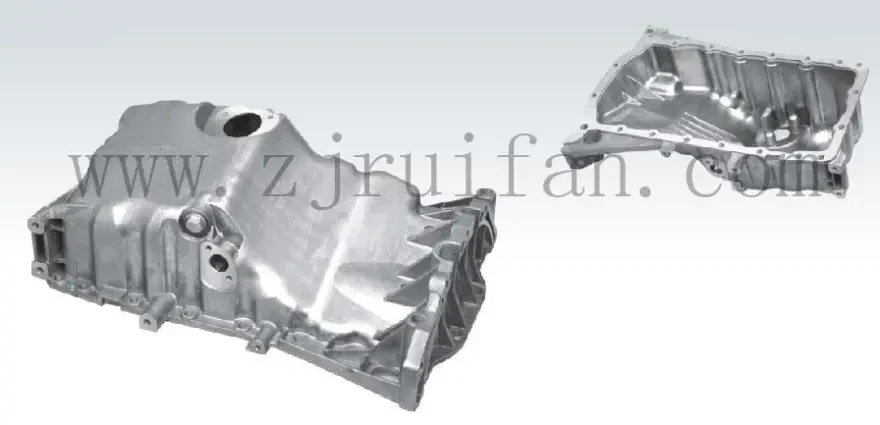
The lower sump is the reservoir and the service item. It carries the drain plug, it is the part that meets the kerb, and it is the part that gets replaced. On many engines it can be pressed steel even where the upper pan is aluminum.
| Upper pan | Lower sump | |
|---|---|---|
| Material | Almost always cast aluminum | Steel or aluminum |
| Bolts to | Block, often also bell housing | Upper pan |
| Carries drain plug | Rarely | Almost always |
| Structural | Yes | No |
| Replaced because | Cracked, or damaged during engine work | Impact, corrosion, stripped drain thread |
The Ordering Mistake
A distributor receives an order quoting the vehicle and the word sump, ships the lower half, and the workshop actually needed the upper casting after an engine rebuild. The freight on a returned aluminum casting usually costs more than the margin on the sale.
The RUIFAN catalogue lists one explicit upper pan reference, OIL PAN Upper 078 103 603AM, in the Audi block. Where a record is an upper pan, the word Upper appears in the catalogue name exactly as the original database stored it.
Before You Order
- Confirm whether the vehicle uses a one-piece or two-piece system
- Establish which half is being replaced and why
- Check whether the drain plug is in the part being ordered
- If both halves are being replaced, order them together so the joint faces match
More From the Knowledge Centre
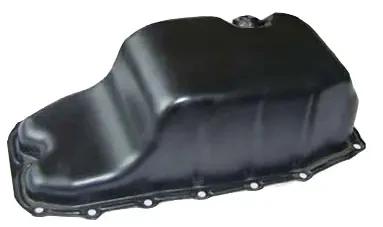
How to Read an OE Oil Pan Number
Reading VW-group, Toyota 12101, Honda 11200 and PSA oil pan numbers, and what each segment actually tells you about fitment.
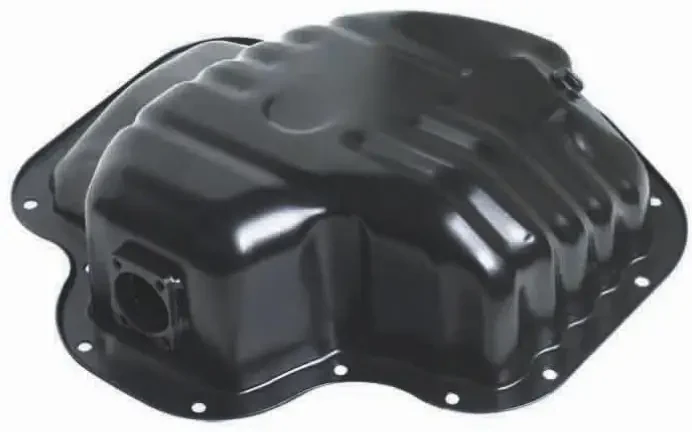
Oil Level Sensor Hole Variants and Why They Matter
Why two pans with almost the same number are not interchangeable when one has an oil level sensor boss and the other does not.
Die Casting Sand Casting and Gravity Casting for Engine Parts
The three casting methods listed in the RUIFAN process sheet, what each one is good for, and how the choice shows up in the finished part.
About This Guide
Where does the information in this guide come from?
Content marked as published on the original RUIFAN website is reproduced from the archived site with the date it carried. Everything else is general engineering background written for this site. Company facts, capacities and certifications are only stated where RUIFAN recorded them.
Can RUIFAN help me identify a part I cannot name?
Yes. Send the number on the old part, the vehicle and engine code, and photographs of the flange face and drain boss side. We check it against the 136 catalogue records and tell you if it is there.
Do you publish the catalogue data behind these guides?
Yes. Every reference has its own page carrying the OE number, alternate numbers, notes and application table the original database stored for it.
What if the part I need was never in the catalogue?
The original RUIFAN site stated the factory develops oil pans and other aluminum castings from customer-supplied samples or drawings.
Put This Into an Enquiry
Send the reference, the vehicle and the quantity. We will confirm against the catalogue before quoting.