
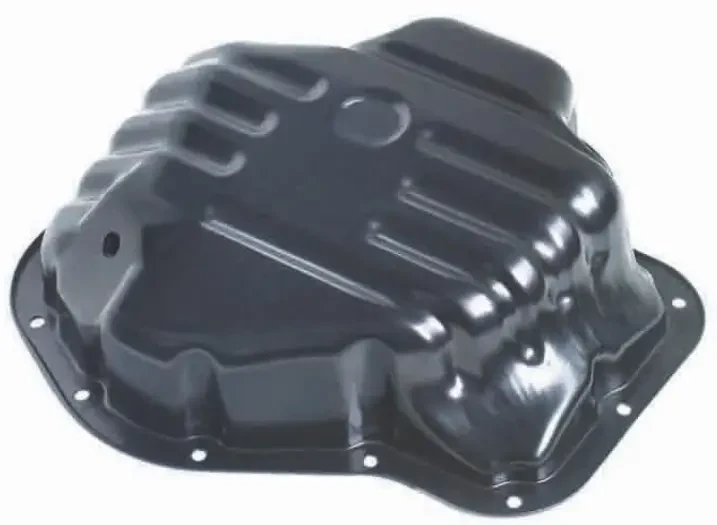
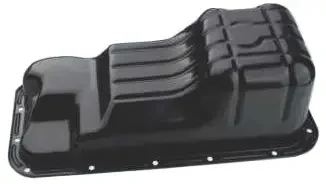
Yes, and the differences are not cosmetic. Different engines and vehicle platforms use different oil pan stampings or castings, and fitment depends on engine code, sensor-hole configuration, drain-plug position and the surrounding geometry. Two pans that look alike in a photograph are frequently not interchangeable.
Published on the original RUIFAN website, 11 August 2009: Different engines and vehicle platforms use different oil-pan stampings or castings. Fitment depends on engine code, sensor-hole configuration, drain-plug position and related geometry. Use the OE number and the application table on each product page when selecting a replacement.
What Actually Separates Two Similar Pans
| Variable | Why it changes | What happens if it is wrong |
|---|---|---|
| Engine code | Different displacement or block casting in the same model range | Bolt pattern or depth will not match |
| Oil level sensor boss | Engine management specification differs by market and year | No mounting for the sensor, or a blanked hole where one is needed |
| Drain plug position | Vehicle packaging and service access | Plug fouls the sub-frame or cannot be reached |
| Sump depth and profile | Sub-frame, steering rack and driveshaft clearance | Pan contacts the sub-frame or the pickup no longer reaches the oil |
| Material and construction | Whether the pan carries structural load | A non-structural pan on a structural application flexes |
How to Use an OE Number Properly
The OE number is the only reliable starting point, but it is a starting point. Numbers get superseded, alternates exist for the same casting, and the same part is often sold under a different reference in a different market. In the RUIFAN catalogue, twenty records carry alternate numbers recorded in the original database and six carry vehicle application tables — those are the records where the archive can settle the question on its own.
When the Number Is Not Enough
- Compare the archive photograph against the part on the vehicle, looking at flange shape and bolt count first
- Check whether a sensor boss is present on one and not the other
- Confirm which side of the pan the drain boss sits on
- Where the catalogue record carries a note, read it — notes such as with or without oil level sensor hole are reproduced unchanged
- If it is still ambiguous, send a sample or a dimensioned photograph
More From the Knowledge Centre
Stamped Steel vs Cast Aluminum Oil Pans
How a drawn steel pan and a cast aluminum sump differ in structure, failure mode and repairability, and what that means when you source a replacement.
How to Read an OE Oil Pan Number
Reading VW-group, Toyota 12101, Honda 11200 and PSA oil pan numbers, and what each segment actually tells you about fitment.
Oil Level Sensor Hole Variants and Why They Matter
Why two pans with almost the same number are not interchangeable when one has an oil level sensor boss and the other does not.
About This Guide
Where does the information in this guide come from?
Content marked as published on the original RUIFAN website is reproduced from the archived site with the date it carried. Everything else is general engineering background written for this site. Company facts, capacities and certifications are only stated where RUIFAN recorded them.
Can RUIFAN help me identify a part I cannot name?
Yes. Send the number on the old part, the vehicle and engine code, and photographs of the flange face and drain boss side. We check it against the 136 catalogue records and tell you if it is there.
Do you publish the catalogue data behind these guides?
Yes. Every reference has its own page carrying the OE number, alternate numbers, notes and application table the original database stored for it.
What if the part I need was never in the catalogue?
The original RUIFAN site stated the factory develops oil pans and other aluminum castings from customer-supplied samples or drawings.
Put This Into an Enquiry
Send the reference, the vehicle and the quantity. We will confirm against the catalogue before quoting.