
Process
How It Runs, Step by Step
Start from what you hold
An OE number, an alternate number, a competitor reference, an engine code or a photograph of the part on the vehicle.
Search the recorded alternates
Twenty catalogue records carry alternate numbers recorded in the original database, and six carry vehicle application tables.
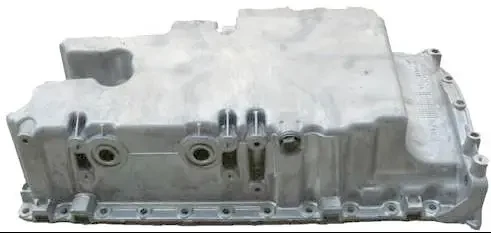
Check against the photograph
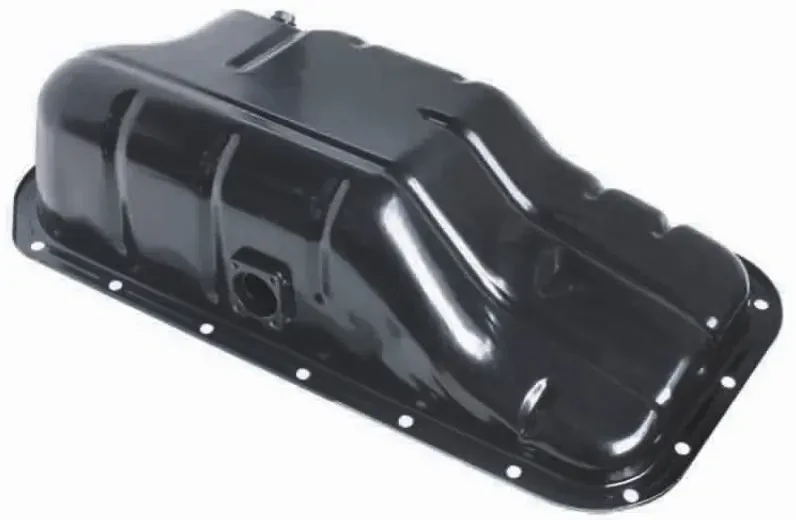
Flange pattern, drain boss position, sensor hole and overall depth are visible in the archive photographs.
Confirm the variant
Where a record notes a variant, such as with or without an oil level sensor hole, that note is published on the part page unchanged.
Fall back to a sample
If the archive cannot settle it, a sample or a dimensioned photograph will.
Outcome
A number you can order against, or a clear statement that the archive does not contain it.
Every figure and capability named on this page is one RUIFAN recorded on its original site. Where a detail was never recorded, it is agreed per programme rather than stated here.
What the factory records
- Founded 1994 in Ruian, Zhejiang
- Stated annual oil pan output of 500,000 pieces
- Quality systems recorded as ISO 9001 and TS 16949
- Deep and shallow draw stamping; die, sand and gravity casting
- Chrome plating and vacuum metallization
- Development of oil pans and aluminum castings from customer samples or drawings
Background Reading
How Will I Know I Have a Bad Oil Pan
How a failing oil pan announces itself, why a dent is usually not an emergency, and when replacement is the right call.
Do They Make Different Oil Pans
Why engine code, sensor-hole configuration and drain-plug position decide fitment, and how to use an OE number properly.
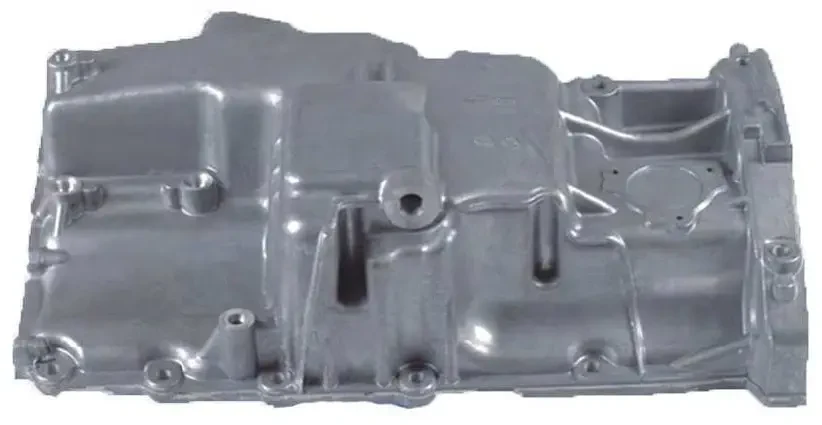
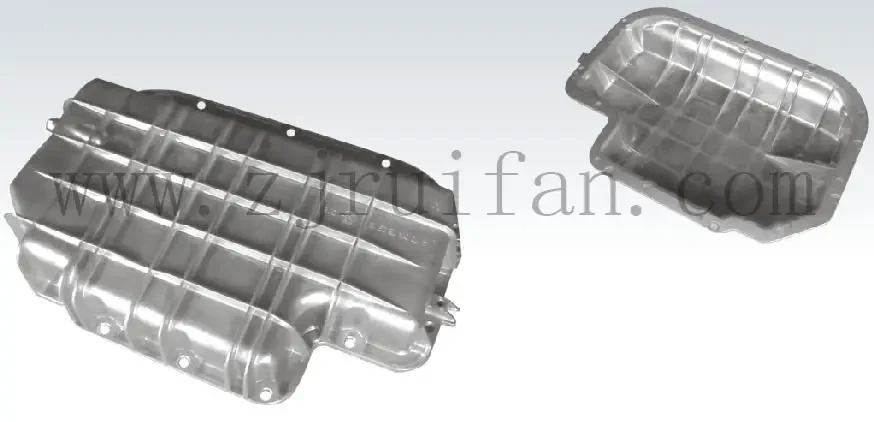
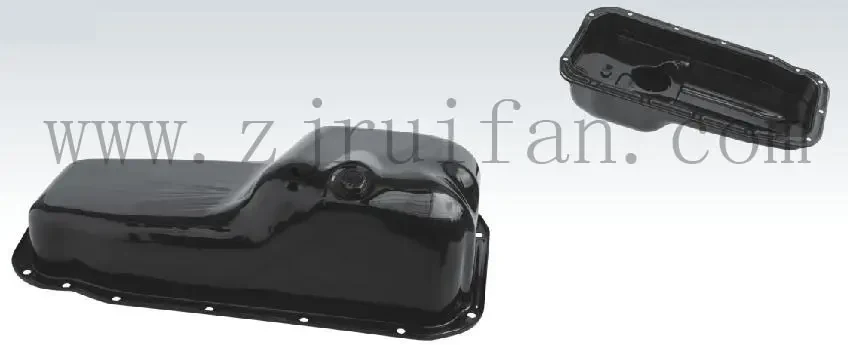
Stamped Steel vs Cast Aluminum Oil Pans
How a drawn steel pan and a cast aluminum sump differ in structure, failure mode and repairability, and what that means when you source a replacement.
Questions About Cross Reference and Part Identification
How long does cross reference and part identification take?
Lead time was not recorded in the archived catalogue and is confirmed per programme, because it depends on whether tooling exists, how many references are in the order and where it is shipping.
What do you need from us to start?
For catalogue references, the number list, quantities and destination market. For anything not in the catalogue, a sample, a drawing or a dimensioned photograph.
Who owns the tooling?
Tooling cost, lead time and ownership are agreed in writing before any work begins. Nothing on that is assumed.
Can this run alongside a catalogue order?
Yes, and it usually should. Consolidating is what makes low-volume references economic to produce and to ship.
What quality systems apply?
ISO 9001 and TS 16949 are the systems RUIFAN recorded on its original site. Certificate numbers and validity dates are supplied on request.
Start With Cross Reference and Part Identification
Send what you have — a number list, a drawing or a sample. We will tell you what the catalogue covers and what needs tooling.