
Diesel off the apron, one phase at a time
A regional airport began replacing diesel ground support with electric tugs and baggage tractors supplied through the ZCForest GSE programme. The rollout is live, incomplete, and already informative.
Client background
The airport handles a mix of regional commercial traffic and some international service, with apron operations running essentially continuously across multiple gates.
The pre-existing ground support fleet was a mix of diesel tugs, baggage tractors, belt loaders and ground power units — typical for an airport of this scale.
Why the apron
Airport ground operations are one of the highest-leverage targets for electrification. Apron equipment runs continuous duty cycles in confined areas, often in high-occupancy environments where diesel emissions and noise are immediate operational concerns.
The vehicles themselves are mechanically simple, the routes are short and predictable, and the depot-charging model fits naturally with operational rhythms.
Customer pain points
- Emissions reduction targets imposed by the airport authority and reinforced by airline customers.
- Ramp-side air quality affecting workers and nearby communities.
- Total-cost-of-ownership economics that had shifted in favour of electric as the technology matured.
- Hot ambient temperatures placing real demands on battery thermal management.
The scope
The first phase covers a meaningful portion of the apron fleet, with subsequent phases planned to expand coverage progressively as charging infrastructure is built out and operational confidence accumulates.
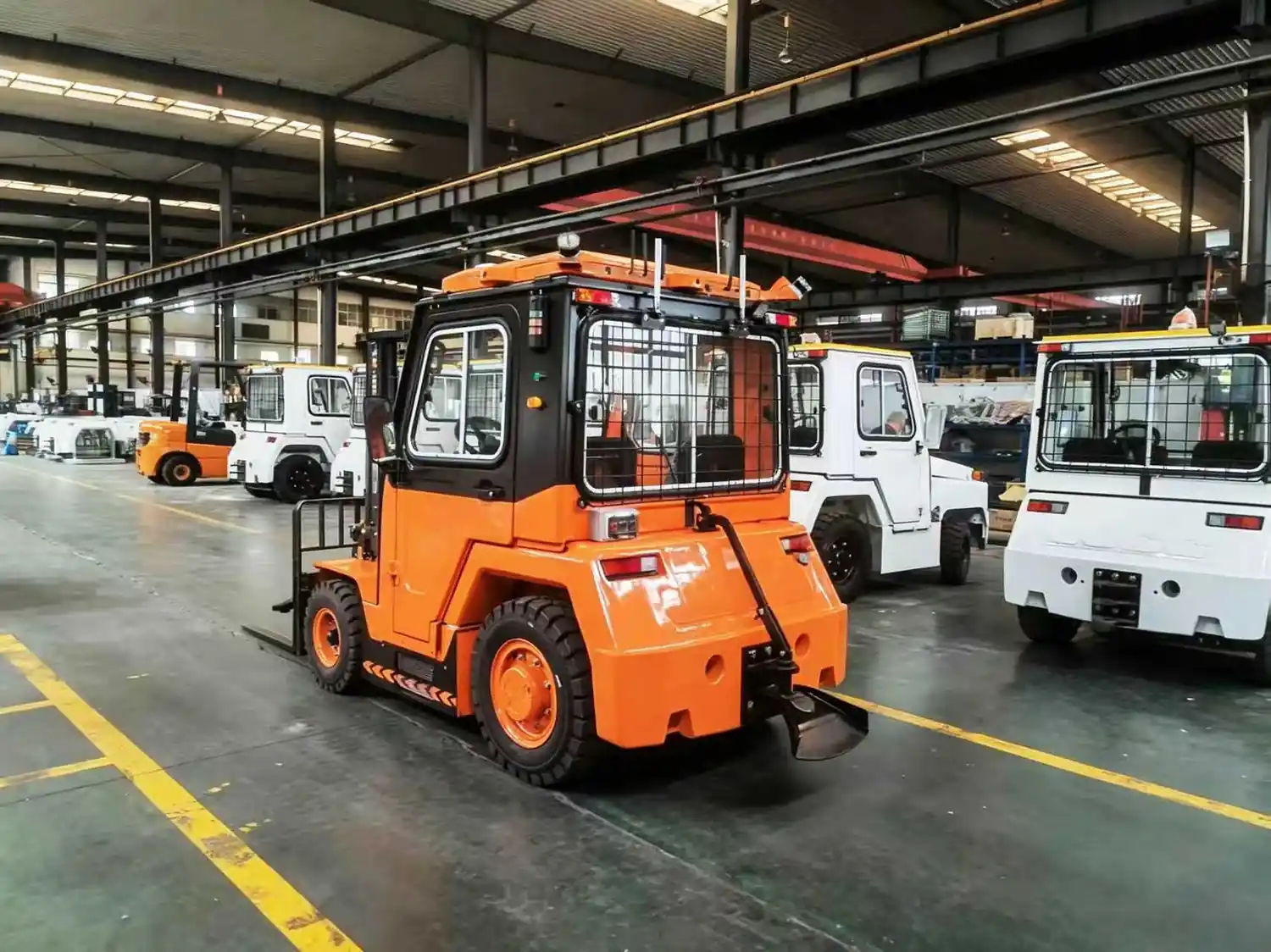
The vehicles supplied include electric baggage tractors, light tugs and supporting ground support equipment configured for this airport's specific operational requirements — local power infrastructure compatibility, climate-appropriate cooling and battery management, and the connector and communication standards the existing operations team already uses.
The infrastructure side
An often-overlooked aspect of ground support electrification is the charging infrastructure. Electric vehicles need to charge, and the charging system has to fit into the operational rhythm without disrupting turnaround times.
For this project the deployment used a mix of overnight AC charging for vehicles with consistent schedules, and DC fast charging at strategic points for vehicles needing top-ups during peak operations.
The biggest early lesson was that operations teams adapt to electric ground support faster than expected — but only if the charging logistics are designed around the existing operational rhythm. Forcing operators to change behaviour to accommodate the vehicles produces friction; designing the vehicles and infrastructure to fit existing patterns produces uptake.
What is working well
- Operator preference. Operators consistently prefer the electric vehicles to their diesel counterparts — quieter, cleaner cabin environment, smoother power delivery.
- Reliability. With far fewer mechanical components than diesel equivalents, in-service reliability has been higher than expected in the early operational period.
- Lower running costs. Energy cost per operating hour is meaningfully lower than diesel, before factoring in reduced maintenance.
- Local air quality. Measurable improvements near the apron and in the cabin environment of the vehicles themselves.
What has been more challenging
- Initial capital cost. Even with declining battery prices, electric ground support typically carries a capital premium over diesel. Total cost of ownership closes the gap over the operational period, but the initial outlay requires explicit capital planning.
- Charging infrastructure. The infrastructure side is non-trivial and needs to be planned in parallel with vehicle deployment, not after it.
- Severe weather operations. In this airport's climate, hot ambient temperatures place real demands on battery thermal management. Engineering choices that work in temperate climates need adjustment.
The rollout continues through 2026, with subsequent phases adding vehicle categories and expanding to the full apron fleet. For airport authorities and ground handlers considering a similar transition, the right approach is a structured one: pilot a portion of the fleet, capture the operational learning, then scale on demonstrated performance.
Industry applications
Solutions
A similar profile to yours?
Send the load profile and tariff structure and we will tell you whether the same approach works on your site.