
How to Choose a Metal Band Saw for a Fabrication Shop
A metal band saw cuts bar, tube, section and plate to length ahead of machining, welding and assembly, and the right one depends on section size, material, volume and how square the cut has to be. This guide is for fabrication shop owners and buyers specifying a first saw or replacing one that has become the bottleneck.
The Saw Sets the Pace of the Whole Shop
In most fabrication shops every job passes through the saw before it reaches anything else. If the saw is slow, out of square, or limited in the sections it can take, the effect is felt at every downstream station: fitters pack out gaps, welders burn more wire filling them, and machinists take an extra facing cut to clean up an untidy end. A saw is rarely the most expensive machine in the building but it is very often the one that decides throughput.
That is why the specification should start from what leaves the saw rather than from horsepower. Ask what the largest section is, what materials go through it, how many cuts a day are made, and how square and how repeatable the length has to be. Those four answers narrow the machine class quickly.
Start with Capacity and Section Shape
Cutting capacity is quoted for round and for rectangular sections, and the two are not interchangeable. A saw that takes a large round bar may not swallow a wide flat or a large box section, because the limit is the throat between the blade guides and the frame, not just the blade length. Write down your largest round, your largest square or box, and your widest flat, and check all three against the machine.
Bundle cutting changes the calculation again. Cutting several small tubes at once is far more productive than cutting them one at a time, but it requires a vice that clamps the full bundle securely and a machine rigid enough that the blade does not wander between pieces. If bundle cutting is part of your plan, say so at enquiry stage because it affects vice and capacity choice.
Then add margin. Buying a saw that exactly matches today's largest section means turning away the first job that arrives one size bigger.
- Record the largest round, square and flat sections you cut
- Check capacity for each shape, not just for round bar
- Decide whether bundle cutting is required
- Allow capacity margin above today's biggest job
Pivot Frame or Double Column
Pivot or swing frame band saws hinge the blade head down onto the work. They are compact, simpler, and cost less, and they suit general fabrication where cuts are varied and volume is moderate. Most also mitre by swivelling the frame or the vice, which is valuable in a shop that fabricates frames and handrails.
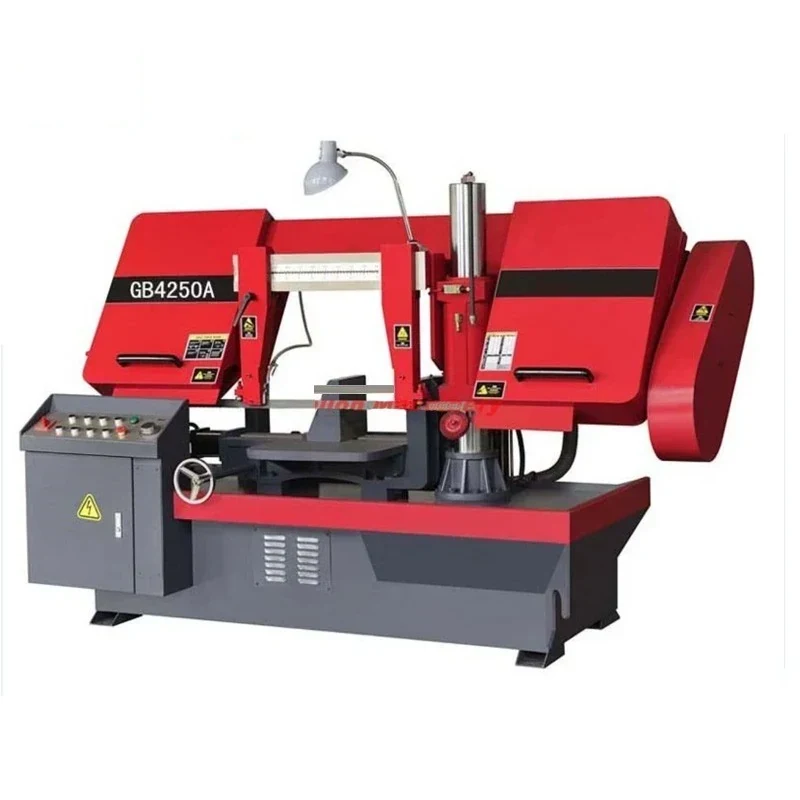
Double column saws carry the blade head on two columns and feed it straight down. The head stays parallel to the table through the whole cut, which holds squareness better on wide sections and at higher feed rates. This is the class to choose for larger bar, for production cutting, and wherever cut squareness on a big section directly affects downstream work such as machining or pressure welding.
The trade-off is straightforward. Pivot saws are more flexible and cheaper; double column saws are more accurate on large sections and better suited to sustained volume. XAIMC supplies both, along with hacksaw machines, circular cold saws and pipe cutting saws, so the frame type can be chosen for the work rather than for what happens to be in stock.
- Pivot frame - compact, lower cost, easy mitre cutting, mixed work
- Double column - parallel head travel, better squareness on wide sections
- Double column suits sustained production volume
- Cold saw suits short, clean, burr-light cuts in smaller section
Blade Speed Feed and Coolant
Band speed has to suit the material. Mild steel, stainless, tool steel, aluminium and brass all want different surface speeds, and running one speed for everything is the fastest way to wear out blades. A machine with a range of band speeds, whether by stepped pulleys, a gearbox or a variable drive, will pay for itself in blade life alone in a shop that cuts mixed materials. Stainless in particular is unforgiving of the wrong speed and of a blade that rubs rather than cuts.
Feed control matters just as much. Gravity feed with hydraulic damping lets the head descend at a controlled rate instead of dropping onto the work, which protects teeth at entry and keeps the cut straight. Machines with hydraulic feed control hold a set down-feed force through the cut, which is what allows a saw to run unattended through a long cut without the operator nursing it.
Coolant is not optional on production cutting. It flushes chips from the gullets and keeps the blade cool, and a machine with a coolant pump, a decent tank and proper nozzles at the guides will get far more life from every blade. Budget for coolant handling and for keeping the tank clean.
Blade Selection and Consumable Cost
The blade, not the machine, does the cutting, and blade choice is the most common source of disappointment with a new saw. Tooth pitch has to suit the wall thickness and section: too coarse and teeth strip on thin tube, too fine and the gullets pack with chips on solid bar. Variable pitch blades cover a range of sections and reduce vibration, which is why they are the default in mixed fabrication.
Bi-metal blades are the normal choice for steel in a commercial shop. Carbide-tipped blades cost more per blade but can be economic on hard materials or high volume. Whichever you use, break in new blades at reduced feed for the first cuts, because a blade that has its tooth tips chipped in the first minute never recovers.
Check blade length and width availability locally before you buy the machine. A saw that takes an unusual blade size ties you to a single supply route for the life of the machine.
- Match tooth pitch to wall thickness and section size
- Use variable pitch blades for mixed section work
- Break in new blades at reduced feed
- Confirm blade size availability in your own market
Vices Stops and Material Handling
A saw cuts square when the work is held square. Look closely at the vice: how it clamps, whether it can be set for mitre angles, and whether it holds thin tube without crushing it. A quick-action vice saves seconds on every cut, and in a shop making hundreds of cuts a day those seconds are the difference between one shift and two.
Length stops turn a saw from a cutting machine into a production machine. A simple adjustable stop bar is enough for batch work to a fixed length; shops running long production batches benefit from a measuring system on the infeed. Either way, plan roller conveyors on the infeed and outfeed. Handling six metre bar without conveyors is slow, awkward and the main safety risk around a saw.
Also consider chip and offcut handling. A chip tray that has to be emptied by shovel will not be emptied often enough.
Automation Level and Volume
Manual saws have the operator clamp, start and release each cut. Semi-automatic machines complete the cut cycle and return the head automatically, so the operator only loads and clamps. Fully automatic machines index the bar, clamp, cut and repeat to a set quantity, which is what makes a saw genuinely unattended.
The right level follows volume and job mix. Varied one-off work rarely justifies automation, because setup dominates cutting. Repeat batches of the same length do justify it, because the machine keeps cutting while the operator does something else. Be honest about your job mix rather than buying automation that spends its life in manual mode.
Count the real cost of an operator standing at a saw. In many shops that single figure decides between a manual and a semi-automatic machine more clearly than any technical argument.
- Manual - varied one-off work, lowest cost
- Semi-automatic - automatic cut cycle and head return, moderate batches
- Automatic - indexing and repeat cutting for production runs
Installation Power and Enquiry Checklist
Confirm voltage, phase and frequency at the order stage so the machine arrives wired for your supply. Check crated dimensions and weight against your doorway and your lifting equipment. Allow floor space for the full bar length on both sides of the machine, which is usually far more than the machine footprint suggests, and keep the operator's side clear.
When you enquire, send XAIMC the largest round, square and flat sections you cut, the materials, the daily cut count, whether you need mitre cutting and to what angle, whether bundle cutting is required, and your electrical supply. With those answers the recommendation comes back matched to your material list rather than to a catalogue page.
- Largest round, square and flat section
- Materials cut and their proportions
- Cuts per day and typical batch size
- Mitre angles required
- Bundle cutting yes or no
- Voltage, phase, frequency and available floor length
Related Machines From XAIMC
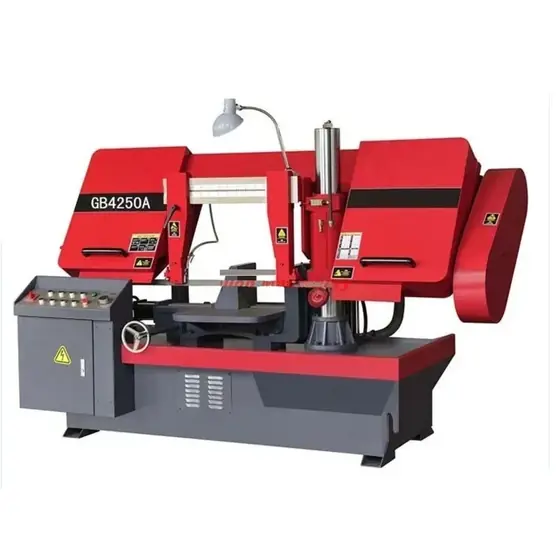
G4250 Double Column Horizontal Metal Band Sawing Machine
View Machine →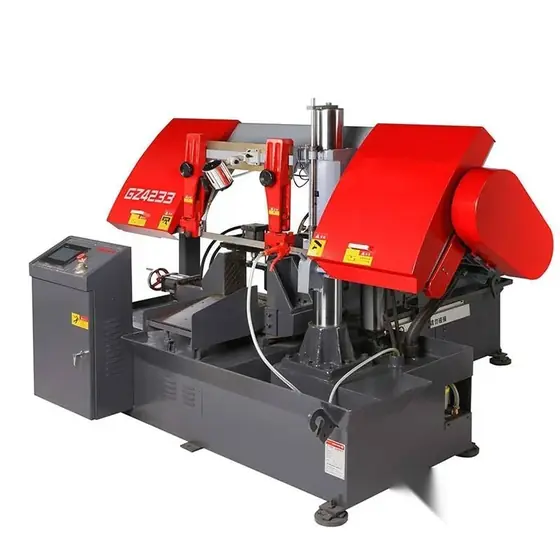
Double Column Horizontal Metal Band Sawing Machine GZ4233
View Machine →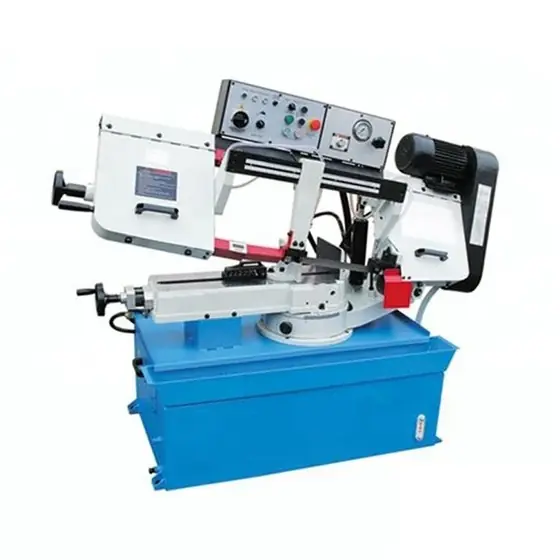
BS1018R 10 Inch Industrial Hydraulic Metal Band Saw
View Machine →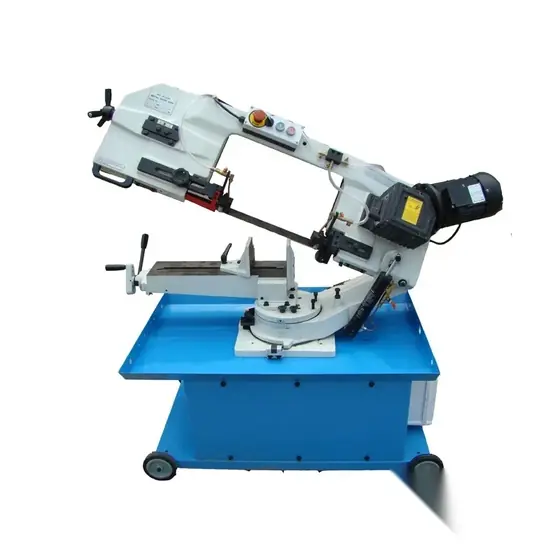
Metal Cutting Band Saw BS912B/GR/BS1018B
View Machine →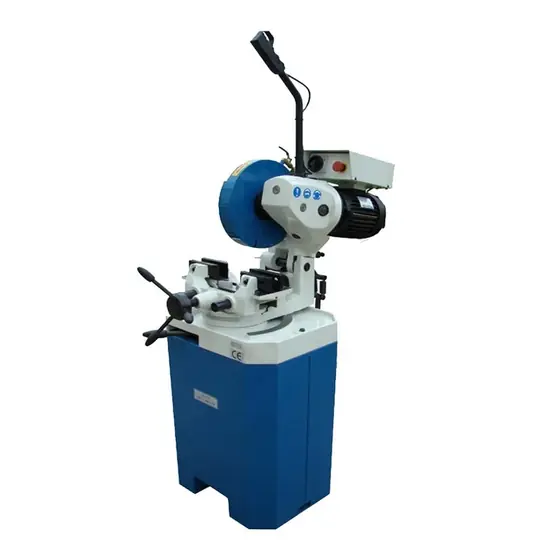
CS-315 Cold Cutting Saw
View Machine →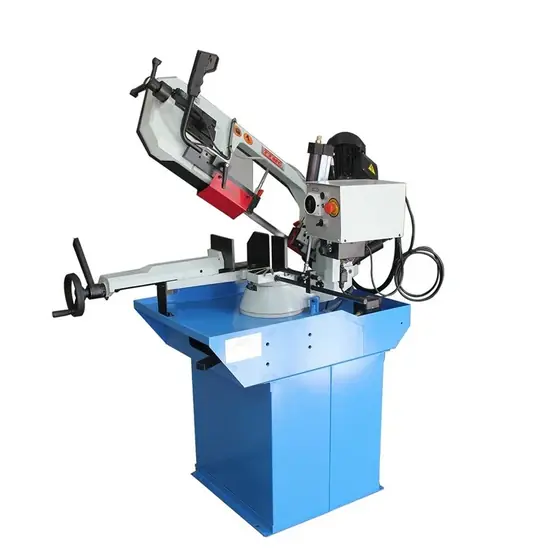
S-280G Pipe Cutting Saw Machine
View Machine →Related Categories
Questions on This Topic
Band saw or circular cold saw
A band saw handles larger sections and a wider range of shapes with lower blade cost per cut. A circular cold saw gives a cleaner, more burr-free cut in smaller sections and is often preferred where the cut face goes straight to welding or assembly. Many shops keep both for different section ranges.
Why are my cuts not square
The common causes are a worn or badly set blade guide, insufficient blade tension, a vice that is not holding the section square, a tooth pitch wrong for the wall thickness, or too much down feed. Check guides, tension and vice alignment before assuming the machine is at fault.
How do I get longer blade life
Match band speed to the material, break in new blades at reduced feed, use the correct tooth pitch for the section, and keep coolant flowing and clean at the guides. Most blades in general fabrication fail early from wrong speed or packed gullets rather than from normal wear.
Do I need a semi-automatic machine
It depends on repetition. If most work is repeat batches to the same length, an automatic cut cycle frees the operator for other work and pays back quickly. For varied one-off cutting, setup dominates and a manual machine is usually the better value.
What floor space should I allow
Plan for the full length of your longest bar on the infeed side and enough space on the outfeed for the cut piece, plus clear standing room at the controls. This is normally several times the machine footprint, so draw the layout before ordering conveyors.
Can one saw cover both steel and aluminium
Yes, provided it has a suitable band speed range and you change blades appropriately, since aluminium wants a higher surface speed and a different tooth form from steel. Tell XAIMC the proportion of each material you cut so the drive and speed range can be considered.
Apply This to Your Own Workshop
Send us your parts, your volumes and your site conditions and we will answer for your case rather than the general one.