
Cylinder Boring vs Honing - What Each Operation Does
Boring removes metal to bring a worn cylinder back to a round straight bore at a new oversize, while honing produces the final diameter, geometry and crosshatch surface that the piston rings need to seat. This guide is for engine rebuilders and workshop buyers deciding which machines their cylinder line actually requires.
Why a Worn Cylinder Needs Two Operations
A cylinder in service does not wear evenly. It wears most near the top of ring travel where side load and temperature are highest, less further down, and it wears into an oval shape across the thrust faces. The result is a bore that is neither round nor straight, with a ridge at the top where the top ring stops. Rings cannot follow that shape, so the engine loses compression and burns oil.
Correcting it takes two different kinds of cutting. The first removes the damaged material and re-establishes a bore that is round, straight and square to the crankshaft axis. The second brings that bore to the exact finished diameter and puts the right surface texture on the wall. Boring does the first job with a single point tool; honing does the second with abrasive stones. They are not alternatives to each other, and a shop that owns only one of them is doing half the process.
What Boring Does
A cylinder boring machine turns a single point tool on a rigid spindle and feeds it down the bore, cutting a helical path. Because the spindle defines the axis, the bore it produces is as straight and as square as the machine setup is. This is why boring machines are aligned to the block deck or the crankshaft main bores before cutting: the new bore must be perpendicular to the crank centreline, or the piston will rock and the rings will wear unevenly from the first hour of running.
Boring removes the ridge, the taper and the ovality in one pass or a small number of passes, and it takes the cylinder out to the next oversize so that an oversize piston can be fitted. A single point tool is efficient at removing stock and leaves a bore that is geometrically correct, but the surface it leaves is comparatively rough and carries torn metal from the cut.
That surface is deliberately left undersize. Boring is normally taken to within a small amount of the final diameter so that honing has material to work with. Boring straight to finished size would leave the wall with a turned finish that rings cannot bed into.
- Removes ridge, taper and ovality from a worn bore
- Establishes a straight bore square to the crankshaft axis
- Opens the cylinder to a new oversize for oversize pistons
- Leaves stock for the honing operation to remove
What Honing Does
A honing machine expands abrasive stones against the cylinder wall and strokes the honing head up and down while it rotates. Because the stones contact a large area of the wall rather than a single point, honing averages out small errors instead of following them, and it finishes the bore to a controlled diameter measured against the actual piston.
The second job of honing is surface texture. The combination of rotation and stroking cuts a crosshatch pattern of intersecting grooves in the wall. Those grooves hold oil so the rings are lubricated through the stroke, and the plateaus between them carry the ring load. Too coarse a finish wears rings quickly and passes oil; too smooth a finish gives the rings nothing to bed into and can glaze. Stone grit, stroking speed and the number of passes are what the operator controls to land in the right window for the ring type being fitted.
Modern practice for many ring sets is a plateau finish, where a coarser stone cuts the grooves and a finer stone or brush knocks the peaks off, giving a bearing surface that is ready to run without a long break-in.
- Brings the bore to final diameter matched to the piston
- Corrects small roundness and straightness errors left by boring
- Cuts the crosshatch that retains oil and beds the rings
- Allows a plateau finish to shorten ring break-in
Where the Two Operations Meet
The handover between the machines is where most rebuild problems start. Bore too close to the finished size and honing runs out of stock before it has cleaned up the bored surface, leaving torn metal in the wall. Leave too much and honing takes a long time, the stones load up, and the bore can go out of straightness because the head is doing work it was not designed to do.
The practical discipline is to measure rather than to assume. Measure the piston with a micrometer at the gauge point the manufacturer specifies, decide the running clearance for that engine and ring set, set the target bore diameter from those two numbers, and then bore to leave a controlled amount for the hone. Check the bore with a dial bore gauge at several depths and on two axes, not once in the middle.
Temperature matters too. A block that has just been bored is warm, and a bore measured warm will read differently once it cools. Shops that hold tight clearances let the block stabilise before the final honing measurement.
Machine Types for Each Operation
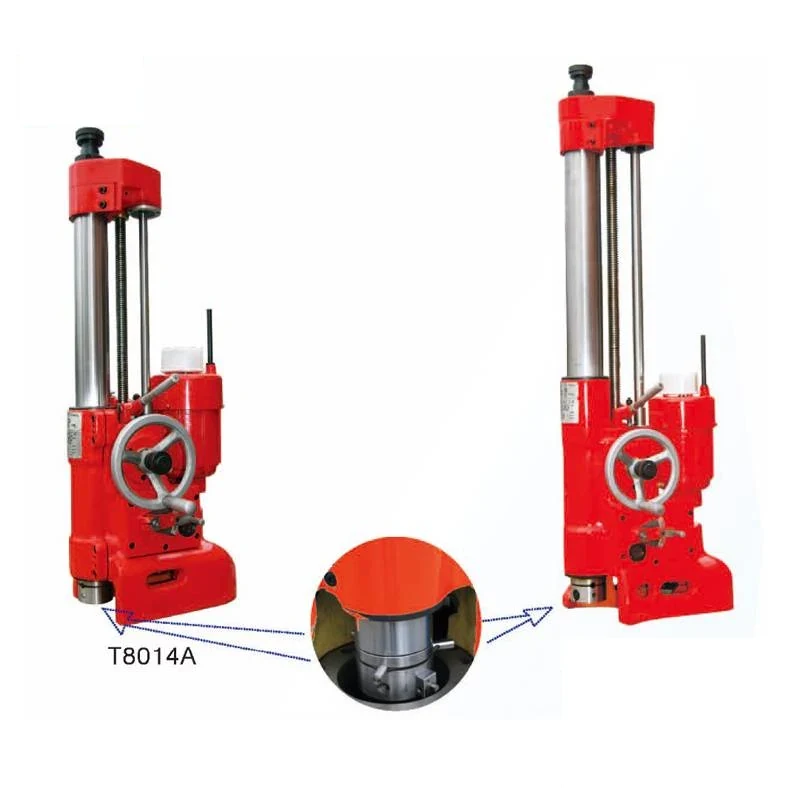
Boring machines come as portable units that clamp to the block deck and as fixed vertical machines with their own column and table. Portable machines are attractive for field work and for large blocks that are awkward to move, but their accuracy depends heavily on how well the deck surface supports them. Fixed vertical boring machines hold the block on a table, are more rigid and are easier to align repeatedly, which is what a production bench needs.
Honing machines range from single-spindle vertical machines with manual stroking to machines with powered stroking and air-floating heads that follow the bore. Air-floating designs let the honing head centre itself in the cylinder rather than being forced by the spindle, which helps where the block cannot be dialled in perfectly. For motorcycle and small engine work, compact combined boring and honing machines cover both operations on one base.
XAIMC supplies both families, including vertical fine boring machines, air-floating fine boring machines, vertical honing machines and combined boring and honing machines for small cylinders, so a shop can build the cylinder line at one supplier and keep tooling and service in one place.
Building a Cylinder Line
A cylinder line is more than a boring machine and a hone. The block has to be cleaned before machining, the deck often has to be resurfaced so the head gasket seals against a flat surface, and main bore alignment should be checked before any cylinder work if the block has been run hot or has had a bearing failure. Line boring and line honing machines exist precisely because a block with a bent or distorted main bore will never hold a straight cylinder relative to the crank.
Measuring equipment is not optional in this line. A dial bore gauge, an outside micrometer and a dial indicator with a magnetic base are used at every stage, and they are what turns the process from guesswork into a repeatable procedure.
- Clean and inspect the block before machining
- Check and correct main bore alignment where needed
- Resurface the deck so the gasket seals flat
- Bore to a controlled undersize, then hone to piston fit
- Verify with a dial bore gauge on two axes at several depths
Common Mistakes and How to Avoid Them
The recurring faults in cylinder work are all avoidable. Boring without aligning to the crank axis produces a bore that is straight but not square, and no amount of honing fixes that. Honing with worn or wrongly graded stones produces the right diameter with the wrong finish, and the engine passes a leak-down test but uses oil. Measuring a bore in only one axis hides ovality that the piston will find within a few hundred hours.
The other frequent error is fitting the ring set before checking what finish it needs. Chrome, cast iron, moly-faced and modern low-tension ring packs do not all want the same surface, and the ring supplier's guidance should set the stone selection, not shop habit.
Choosing What to Buy First
If a shop is buying in stages, the honest sequence is driven by what work is already coming in. A shop that currently subcontracts both operations and wants to bring work in house usually starts with the boring machine, because it is the operation that decides geometry and is the harder one to buy well. The hone follows quickly, since a bored bore that is not honed is not a finished job.
A shop that already has a serviceable boring machine but is unhappy with oil consumption after rebuilds almost always has a honing and measurement problem rather than a boring problem, and should invest there. Send XAIMC the engine sizes, cylinder diameters and monthly volume you handle, and the machine pairing can be proposed against that workload.
Related Machines From XAIMC
Cylinder Boring Machine T8014A/T8016A
View Machine →
Cylinder Vertical Air-Floating Fine Boring Machine TB8016
View Machine →
Vertical Cylinder Honing Machine 3M9817
View Machine →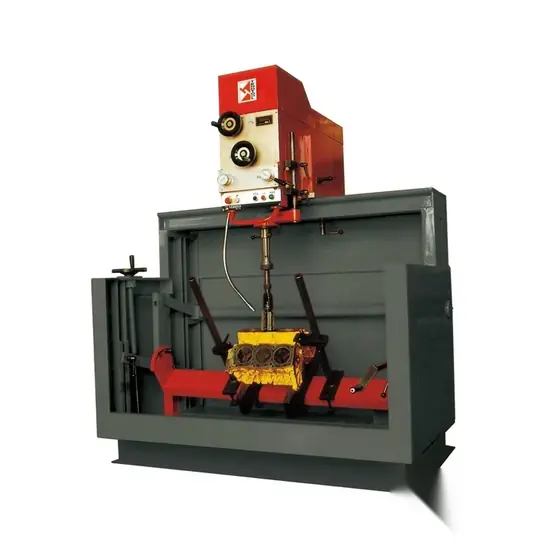
Vertical Air-Floating Cylinder Honing Machine THM170
View Machine →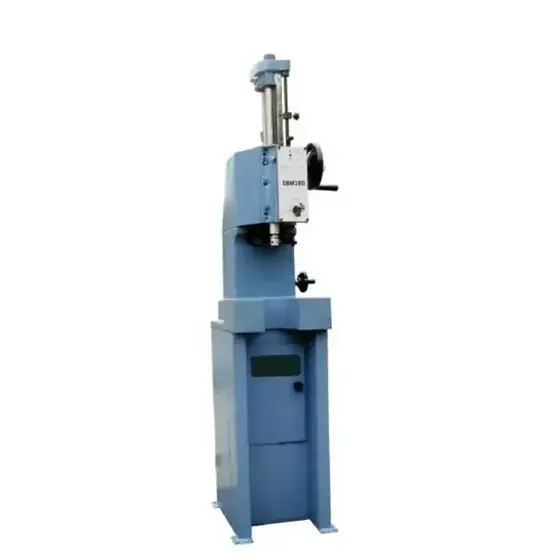
Boring & Honing Machine for Motorcycle Cylinder SBM100
View Machine →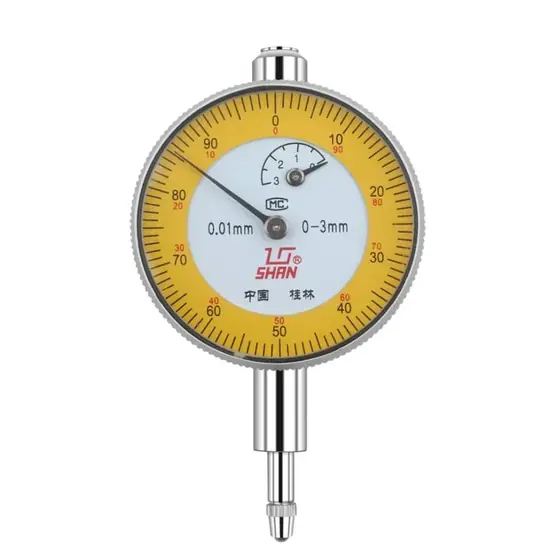
Dial Bore Gauge
View Machine →Related Categories
Questions on This Topic
Can I skip boring and just hone a worn cylinder
Only where wear is very light and the bore is still round and straight, in which case a light hone to deglaze the wall and fit new rings can be acceptable. Where there is a ridge, measurable taper or ovality, honing alone will follow the existing shape rather than correct it.
Can I bore straight to the final size and skip honing
No. A bored surface carries torn metal from the single point cut and has no crosshatch, so the rings have nothing to bed into and the engine will pass oil. Boring is taken to a controlled undersize precisely so that honing can produce the final diameter and finish.
How much stock should be left for honing
It depends on the block material, the bore size and the hone you are using, so follow the ring and piston supplier's guidance and your own machine practice rather than a fixed figure. The principle is to leave enough for the hone to clean up the bored surface completely without stroking for so long that geometry suffers.
What is the crosshatch angle for
The intersecting grooves retain oil for ring lubrication while the plateaus between them carry the ring load. Stroking speed relative to rotation sets the angle, and the correct target depends on the ring set being fitted, so take the ring supplier's recommendation.
Do I need a separate machine for main bore work
If the block has been run hot or has suffered a bearing failure, the main bore alignment should be checked and corrected before cylinder work. Line boring and line honing machines are built for that job, and XAIMC supplies both.
What measuring equipment does a cylinder line need
A dial bore gauge, an outside micrometer for the pistons, and a dial indicator with a magnetic base for setup and runout checks. These are what make the boring and honing settings repeatable rather than judged by feel.
Apply This to Your Own Workshop
Send us your parts, your volumes and your site conditions and we will answer for your case rather than the general one.