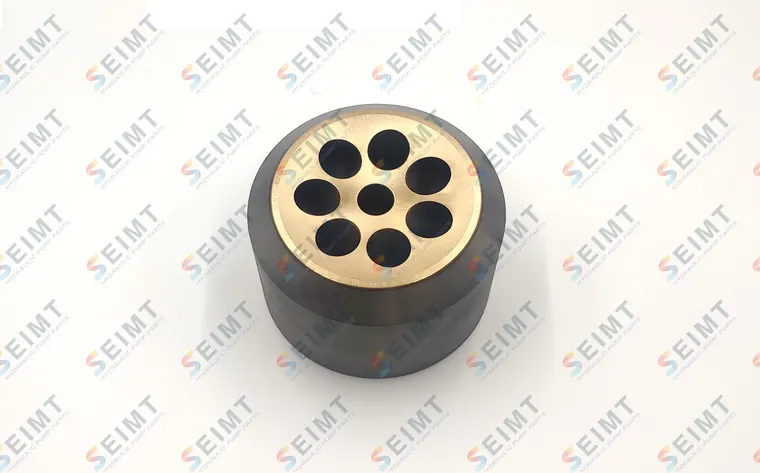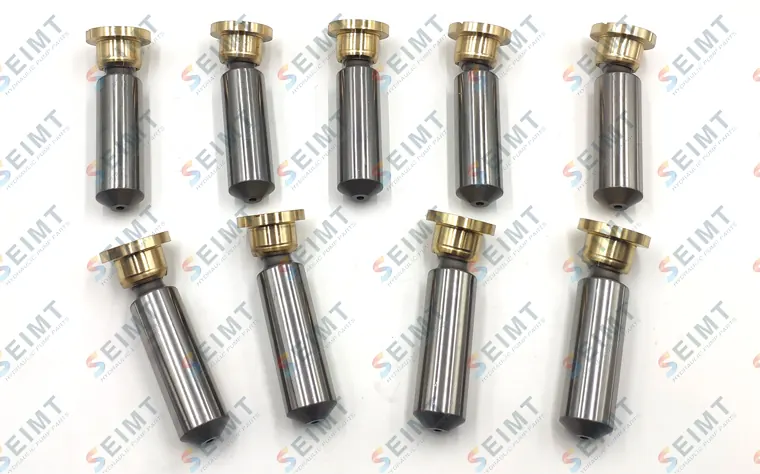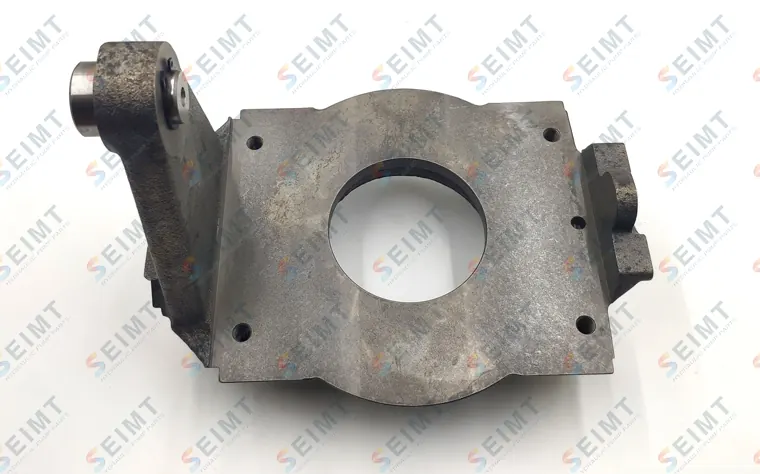
Cylinder Blocks
Case hardening steel body with a sintered bronze running face. The bronze is bonded to the steel, then the face is machined after sintering and lapped flat. A face that is machined before sintering will not stay flat, and a bond that is not properly formed will lift under pressure.
Pistons and Shoes
Case hardening steel pistons, carburised and hardened, with a bronze shoe face carrying a hydrostatic balance pocket. The shoe is swaged to the piston and the clearance is checked on every piece, because one loose shoe destroys a whole group.
Valve Plates
Bearing steel or bronze faced steel depending on the frame. The face is ground after hardening and then lapped, because a hard face that is not flat wears the block it runs against.
Vanes Rotors and Cam Rings
Vanes in high speed tool steel, rotors in case hardening steel with the slots ground after heat treatment, cam rings in bearing quality steel through hardened and profile ground. Grinding the slots after hardening is what keeps the vanes moving freely under load.
Drive Shafts
Alloy steel, carburised and hardened on the spline and bearing seats, then ground on centres. Grinding after heat treatment removes the distortion that heat treatment always introduces.
Seals
Nitrile as standard. Fluorocarbon for hot oil or fire resistant fluids, polyurethane where the duty calls for it. Tell us the fluid and the temperature range and we will fit the right material rather than the default one.
Why the Order of Operations Matters
Hardening moves metal. Any critical face that is finished before heat treatment will not be within tolerance afterwards. That is why the sequence is machine, harden, then grind and lap, not the other way round.