Process Guide

How Hydraulic Pump Parts Are Machined and Finished

The sequence matters as much as the equipment. Most of what separates a part that lasts from one that does not happens after the machining is finished.

Material Preparation

Bar and forging stock arrives with a mill certificate. The grade is checked against the drawing before anything is cut, because a substitution found later means scrapping finished parts.

Turning and Milling

Blanks are turned and milled on CNC machines to the drawing with stock left on every face that will be ground later. How much stock to leave is a judgement based on how much the part will move in the furnace.

Heat Treatment

Carburising, quenching and tempering for case hardened parts, nitriding where the drawing calls for it. Hardness is measured on every batch after treatment and recorded on the batch card.

Grinding

Bores, spline seats, bearing seats and running faces are ground after heat treatment. This is where the distortion introduced by the furnace is taken out and the part reaches final size.

Lapping and Superfinishing

Valve plates, block faces and shoe faces are lapped. These are the pairs that have to seal against each other under full system pressure, and a ground finish is not good enough for that.

Inspection

Dimensions, hardness and surface finish are checked against the drawing on a sampling plan, with critical features measured on every piece.

Assembly and Matching

Rotary groups are assembled as matched sets. Vane cartridges are built and matched. Parts are not mixed between sets after matching.

Bench Test and Packing

Complete pumps are run in and tested for volumetric efficiency, external leakage and sound level. Everything is then oiled, vacuum sealed and boxed, and photographed before dispatch.
Related Products

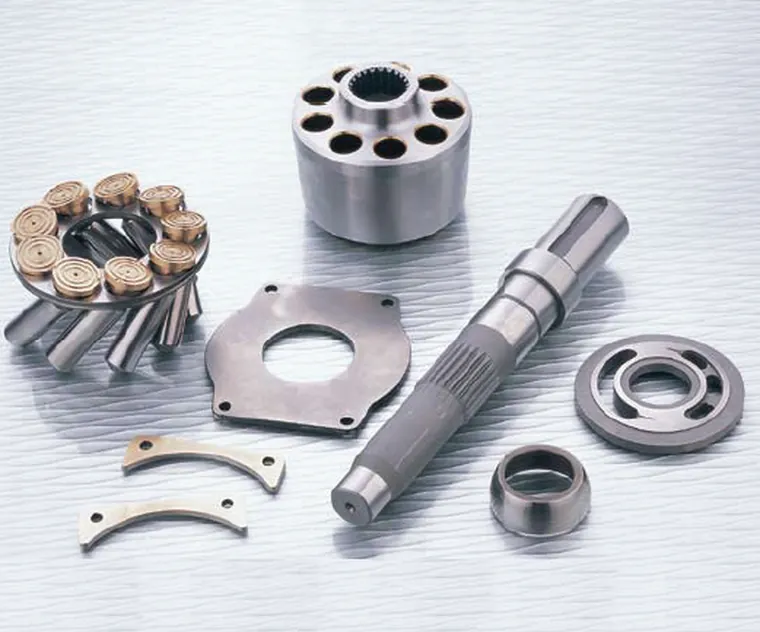
  • A4VSO Series Rotary Groups manufactured by SEIMT Hydraulics

    A4VSO Series Rotary Groups

    A4VSO and A4V rotary groups and spare parts in sizes 28 to 500, supplied as matched sets with cylinder block pistons valve plate and swash plate.

    View Series and Sizes
  • Cylinder Blocks manufactured by SEIMT Hydraulics

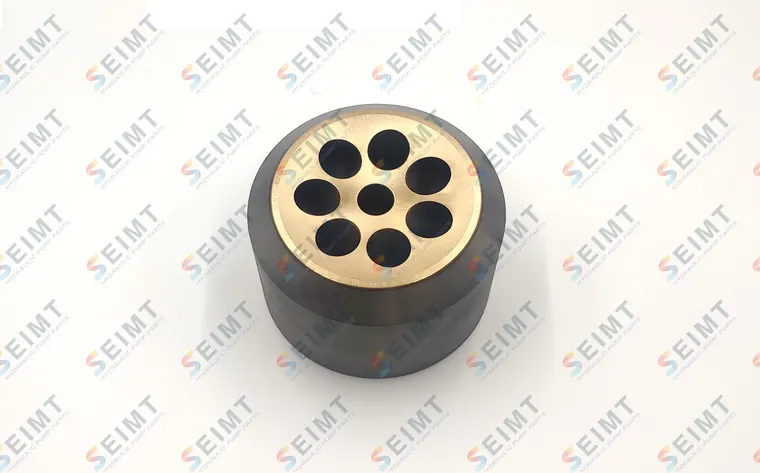
    Cylinder Blocks

    Cylinder blocks for axial and bent axis piston pumps with sintered bronze running faces bonded and machined after sintering then lapped flat.

    View Series and Sizes
  • Valve Plates and Swash Plates manufactured by SEIMT Hydraulics

    Valve Plates and Swash Plates

    Valve plates swash plates cradles retainer plates and ball guides for axial and bent axis piston pumps lapped and ground to the original drawing.

    View Series and Sizes

Related Project Cases

  • Excavator Travel Motor Rebuild Programme in Turkey

    Read the Case
  • Stocking Cartridge Kit Programme for a German Distributor

    Read the Case
  • Marine Winch Pump Refit for a Canadian Repair Yard

    Read the Case

Related Industry Applications

More Guides

Frequently Asked Questions

Why grind after heat treatment rather than before?
Because heat treatment moves the metal. A face ground before hardening will not be within tolerance afterwards.
What is the difference between grinding and lapping?
Grinding brings a part to size. Lapping makes two faces flat enough to seal against each other.
Are all parts inspected or only samples?
Critical features are measured on every piece. Other features are checked on a sampling plan.

Send Us the Model Code and We Will Quote

Tell us the model code stamped on the pump, the quantity and your delivery port. A quotation with lead time usually comes back within one working day.

WhatsApp Email