No Pressure At All
Check the relief valve setting and the control before condemning the pump. A pump that makes no pressure at all is more often a valve stuck open than a worn rotary group.
Low Pressure Under Load
Measure delivered flow at working pressure and compare it with the original figure. A worn pump loses flow as pressure rises, which is exactly what a flow meter with a loading valve will show you.
High Case Drain Flow
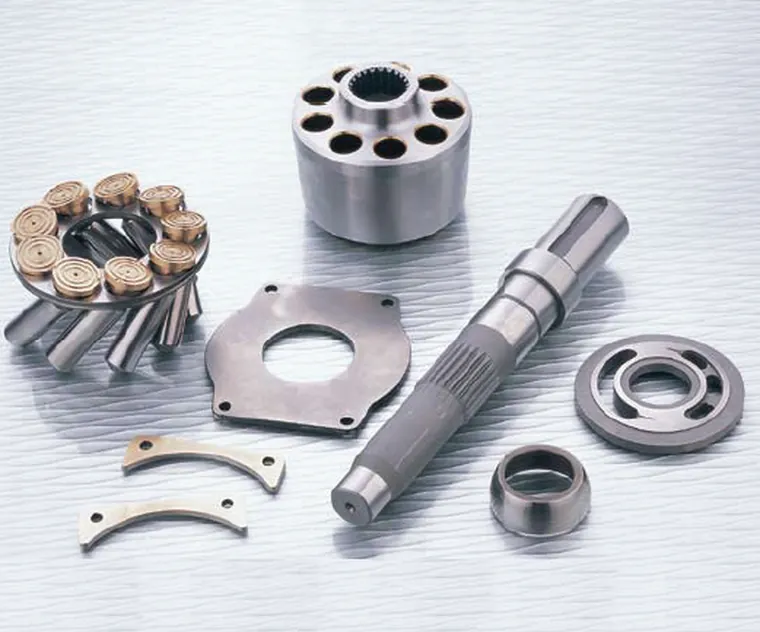
This is the most useful single measurement on a piston pump. Internal leakage past worn shoes and block faces has to go somewhere and it goes into the case. Rising case drain flow with rising temperature is a strong indication of rotary group wear.
Noise
Air in the suction line, a blocked strainer, a restricted suction hose or a cavitating pump all sound similar. Check the suction side thoroughly before opening the pump, because cavitation damage will keep destroying new parts if the cause is left.
Slow Machine Movement
Could be pump wear, a leaking cylinder, a worn motor or a control problem. Isolate each part of the circuit before deciding. A cylinder passing internally will look exactly like a worn pump from the operator seat.
Overheating
Oil turns hydraulic energy into heat wherever it passes through a restriction or a worn clearance. Check cooler function and relief valve settings before assuming the pump is at fault.
Repeat Failure After a Rebuild
Almost always contamination or a suction restriction that was never fixed. If a rebuild fails quickly, look at fluid cleanliness, filter condition and the suction line before ordering another set of parts.