
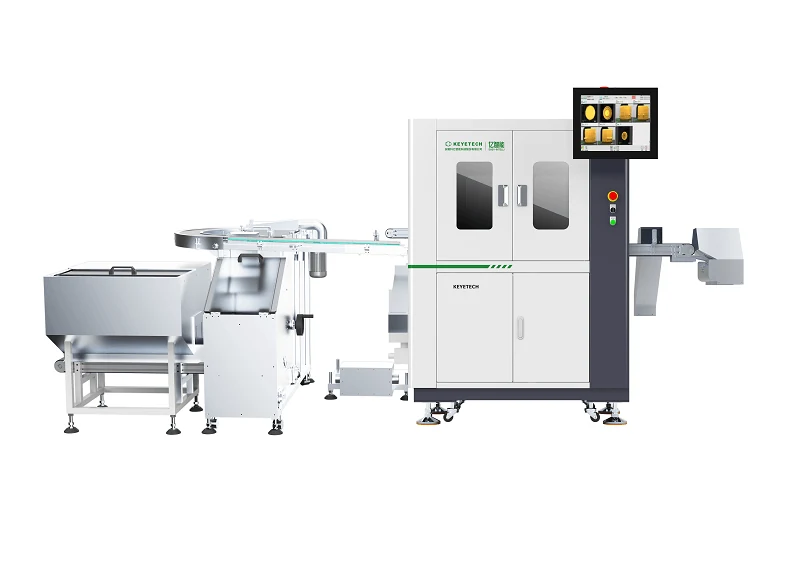
Cap Visual Inspection
Reliable Cap Visual Inspection System with 6-Camera High-Speed AI Full-Area Defect Detection
Inspection Speed: 300pcs/min~2500pcs/min
View specification →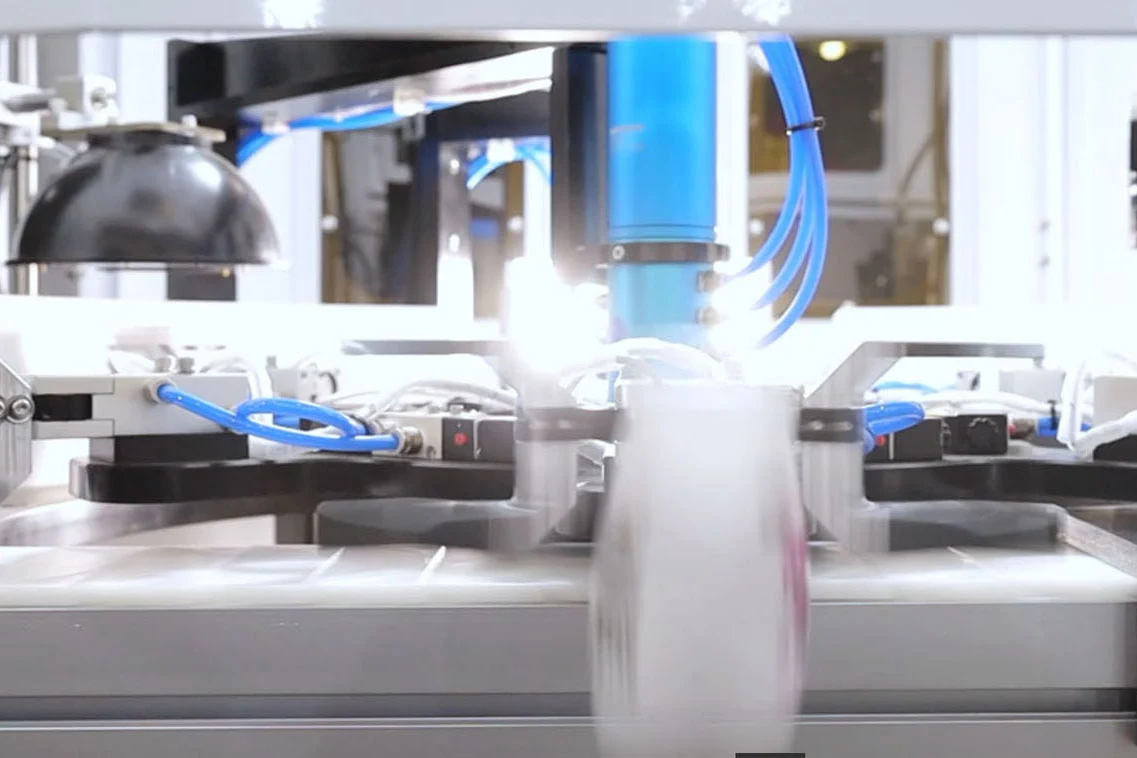
Put the quality gate where the defect is made, so nothing downstream ever sees it.
Inline means the inspection machine is connected to the equipment already producing the part: a cap moulding machine, a blow moulder, an IML cell or a filling line. Parts flow from that machine into the inspection station without a separate handling step, which is why inline needs a material feeder integration rather than a standalone feeder.
The commercial argument for inline is simple. A defect caught at the moulder is a scrapped part. The same defect caught after filling is a scrapped filled unit, and after shipping it is a claim. Inline inspection moves the detection point as far upstream as the process allows.
Integration is designed, not improvised. The self-developed human-computer interaction system can be customised for image display, data transmission and export, and signal linkage with your equipment, so the inspection result can stop a moulder or flag a cavity rather than only firing an air valve.
We map the mechanical handover, the available floor space and the electrical and signal interfaces on the machine you already run.
Parts must arrive at the inspection station stably and in an orderly stream. This is the part that determines whether the speed on the datasheet is achievable on your floor.
Reject valve control, counting, and optional linkage back to the production machine so a repeating defect can raise an alarm rather than just filling a reject bin.
Electrical and software communication logic, light source and camera triggering, and result statistics are verified together before the model is trained on production output.
Inspection Speed: 300pcs/min~2500pcs/min
View specification →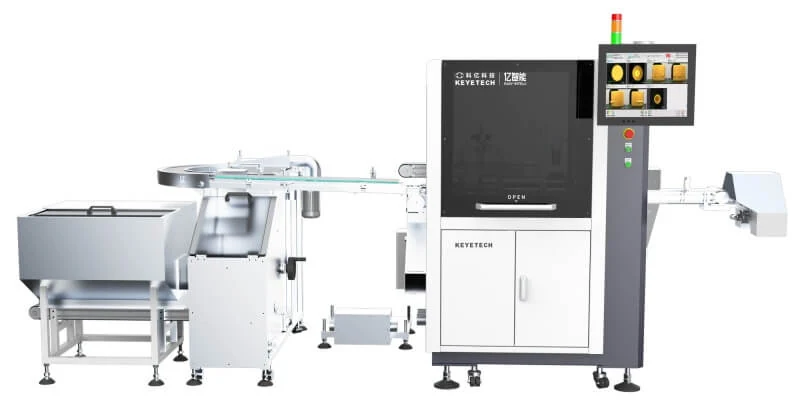
Inspection Speed: 300~2500pcs/min
View specification →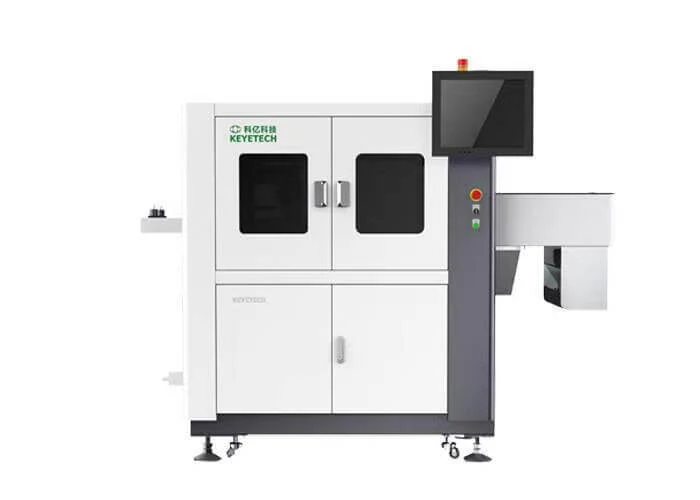
Inspection Speed: 150~300pcs/min
View specification →Inspection Speed: 150~300pcs/min
View specification →Tell us how your line is laid out today and we will describe what integration actually requires.