
Stainless Grades for Fasteners: 304, 316, 410 and the Rest
Which of SUS201, 202, 302, 304, 305, 316, 410 and 430 belongs on your job, and what A2-70 and A4-80 actually specify.
The grades held
SUS201, 202, 302, 304, 305, 316, 410 and 430.
Austenitic: 302, 304, 305, 316
These are the corrosion performers. 304 and 305 cover general exterior work. 316 adds molybdenum, which is what lets it resist pitting in chloride — sea air, pool halls, roads treated with de-icing salt. In the annealed condition they are non-magnetic, which is why a magnetised nut setter will not pick one up.
Martensitic and ferritic: 410 and 430
Both are magnetic. 410 can be hardened, which is why it appears in self drilling constructions where the point has to cut steel — an austenitic grade cannot be made hard enough to do that on its own.
Property classes
A2-70, A2-80, A4-70 and A4-80. A2 is the chromium-nickel group, broadly 304; A4 is the molybdenum-bearing group, broadly 316. The number is the tensile strength class, so A4-80 is a 316-type steel at the higher of the two strength levels.
Two practical warnings
Austenitic stainless galls if it is run down fast and dry — slow the assembly or lubricate the thread. And stainless is more ductile than a hardened carbon screw, so in hardwood or near an edge it will twist off before it splits its way through; pilot it.
Everything on this page describes the specification range Beyond Industry Groups Limited works to. Where a figure is a laboratory test result rather than a service life, it is described as such.
Put it to use
Send the substrate, the exposure and the quantity. We will name the head, point, thread form, material and finish, and quote them.
Ask the factoryOther technical notes
- Self Drilling vs Self Tapping Screws: Which One Your Job Needs
- Drywall Screw Thread Forms: Fine, Coarse and Hi-Low
- Roofing Screw Selection: Sheet, Deck, Point and Washer
- Fastener Finishes and What Salt Spray Hours Really Tell You
- Screw Head Types and Drives: An Eleven by Seven Matrix
- Thread Forms and Point Types: Type-A, BSB, CSB, Hi-Low, TEK#1–#5, Type 17
- Bolt Property Classes: What 8.8, 10.9 and A4-80 Mean
Products this note applies to
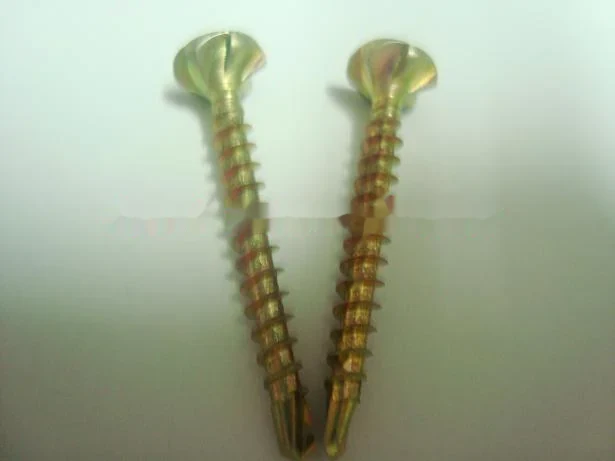
Flat Head Tek Screws
Flat head self-drilling screws.
View specification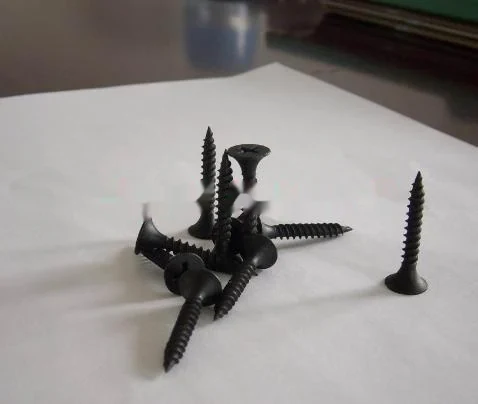
Drywall Screws (BF-110)
Drywall screws for board fixing.
View specification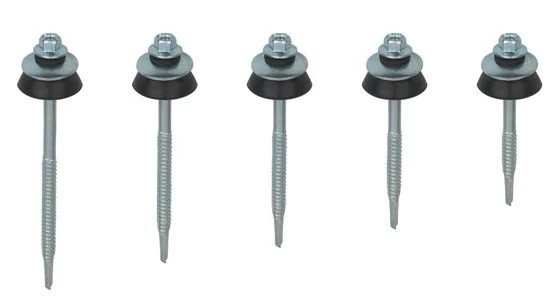
Roofing Screws (BF-140)
Roofing screws for fixing profiled sheet to steel purlin or timber.
View specification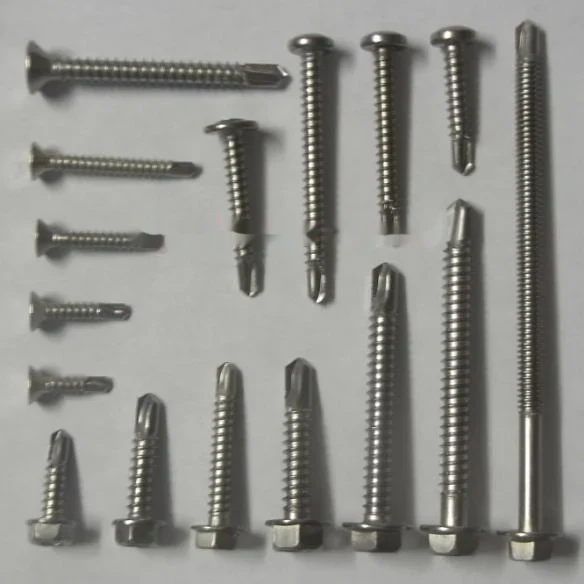
Stainless Steel Tek Screws (BF-155)
Stainless steel self-drilling screws in the standard M1.4–6.3 range.
View specificationSpecification questions are free
We would rather answer three questions now than replace a container of the wrong screw later.