
Materials & Property Classes
What each material group is for, and what the class numbers mean.
Carbon and alloy steel
Mild carbon steel, medium carbon steel and alloy steel, in the grades C1006, C1008, C1018, C1022 and 10B21. Carbon content sets how hard the screw can be made: C1006 and C1008 are the mild grades for low-load fixings, while 10B21 is boron treated and is used where the screw has to be case hardened — which is what a self drilling point needs.
Stainless steel
SUS201, 202, 302, 304, 305, 316, 410 and 430. The austenitic grades — 302, 304, 305, 316 — are the corrosion performers and are non-magnetic in the annealed condition. 410 and 430 are magnetic and 410 can be hardened, which is why it appears in self drilling constructions and why a magnetic nut setter will pick it up when it will not pick up a 304 screw.
Property classes
Carbon and alloy steel: 4.8, 5.8, 6.8, 8.8, 10.9 and 12.9. The first figure is one hundredth of the nominal tensile strength in MPa and the second is ten times the yield-to-tensile ratio. Stainless: A2-70, A2-80, A4-70 and A4-80, where A2 is the chromium-nickel group and A4 the molybdenum-bearing group, and the number is the tensile class.
Brass and aluminium
Both are held for applications where conductivity, weight or appearance matters more than strength.
The envelope
Other capabilities
See it applied
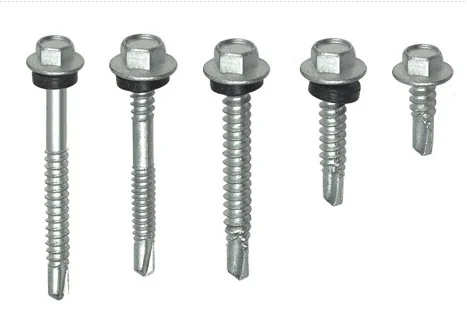
1000SST Tek Screws
1000SST self-drilling screws.
View specification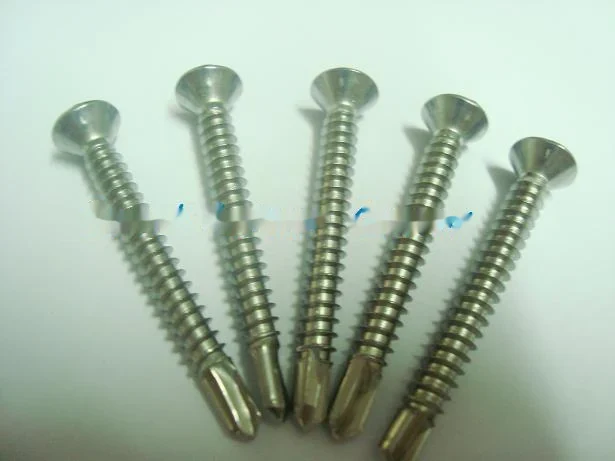
Stainless Steel Flat Head Tek Screws
Stainless steel flat head Phillips self-drilling screws, built as the corrosion answer for steel construction, shipbuilding and ocea
View specification
Thread Rod
Threaded rod in carbon steel and stainless A2 and A4, M6 to M30, in lengths from 50mm to 3000mm.
View specification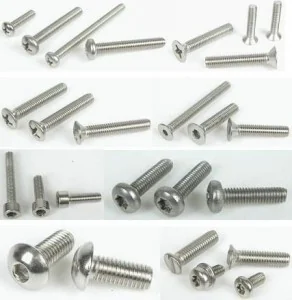
Machine Screws (BF-146)
Machine screws, M1.4–M6 (0#–14#), 6mm to 300mm long, in carbon steel or stainless A2, A4 and 410, to IFI, DIN, JIS, GB or drawing.
View specificationBring us the hard one
The enquiries worth sending are the ones where the catalogue does not obviously answer the question. Send the drawing, the sample or the failure you are trying to design out.