
Fastener Finishes and What Salt Spray Hours Really Tell You
Fifteen finishes, three different blacks, and why a salt spray figure is a ranking tool rather than a service life.
The fifteen
Plain, zinc plated, colour zinc, blue zinc, white zinc, black zinc, black phosphate, grey phosphate, black oxide, dacrotized, Ruspert, Xylan, nickel, bronze and spray paint.
Salt spray is comparative, not predictive
Across this catalogue, salt spray test time runs from 24 to 2000 hours depending on material and finish, and reaches up to 3000 hours on the stainless self drilling line. Those are laboratory hours in a cabinet. They rank finishes against one another reliably; they do not convert into years on a building, and anyone who tells you they do is selling something.
The three blacks
Black oxide is a conversion coating with an oil film — essentially appearance. Black phosphate holds oil and paint and adds modest protection. Black zinc is a real zinc coat under a black passivate and is the only one of the three with meaningful corrosion life. They are indistinguishable in a photograph.
The zinc passivates
Colour (yellow), blue, white and black zinc are all zinc coats under different passivate layers. The passivate changes both appearance and corrosion life; yellow passivate has traditionally been the most protective of the common ones.
When to go past zinc
Dacromet, Ruspert and Xylan are the systems to reach for when the fixing has to stay outdoors for years and stainless is more than the job needs. They are where the upper end of the salt spray range comes from.
Thickness is part of the specification
A finish name on its own is half a specification. On the black bugle head line the plating can be laid down at 15 microns, which is thick enough to carry the anti-corrosion duty rather than only colouring the screw.
Everything on this page describes the specification range Beyond Industry Groups Limited works to. Where a figure is a laboratory test result rather than a service life, it is described as such.
Put it to use
Send the substrate, the exposure and the quantity. We will name the head, point, thread form, material and finish, and quote them.
Ask the factoryOther technical notes
- Self Drilling vs Self Tapping Screws: Which One Your Job Needs
- Drywall Screw Thread Forms: Fine, Coarse and Hi-Low
- Roofing Screw Selection: Sheet, Deck, Point and Washer
- Stainless Grades for Fasteners: 304, 316, 410 and the Rest
- Screw Head Types and Drives: An Eleven by Seven Matrix
- Thread Forms and Point Types: Type-A, BSB, CSB, Hi-Low, TEK#1–#5, Type 17
- Bolt Property Classes: What 8.8, 10.9 and A4-80 Mean
Products this note applies to
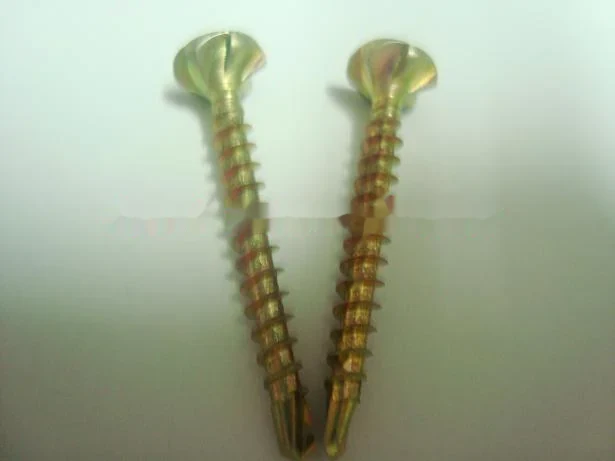
Flat Head Tek Screws
Flat head self-drilling screws.
View specification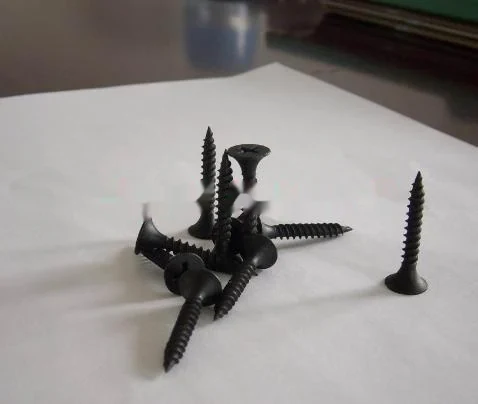
Drywall Screws (BF-110)
Drywall screws for board fixing.
View specification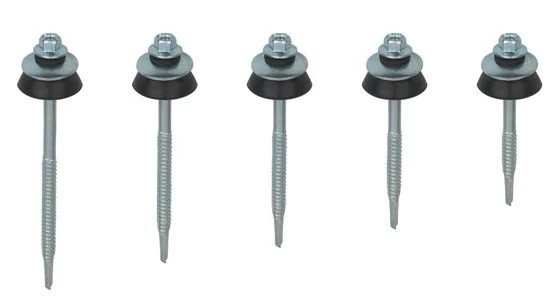
Roofing Screws (BF-140)
Roofing screws for fixing profiled sheet to steel purlin or timber.
View specification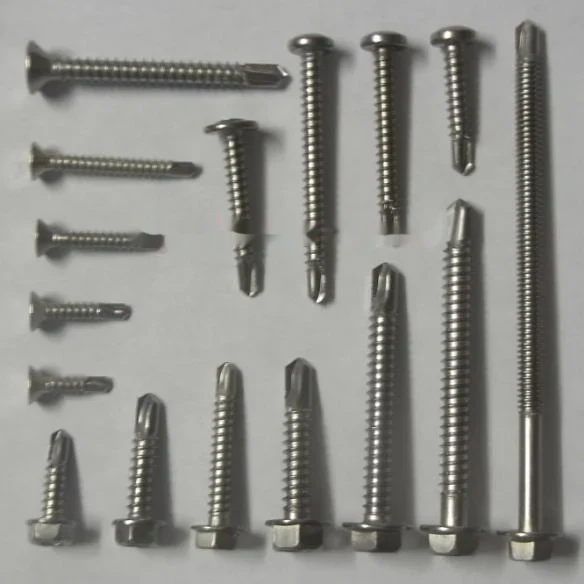
Stainless Steel Tek Screws (BF-155)
Stainless steel self-drilling screws in the standard M1.4–6.3 range.
View specificationSpecification questions are free
We would rather answer three questions now than replace a container of the wrong screw later.