
MTR3CCD C-mount USB3.0 CCD Digital Video Microscope Camera
The MTR3CCD is a C-mount digital video microscope camera with USB3.0 interface, designed for integration into industrial and laboratory microscopes.
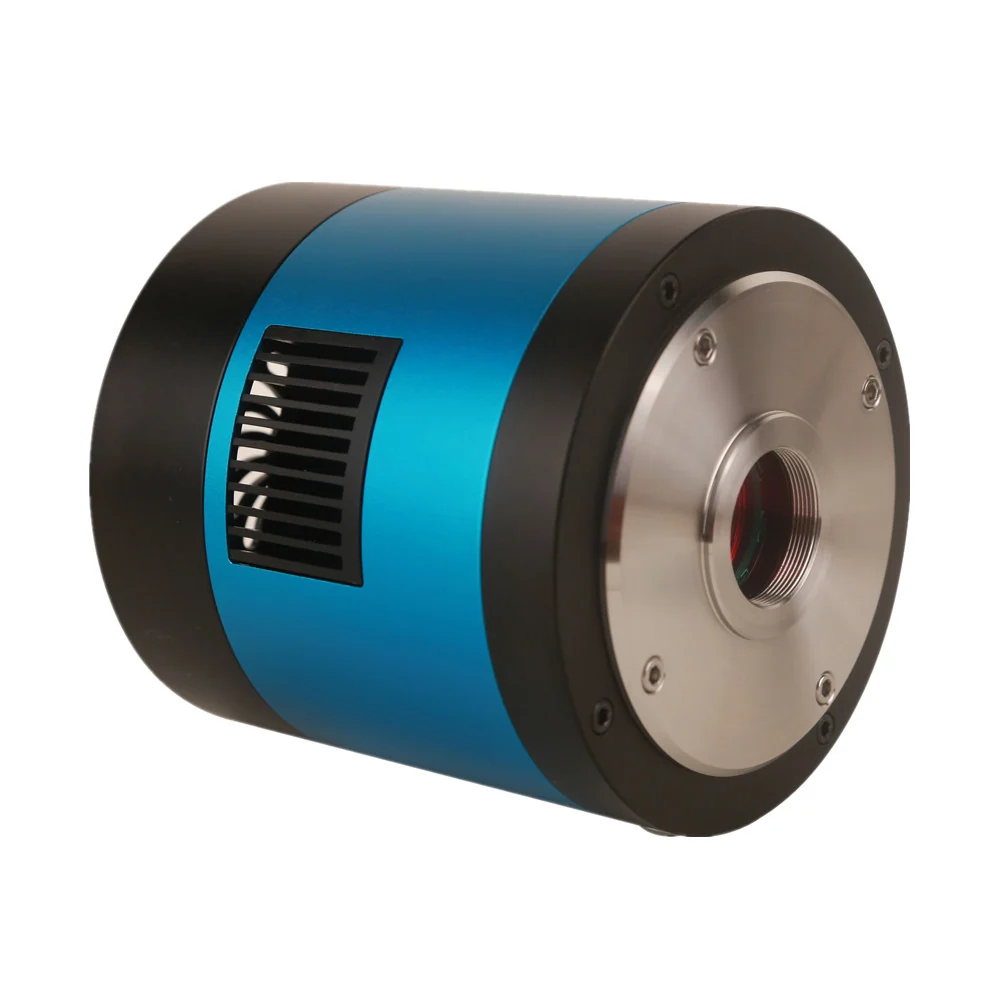
Product Overview
The MTR3CCD is a C-mount digital video microscope camera with USB3.0 interface, designed for integration into industrial and laboratory microscopes. It supports multiple sensor options from 1.4 megapixels to 12 megapixels, with monochrome and color variants. The camera delivers high sensitivity and low dark signal, enabling clear imaging under low-light conditions. It operates with a two-stage TE-cooling system that reduces sensor temperature by up to 45°C below ambient, minimizing thermal noise during long exposures.
- InterfaceUSB3.0
- Sensor TypeCCD
- Sensor Size1" (13.15x8.77), 2/3" (8.81x6.63), 2/3" (8.88x6.70)
- Pixel Size3.1x3.1μm, 3.69x3.69μm, 4.54x4.54μm, 6.45x6.45μm
- Resolution1.4M, 2.8M, 6.0M, 9.0M, 12M
- Sensitivity420mv to 2000mv with 1/30s exposure
Key Benefits
- USB3.0 interface enables 4.8Gbit/sec data transfer for high-speed video capture and real-time imaging
- Two-stage TE-cooling system reduces sensor temperature by up to 45°C below ambient, lowering dark signal and improving image quality
- Available in 1.4M to 12M pixel sensors with 3.1μm to 6.45μm pixel sizes, covering a range of resolution and sensitivity needs
- Monochrome and color variants available, with spectral response 380-650nm (with IR-cut filter)
- Supports 1x1 and 2x2 binning modes for faster frame rates or improved signal-to-noise ratio
- Exposure time adjustable from 0.05ms to 1 hour, suitable for high-speed motion or long-duration imaging
- SDKs available for Windows, Linux, macOS, and Android, enabling custom integration into inspection software
Application Scenarios
- High-resolution inspection of PCB solder joints with long exposure in low-light environments
- Documenting microstructures in metallurgical samples using monochrome mode for maximum sensitivity
- Capturing fast-moving processes in semiconductor manufacturing with sub-millisecond exposure control
- Integration into a microscope system for automated quality inspection with custom software via SDK
- Teaching labs requiring stable, low-noise imaging for student observation and recording
Who It Is For
- Electronics manufacturers performing PCB and SMD inspection with automated or manual systems
- Metallurgy and materials science labs requiring high-sensitivity imaging of microstructures
- Research labs conducting long-exposure or low-light microscopy with minimal noise
- University teaching labs needing stable, low-noise cameras for student demonstrations
- Industrial inspection lines requiring real-time video capture with custom software integration
Problems It Solves
- A standard USB2.0 camera limits frame rate and resolution in high-speed or high-resolution applications
- Uncooled sensors generate thermal noise during long exposures, degrading image quality
- Lack of SDK support forces buyers to use generic software with limited control over exposure, ROI, or white balance
- Mismatched sensor size or interface prevents direct integration into existing microscope systems
- No cooling system in entry-level cameras leads to increased dark current and reduced dynamic range
Technical Features
- C-mount interface for direct attachment to microscope bodies and optical systems
- USB3.0 interface at 4.8Gbit/sec for high-speed data transfer and low latency
- Two-stage TE-cooling system reduces sensor temperature by up to 45°C below ambient
- Spectral range 380-650nm with IR-cut filter to prevent infrared contamination in color images
- White balance adjustable via software, with manual temp and tint control for color models
- ROI (Region of Interest) selection allows faster frame rates by reading only a portion of the sensor
- Supports 1x1 and 2x2 binning modes for improved signal-to-noise ratio or higher frame rates
- Exposure time from 0.05ms to 1 hour, suitable for both high-speed and long-duration imaging
- Operating temperature range: -10°C to 50°C; storage temperature: -20°C to 60°C
Specifications
| Interface | USB3.0 |
|---|---|
| Sensor Type | CCD |
| Sensor Size | 1" (13.15x8.77), 2/3" (8.81x6.63), 2/3" (8.88x6.70) |
| Pixel Size | 3.1x3.1μm, 3.69x3.69μm, 4.54x4.54μm, 6.45x6.45μm |
| Resolution | 1.4M, 2.8M, 6.0M, 9.0M, 12M |
| Sensitivity | 420mv to 2000mv with 1/30s exposure |
| Dark Signal | 4mv to 15.2mv with 1/30s exposure |
| Frame Rate | 3.6@4248x2836, 4.4@3388x2712, 7.5@2748x2200, 15@1938x1460, 25@1376x1040 |
| Binning | 1x1, 2x2 |
| Exposure Time | 0.05ms~1h |
| Cooling System | Two-stage TE-cooling, -45°C below body temperature |
| Spectral Range | 380-650nm (with IR-cut filter) |
| White Balance | Auto, Manual Temp Tint Adjustment |
| ROI Support | Yes |
| Color Technique | Ultra-Fine TM Color Engine (color models only) |
| Operating Temperature | 10°C to 50°C |
| SDK Support | Windows, Linux, macOS, Android (Native C/C++, C#, VB.NET, Python, Java, DirectShow, Twain) |
Specifications are taken from the AMADA product data for this item. Confirm critical dimensions with us in writing before ordering.
Customization Options
- Choose between color (C) and monochrome (M) sensor variants for the same model
- Select from five sensor resolutions: 1.4M, 2.8M, 6.0M, 9.0M, 12M
- Specify sensor type (ICX285AQ, ICX674AQ, ICX694AQ, ICX814AQ, ICX834AQ) and variant (C or M)
- Request custom firmware or SDK integration support for specific inspection software
- Order with or without IR-cut filter based on application needs
Comparison With Other Options
| USB2.0 CCD microscope camera | USB3.0 interface provides 4.8Gbit/sec bandwidth, enabling higher frame rates and larger resolution capture than USB2.0's 480Mbit/sec limit |
|---|---|
| Uncooled CCD camera | Two-stage TE-cooling reduces sensor noise by up to 45°C below ambient, improving image quality in long exposures and low-light conditions |
| Camera with no SDK support | MTR3CCD provides native SDKs for Windows, Linux, macOS, and Android, enabling full control over exposure, ROI, white balance, and capture timing |
Use Guide
- Ensure the microscope's C-mount interface matches the camera's C-mount standard (1mm flange focal distance)
- Use the provided USB3.0 cable and connect to a USB3.0 port for full bandwidth and cooling power
- Enable cooling by connecting the camera to a power source with sufficient current; cooling activates automatically
- Adjust exposure time based on lighting conditions: use shorter times for bright samples, longer for low-light or fluorescence
- Use ROI selection to reduce data load and increase frame rate when full sensor resolution is not required
- Use the SDK to set white balance and color correction for consistent results across multiple sessions
More From USB3.0 CCD Microscope Camera
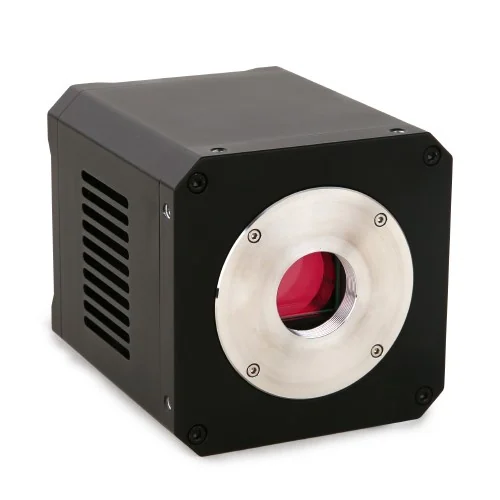
MAX TE-Cooling M52/C-mount USB3.0 CMOS Microscope Camera
View Details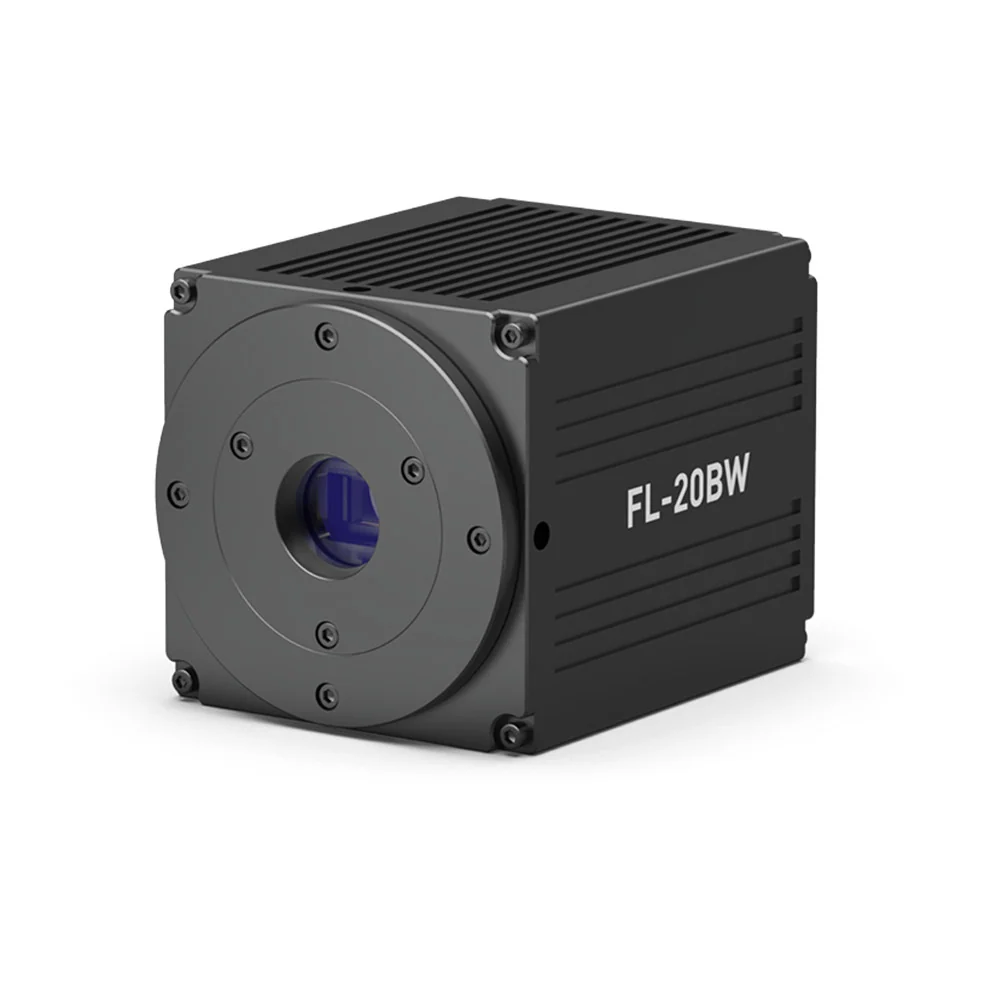
FL-20BW Mono Cooled SONY CMOS Camera for Fluorescence Imaging
View Details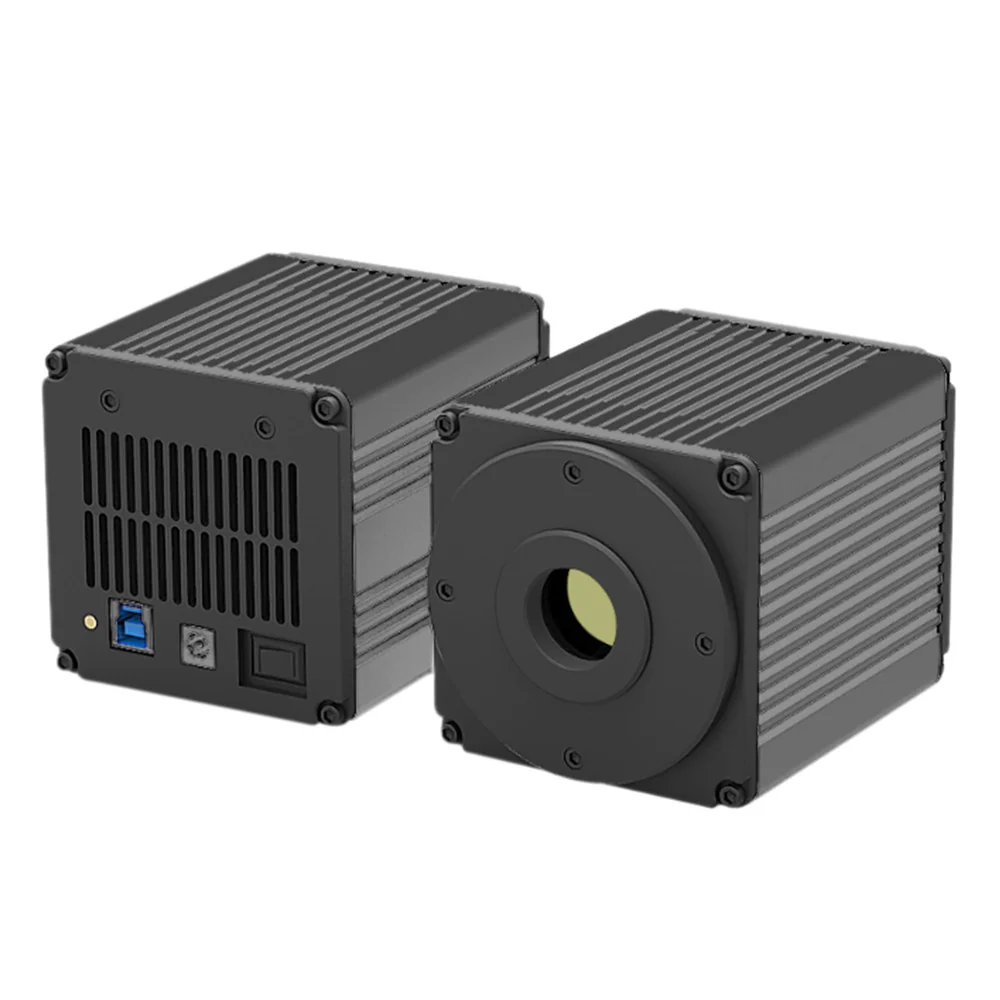
FL-20 Color Cooled SONY CMOS Camera for Fluorescence Imaging
View Details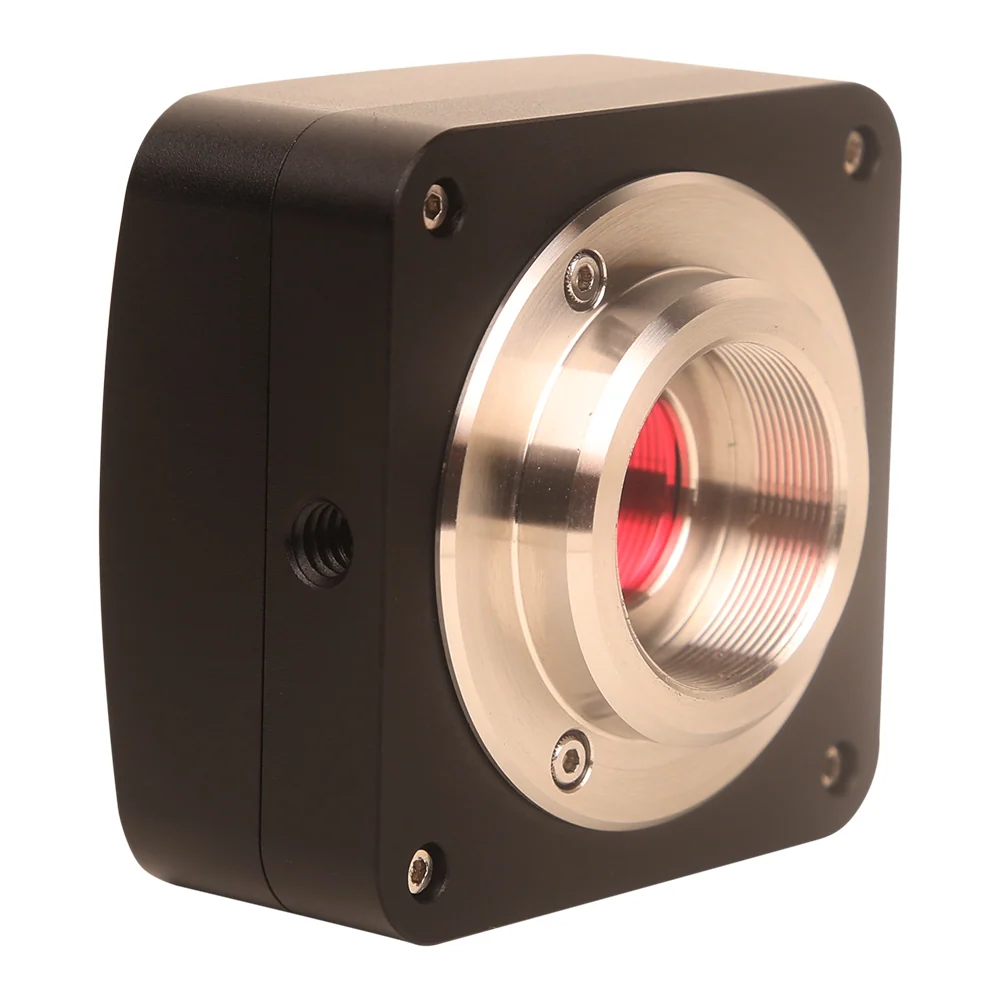
U3CCD C-mount USB3.0 CCD Digital Video Microscope Camera
View Details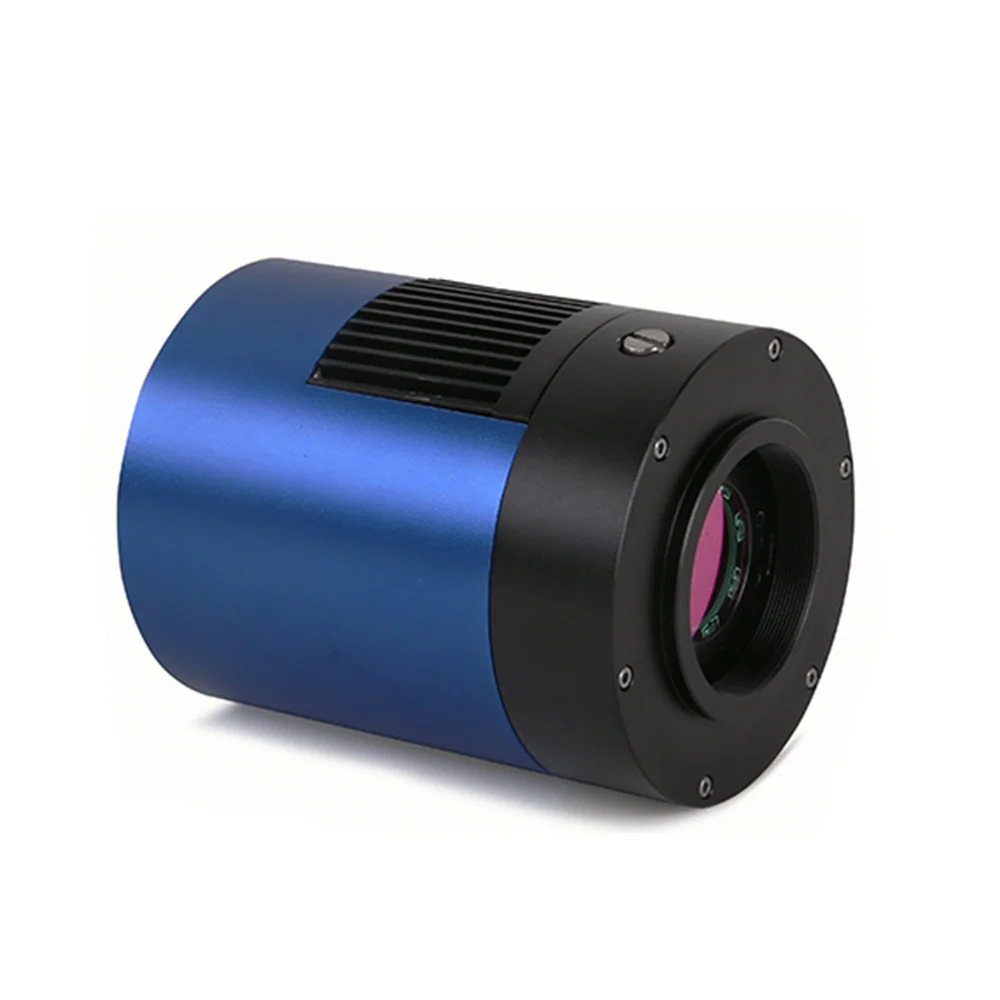
MTR3CMOS TE-Cooling C-mount USB3.0 CMOS Microscope Camera
View DetailsFrequently Asked Questions
What is the maximum frame rate for the 12M sensor?
3.6 frames per second at 4248x2836 resolution with 1x1 binning
Does the camera require external power for cooling?
Yes. The two-stage TE-cooling system requires a stable power supply; connect via USB3.0 or external power if needed
Can I use this camera with a microscope that has a different flange focal distance?
No. The camera is designed for C-mount with 1mm flange focal distance; use an adapter only if the microscope supports it
Is the IR-cut filter removable?
The IR-cut filter is fixed in the optical path; it cannot be removed. It is included to prevent infrared contamination in color images
Which operating systems are supported by the SDK?
Windows, Linux, macOS, and Android. SDKs are available in C/C++, C#, VB.NET, Python, Java, DirectShow, and Twain formats
Can I use binning to increase frame rate?
Yes. 2x2 binning reduces resolution by 4x but increases frame rate and improves signal-to-noise ratio in low-light conditions
Request A Price On The MTR3CCD C-mount USB3.0 CCD Digital Video Microscope Camera
Send quantity, destination and the application. We will confirm the configuration, the price and the lead time.