
XIB400 Inverted Laboratory Biological Microscope for Research
The XIB400 is an inverted biological microscope with a Seidentopf trinocular head, Koehler illumination, and a quintuple nosepiece.
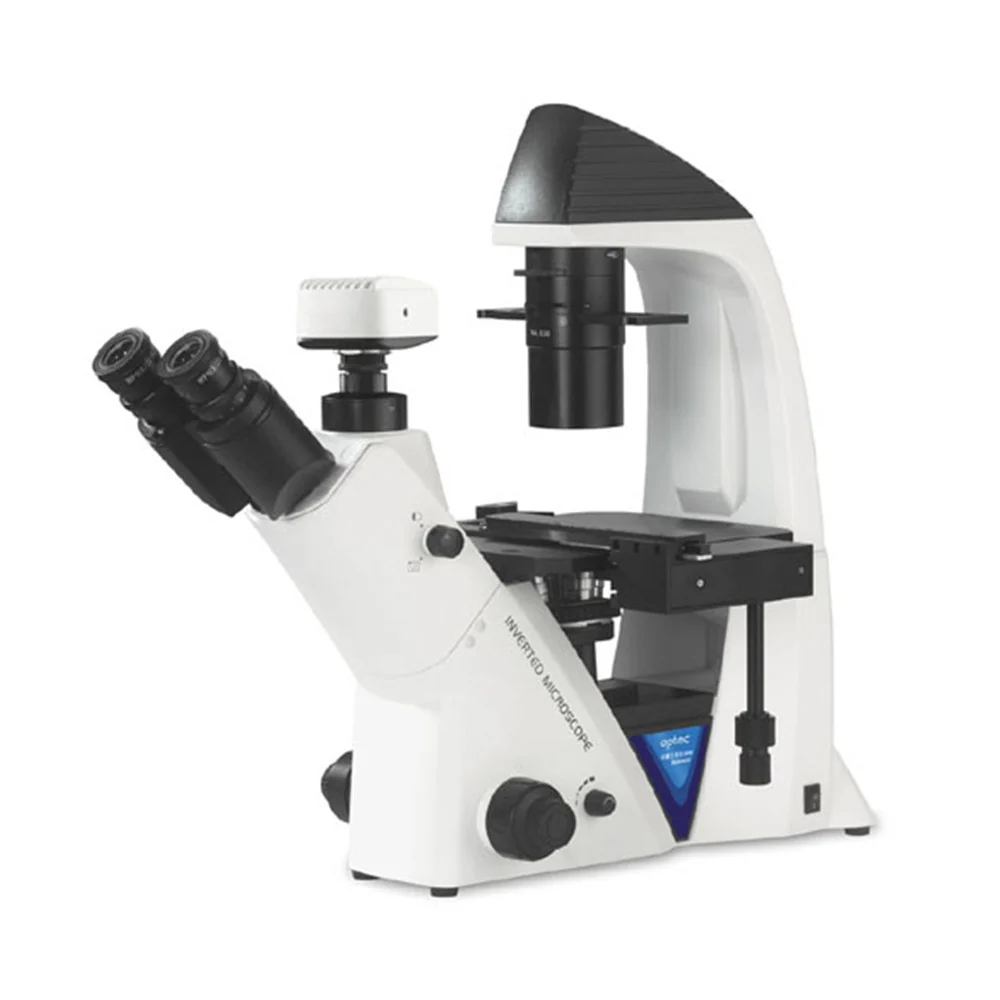
Product Overview
The XIB400 is an inverted biological microscope with a Seidentopf trinocular head, Koehler illumination, and a quintuple nosepiece. It supports infinity plan objectives from 4X to 40X with working distances from 3.4mm to 12.1mm, and includes phase contrast and epi fluorescence options. The 6V/30W lamp powers both transmitted and reflected light, and the 100W mercury lamp enables fluorescence imaging. It is designed for cell culture, tissue sectioning, and live specimen observation in research and teaching labs.
- Microscope typeInverted biological microscope
- HeadSeidentopf trinocular, 45° inclined
- Interpupillary adjustment48-76mm
- EyepieceWF10x/22mm (23mm optional)
- Objective typeInfinity Plan
- ObjectivesLPL 4x/0.11, LPLAN 10x/0.25, LPLAN 20x/0.40, LPLAN 40x/0.60
Key Benefits
- Inverted design allows observation of culture dishes, slides, and plates without interference from the stage
- Infinity plan objectives deliver flat, high-contrast images across the field at all magnifications
- Phase contrast objectives (10X, 20X, 40X) enhance contrast in transparent specimens like live cells
- Epi fluorescence with mercury lamp and filter selection enables detection of labeled proteins and nucleic acids
- Trinocular head with 100:0 or 80:20 light split allows simultaneous viewing and digital capture
- Koehler illumination ensures even, glare-free lighting across the field of view
- Quickly detachable condenser with 72mm working distance simplifies setup and cleaning
- C-mount adapters and digital camera compatibility support image capture and documentation
Application Scenarios
- Live cell imaging in tissue culture labs using phase contrast and epi fluorescence
- Observation of microorganisms in liquid cultures in petri dishes or flasks
- Inspection of cell monolayers and tissue sections on glass slides
- Documentation of fluorescently labeled samples for research reports and publications
- Teaching histology and cell biology in university laboratories with real-time image capture
- Quality control in biotech labs for cell viability and morphology checks
- Long-term observation of growing cultures with stable illumination and focus
Who It Is For
- Research laboratories in universities and biotech firms
- Clinical and veterinary diagnostic labs using cell cultures
- Teaching labs in biology, microbiology, and medical education
- Biopharmaceutical quality control and process development teams
- Cell culture and tissue engineering labs
- Microbiology and environmental testing labs
Problems It Solves
- Traditional upright microscopes cannot accommodate large culture dishes or plates
- Low contrast in transparent specimens like live cells is difficult to resolve without phase contrast
- Separate fluorescence and transmitted light setups require multiple instruments
- Manual illumination adjustment leads to uneven lighting and glare
- Lack of digital capture capability forces the operator to describe images instead of recording them
- Fixed light distribution in trinocular heads limits simultaneous viewing and recording
- Inconsistent focus and image quality across magnifications due to non-infinity optics
Technical Features
- Seidentopf trinocular head with 45° inclination and 48-76mm interpupillary adjustment
- Quintuple nosepiece for five objectives in one rotation
- Infinity optical system with plan objectives for flat, distortion-free images
- Koehler illumination with 6V/30W lamp and 100V~240V input voltage
- Quickly detachable condenser with 72mm working distance (with condenser), 195mm (without)
- Epi fluorescence unit with field diaphragm and center adjustment
- 100W mercury lamp (OSRAM) with digital power box for stable operation
- Selectable fluorescence filters: B, G, V, UV for different fluorophores
- C-mount 1x and 0.5x adapters for digital camera integration
- Mechanical stage with 210x241mm size and 128x80mm moving range for 96-well plates
- Culture dish holders for 65mm, 54mm, and 35mm dishes
Specifications
| Microscope type | Inverted biological microscope |
|---|---|
| Head | Seidentopf trinocular, 45° inclined |
| Interpupillary adjustment | 48-76mm |
| Eyepiece | WF10x/22mm (23mm optional) |
| Objective type | Infinity Plan |
| Objectives | LPL 4x/0.11, LPLAN 10x/0.25, LPLAN 20x/0.40, LPLAN 40x/0.60 |
| Working distance (4X objective) | 12.1mm |
| Working distance (10X objective) | 8.3mm |
| Working distance (20X objective) | 7.2mm |
| Working distance (40X objective) | 3.4mm |
| Phase contrast objectives | LPL Ph P 10x/0.25, LPL Ph P 20x/0.40, LPL Ph P 40x/0.60 |
| Annular spot objectives | 10x, 20x, 40x |
| Nosepiece | Quintuple |
| Mechanical stage | 210x241mm, round slide Φ118mm, 96-well plate holder |
| Moving range | XxY: 128x80mm |
| Condenser | Long working distance, quickly detachable, N.A.0.3 |
| Working distance (with condenser) | 72mm |
| Working distance (without condenser) | 195mm |
| Illumination | Koehler, 6V/30W, 100V~240V |
| Filter | Blue, Green, Amber, Grey |
| C-mount | 1x (for digital photograph), 0.5x (focus adjustable) |
| Digital camera adapter | For CANON, NIKON, OLYMPUS |
| Epi fluorescence | 100W mercury lamp (OSRAM), digital power box, field diaphragm |
| Fluorescence filters | B, G, V, UV |
| Packing size | 660mmx590mmx325mm |
| Gross weight | 18 kgs |
| Net weight | 13.5 kgs |
Specifications are taken from the AMADA product data for this item. Confirm critical dimensions with us in writing before ordering.
Customization Options
- Choose between WF10x/22mm and WF10x/23mm eyepieces
- Select phase contrast objectives for 10X, 20X, or 40X
- Add annular spot objectives for 10X, 20X, or 40X
- Order with or without epi fluorescence unit and mercury lamp
- Select fluorescence filters: B, G, V, UV
- Choose C-mount 1x or 0.5x adapter for digital camera
- Add culture dish holders for 65mm, 54mm, or 35mm dishes
- Request mechanical stage with 96-well plate holder
Comparison With Other Options
| Upright biological microscope | The inverted design allows direct observation of culture dishes, plates, and flasks without removing them from the incubator or stage |
|---|---|
| Microscope without phase contrast | Phase contrast objectives improve contrast in transparent, unstained specimens like live cells and microorganisms |
| Microscope without epi fluorescence | Epi fluorescence enables detection of labeled biomolecules, which is essential for cell biology and molecular research |
| Microscope with fixed light split | The 100:0 or 80:20 light split in the trinocular head allows full brightness for the eyepiece or balanced output for camera and eye |
Use Guide
- Adjust the interpupillary distance to 48-76mm before focusing to ensure a single merged image
- Use Koehler illumination to align the lamp and condenser for even lighting
- For fluorescence, ensure the mercury lamp is warmed up and the correct filter is in place
- Use the 0.5x C-mount adapter if your camera requires focus adjustment
- Place the culture dish on the stage with the bottom facing up for optimal focus
- Use the 96-well plate holder for high-throughput screening and consistent positioning
- Detach the condenser when observing thick samples or large dishes to avoid interference
More From Inverted Biological Microscope
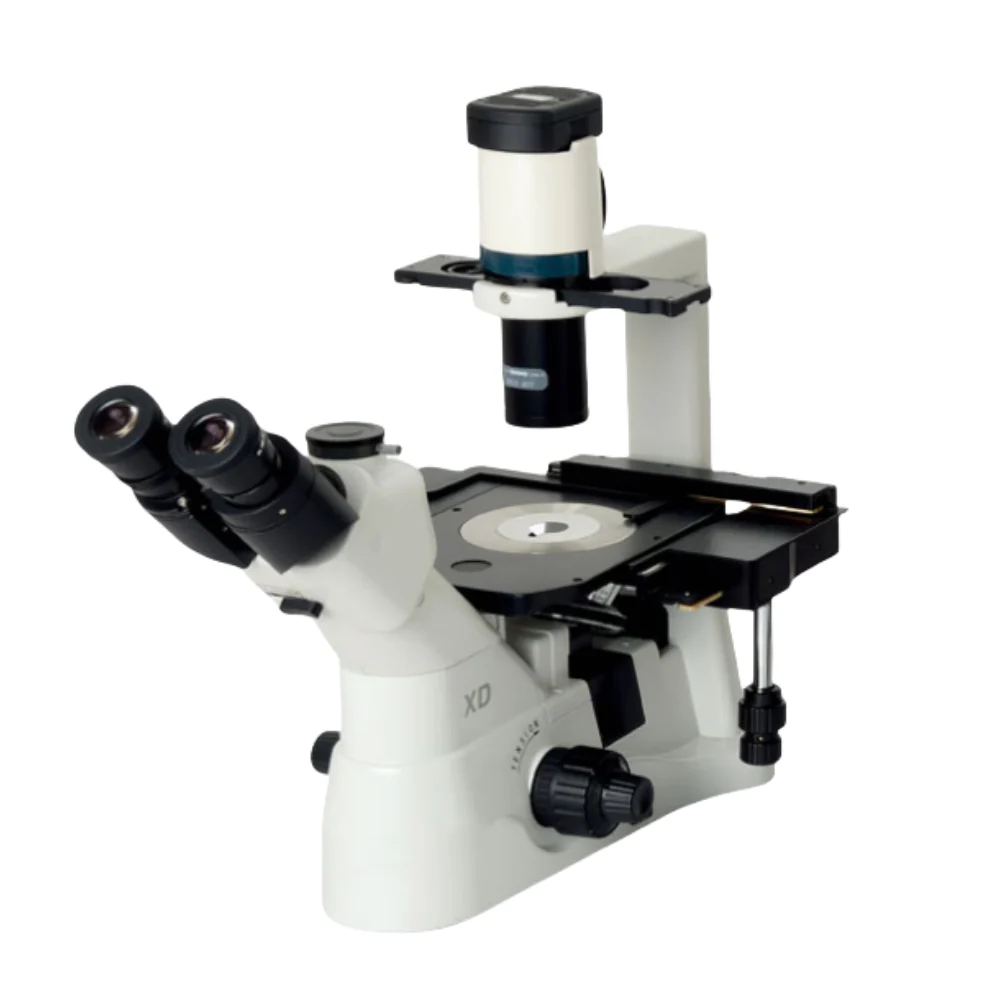
XD Series Inverted Biological Microscope for Research and Clinical
View Details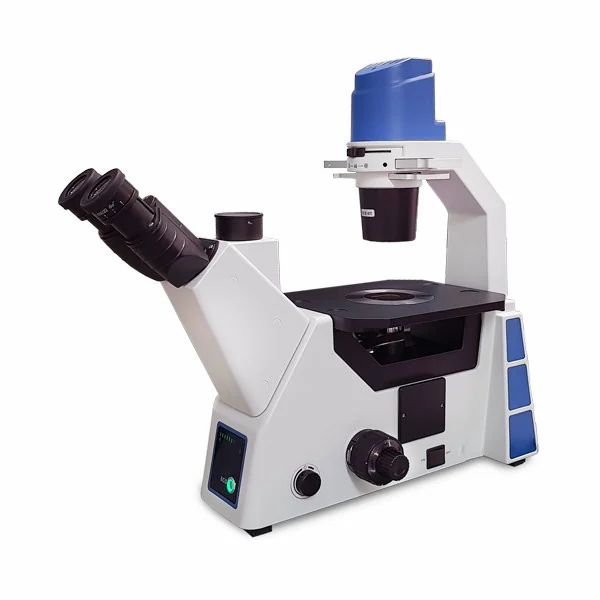
ICX41 Industrial Biological Microscope for Industrial Inspection
View Details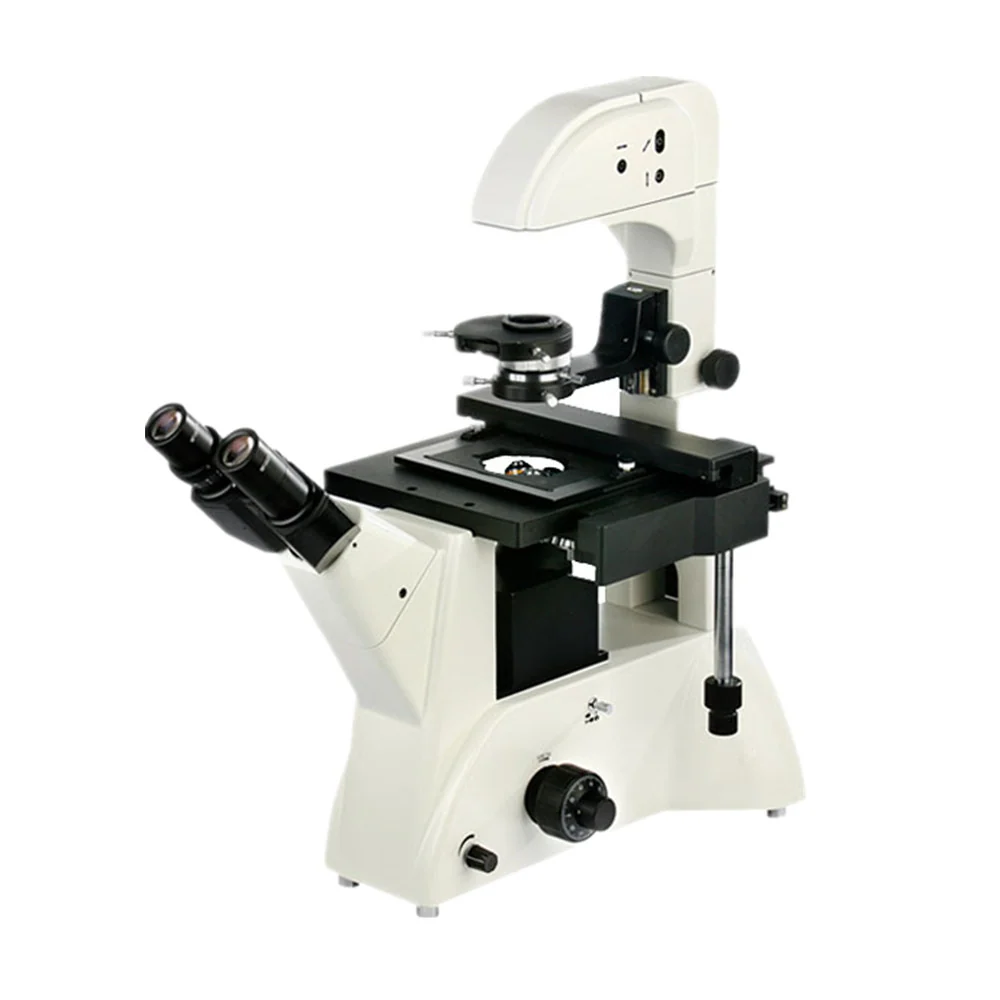
XIB300 Inverted Lab Biological Microscope with LED Illumination
View Details
XIB500 Inverted Lab Biological Microscope for Clinical Diagnostics
View Details
XIB200 Inverted Lab Biological Microscope for Clinical Diagnostics
View Details
XIB100 Inverted Lab Biological Microscope for Laboratory and Clinical
View DetailsGuides and Applications
Frequently Asked Questions
What is the working distance for the 40X objective?
3.4mm. The working distance decreases with higher magnification objectives.
Can I use this microscope for live cell imaging?
Yes. The inverted design and phase contrast objectives are ideal for observing live cells in culture dishes.
Does the epi fluorescence unit require a separate power supply?
Yes. The 100W mercury lamp requires a digital power box that operates on 100V~240V input.
What digital cameras are compatible with the C-mount?
The C-mount 1x and 0.5x adapters support cameras from CANON, NIKON, OLYMPUS, and other standard brands.
Can I use the microscope without the condenser?
Yes. The condenser can be quickly detached for use with large or thick samples, increasing the working distance to 195mm.
What filters are available for fluorescence?
B, G, V, and UV filters are available. Choose based on the fluorophore used in your sample.
Request A Price On The XIB400 Inverted Laboratory Biological Microscope for Research
Send quantity, destination and the application. We will confirm the configuration, the price and the lead time.