
Upright and Inverted Microscopes Compared
Which geometry suits slides, which suits culture vessels and heavy metallurgical samples, and why the choice is made by the sample.
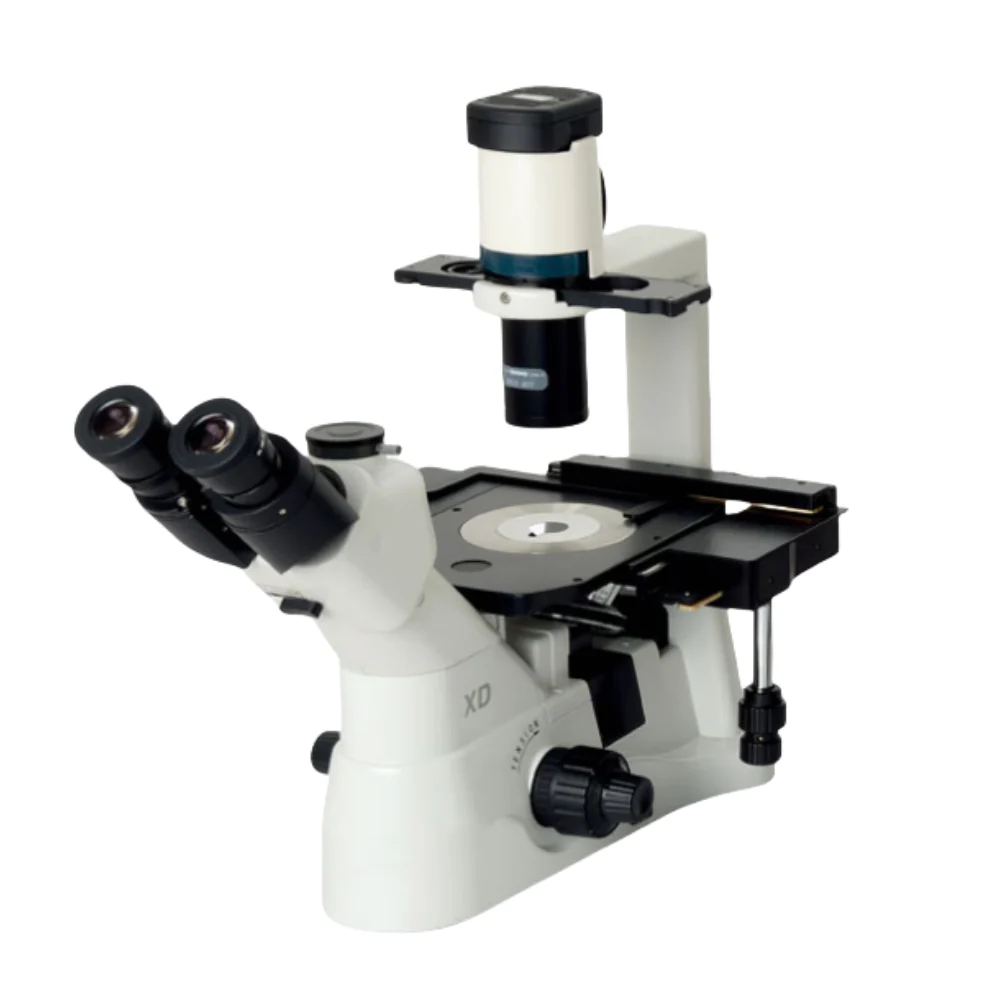
The Difference Is Where the Objective Sits
An upright microscope looks down at the sample from above. An inverted microscope looks up at it from below. Everything else - illumination, stage, camera path - follows from that one difference.
When Upright Is Right
Slides, smears, prepared sections and small mounted specimens all sit flat on a stage and are best viewed from above. Most teaching and clinical work is upright work.
When Inverted Is Necessary
Cells in a flask, dish or well plate settle on the bottom, and the vessel cannot be turned over. In metallurgy, a heavy or awkward sample rests polished-face-down over the objective, which removes the need to level it on a stage.
What Changes in Practice
Inverted bodies have longer working distances to clear vessel walls, different condenser arrangements, and stages built to carry vessels rather than slides. Objectives are often corrected for the thickness of the vessel base.
Where To Look In The Catalogue
7 productsInverted Biological Microscope
Inverted biological microscopes designed for observing live cells, tissue cultures, and transparent specimens on culture dishes or slides without requiring a cover slip. These instruments feature infinity-corrected optics, long working distance objectives, and trinocular viewing heads for documentation.
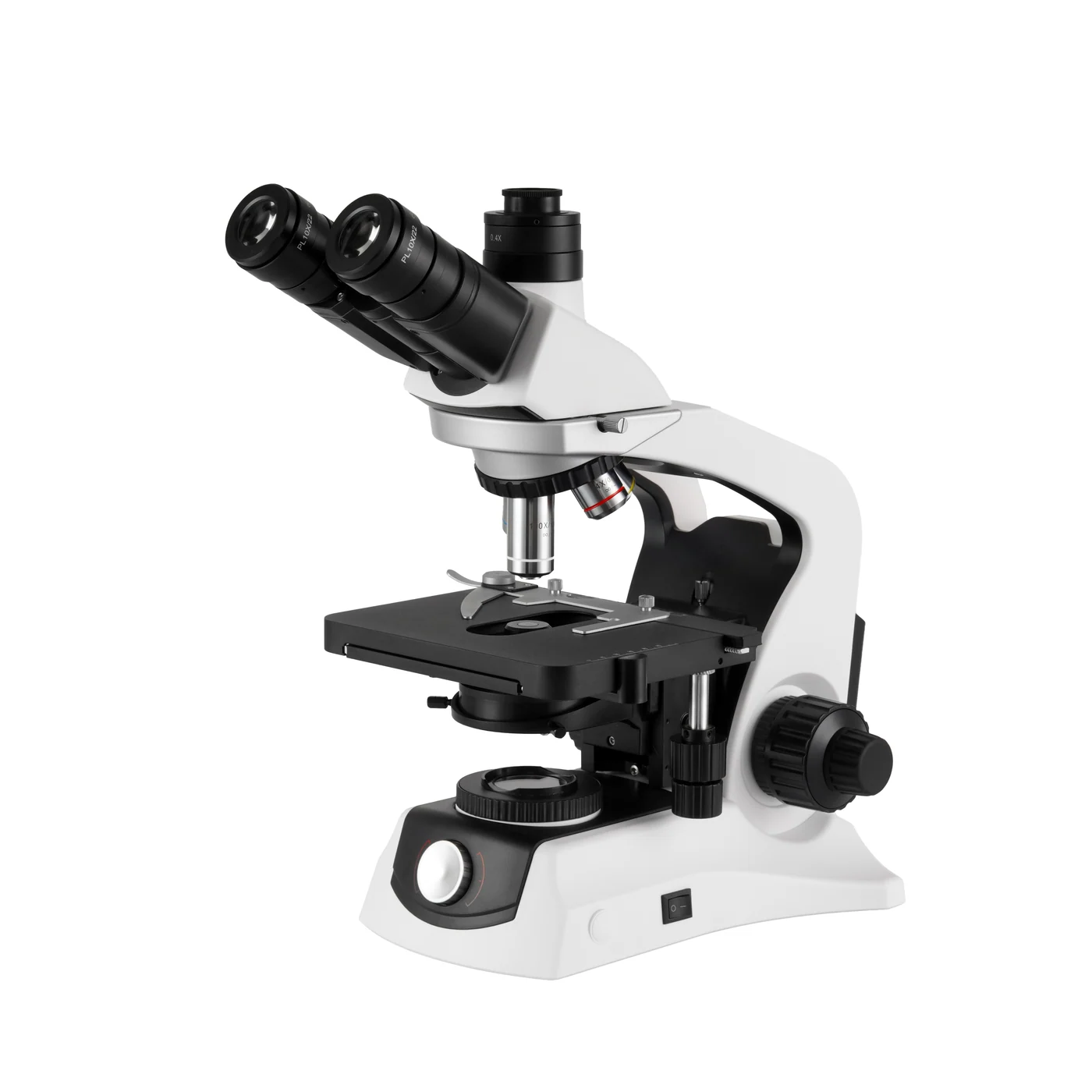 24 products
Laboratory Biological Microscope
Laboratory biological microscopes designed for routine inspection and teaching tasks in life science and educational settings. Available in monocular, binocular and trinocular configurations with adjustable interpupillary distance and 30° inclined viewing heads.
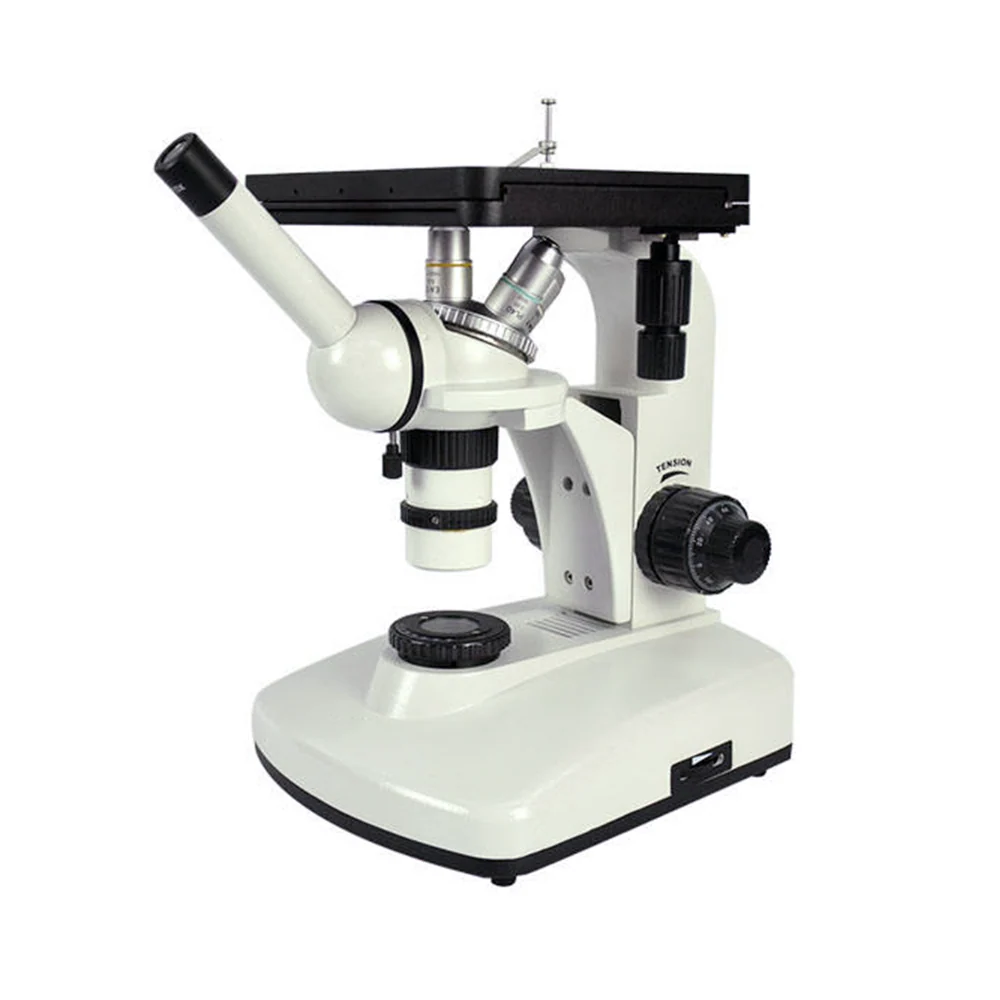 10 products
Inverted Metallurgical Microscope
Microscopes designed for examining polished metal surfaces, thin sections and opaque materials from below, with objectives positioned beneath the sample and illumination directed upward through the specimen.
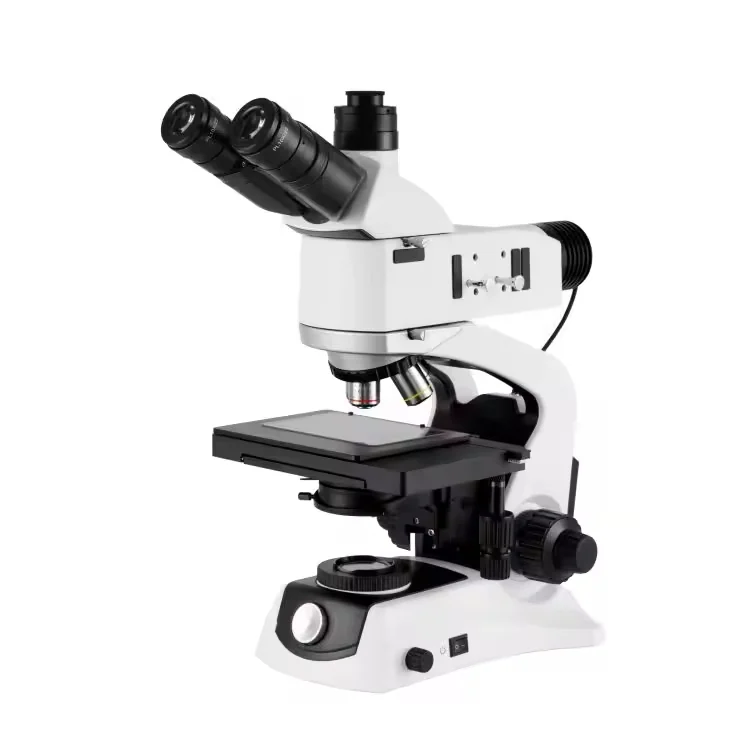 14 products
Upright Metallurgical Microscope
Upright metallurgical microscopes designed for high-magnification inspection of polished metal surfaces, semiconductor wafers, and opaque industrial samples under transmitted or reflected light. Available in models from XUM100 to XUM904 with trinocular heads, infinity optical systems, and interchangeable objectives.
Frequently Asked Questions
Can one microscope do both?
No. The geometry is fixed by the frame. Labs that need both keep both, often sharing the camera between them.
Which is better for large metal samples?
Inverted. The polished face rests downward over the objective, so sample height and levelling stop being a problem.
Ask Before You Order
Send the model you are considering and the task it has to do. We will confirm the fit in writing.