
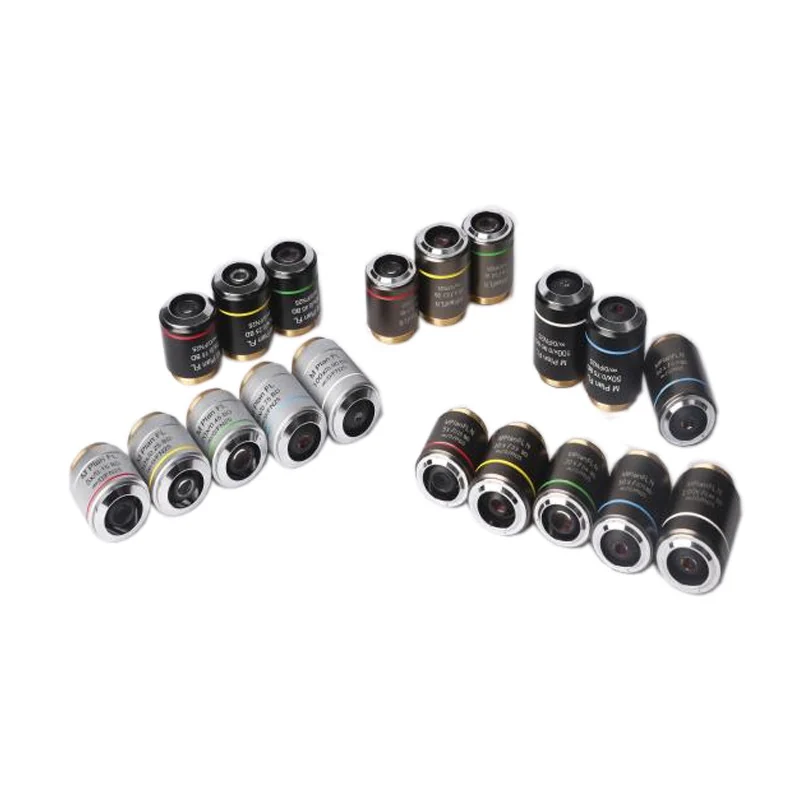
F=180 Bright/Dark Field Semiapochromat/Apochromatic Metallurgical Microscope Objective
The F=180 objective provides brightfield and darkfield illumination for metallurgical analysis. It is available in semiapochromat and apochromatic correction, with magnifications from 2.5X to 100X.
Product Overview
The F=180 objective provides brightfield and darkfield illumination for metallurgical analysis. It is available in semiapochromat and apochromatic correction, with magnifications from 2.5X to 100X. Numerical apertures range from 0.08 to 0.9, and working distances vary from 1mm to 14.8mm depending on the magnification and correction collar. It solves the problem of insufficient resolution or contrast when inspecting metal structures, coatings and surface defects.
- Magnification2.5X, 5X, 10X, 20X, 50X, 100X
- Numerical Aperture (NA)0.08, 0.15, 0.3, 0.4, 0.45, 0.75, 0.8, 0.9
- Working Distance (WD) (mm)1, 3, 3.6, 8, 8.5, 9, 9.8, 14, 14.5, 14.8
- Focal Length (mm)18, 36, 72
- Resolution (μm)0.3, 0.4, 0.6, 0.65, 0.68, 0.88, 0.9
- Depth of Field (μm)0.4, 0.43, 0.5, 0.52, 0.7, 1, 1.65, 1.68, 1.7, 1.72, 1.8, 3, 3.06, 4.19, 12.27
Key Benefits
- Brightfield and darkfield options in one objective, so a single lens serves multiple inspection tasks
- Semiapochromat and apochromatic corrections reduce aberrations for clearer images at higher magnifications
- Numerical apertures from 0.08 to 0.9 balance resolution and light gathering across the magnification range
- Working distances from 1mm to 14.8mm accommodate different sample thicknesses and mounting methods
- Magnifications from 2.5X to 100X cover a broad range of inspection scales without changing objectives
Application Scenarios
- Grain size analysis in steel and aluminium alloys
- Phase identification in multi-component metal systems
- Hardness testing and microstructural evaluation
- Inspection of surface coatings for defects and thickness
- Quality control of heat treatment processes
Who It Is For
- Metallurgy laboratories in steel mills and foundries
- Materials science departments in universities and research institutions
- Quality control departments in metal fabrication plants
- Failure analysis laboratories investigating metal component defects
- Gemological labs analysing metal inclusions in gemstones
Problems It Solves
- Low magnification objectives lack the resolution to see fine details in metal structures
- High magnification objectives have insufficient working distance for thick samples
- Chromatic aberration causes colour fringing and reduces image clarity
- Insufficient contrast makes it difficult to identify subtle features
- Switching objectives slows down inspection and increases the risk of losing focus
Technical Features
- Brightfield and darkfield illumination options
- Semiapochromat and apochromatic correction
- Magnifications: 2.5X, 5X, 10X, 20X, 50X, 100X
- Numerical apertures: 0.08 to 0.9
- Working distances: 1mm to 14.8mm
- Long working distance (LWD) options available
Specifications
| Magnification | 2.5X, 5X, 10X, 20X, 50X, 100X |
|---|---|
| Numerical Aperture (NA) | 0.08, 0.15, 0.3, 0.4, 0.45, 0.75, 0.8, 0.9 |
| Working Distance (WD) (mm) | 1, 3, 3.6, 8, 8.5, 9, 9.8, 14, 14.5, 14.8 |
| Focal Length (mm) | 18, 36, 72 |
| Resolution (μm) | 0.3, 0.4, 0.6, 0.65, 0.68, 0.88, 0.9 |
| Depth of Field (μm) | 0.4, 0.43, 0.5, 0.52, 0.7, 1, 1.65, 1.68, 1.7, 1.72, 1.8, 3, 3.06, 4.19, 12.27 |
| Correction | Semiapochromat, Apochromatic |
| Illumination | Brightfield, Darkfield |
Specifications are taken from the AMADA product data for this item. Confirm critical dimensions with us in writing before ordering.
Comparison With Other Options
| Achromatic Objective | Apochromatic objectives offer superior correction of chromatic aberration, resulting in sharper, more accurate images, particularly at higher magnifications. |
|---|---|
| Standard Working Distance Objective | Long working distance (LWD) objectives provide greater clearance for working with thicker samples or accessories. |
| Lower Numerical Aperture Objective | Higher numerical aperture objectives provide greater resolution and light gathering ability, but with a reduced depth of field. |
Use Guide
- Select the appropriate magnification and numerical aperture for the desired resolution and depth of field.
- Ensure the sample is properly prepared and mounted.
- Adjust the illumination for optimal contrast and clarity.
- Use immersion oil with high-magnification objectives to improve resolution.
- Clean the objective lens regularly to maintain image quality.
More From Microscope Objective
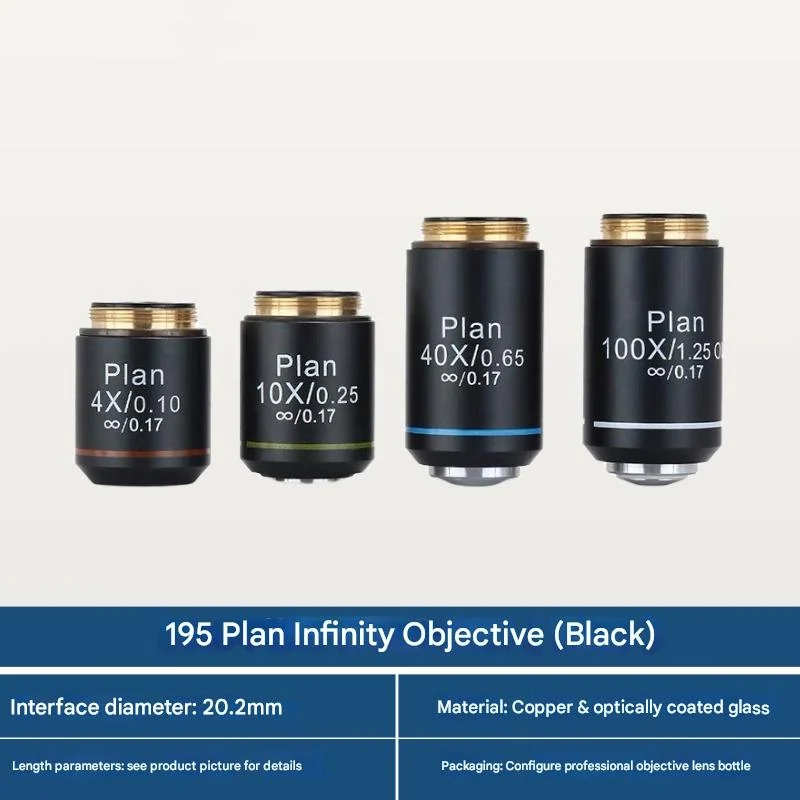
195 Plan Infinity Objective Black Compatibale for Olympus Microscope
View Details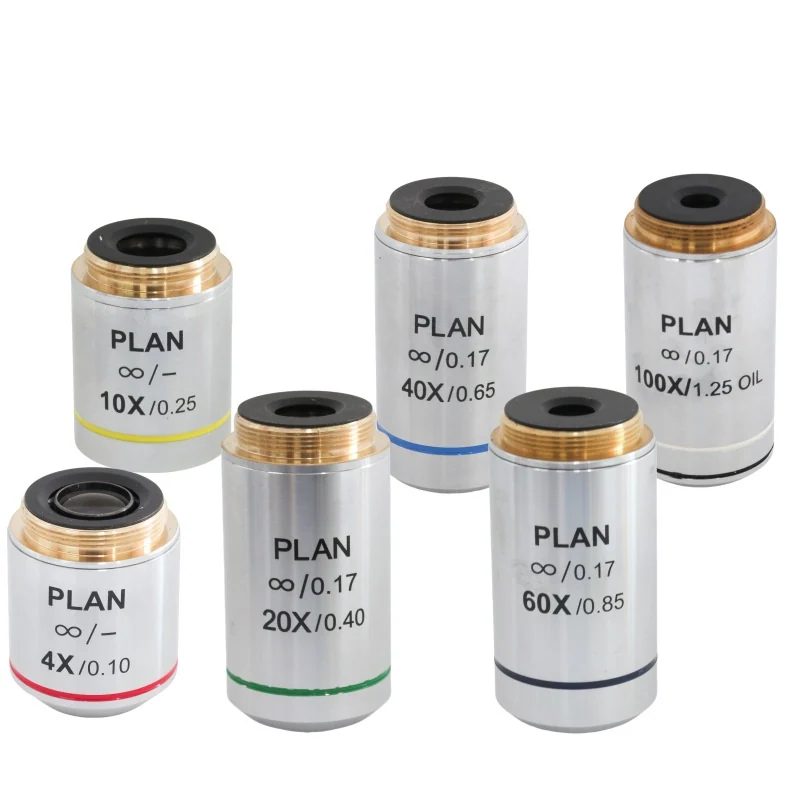
195 Plan Infinity Achromatic Objectives Compatiable for Olympus Microscopes
View Details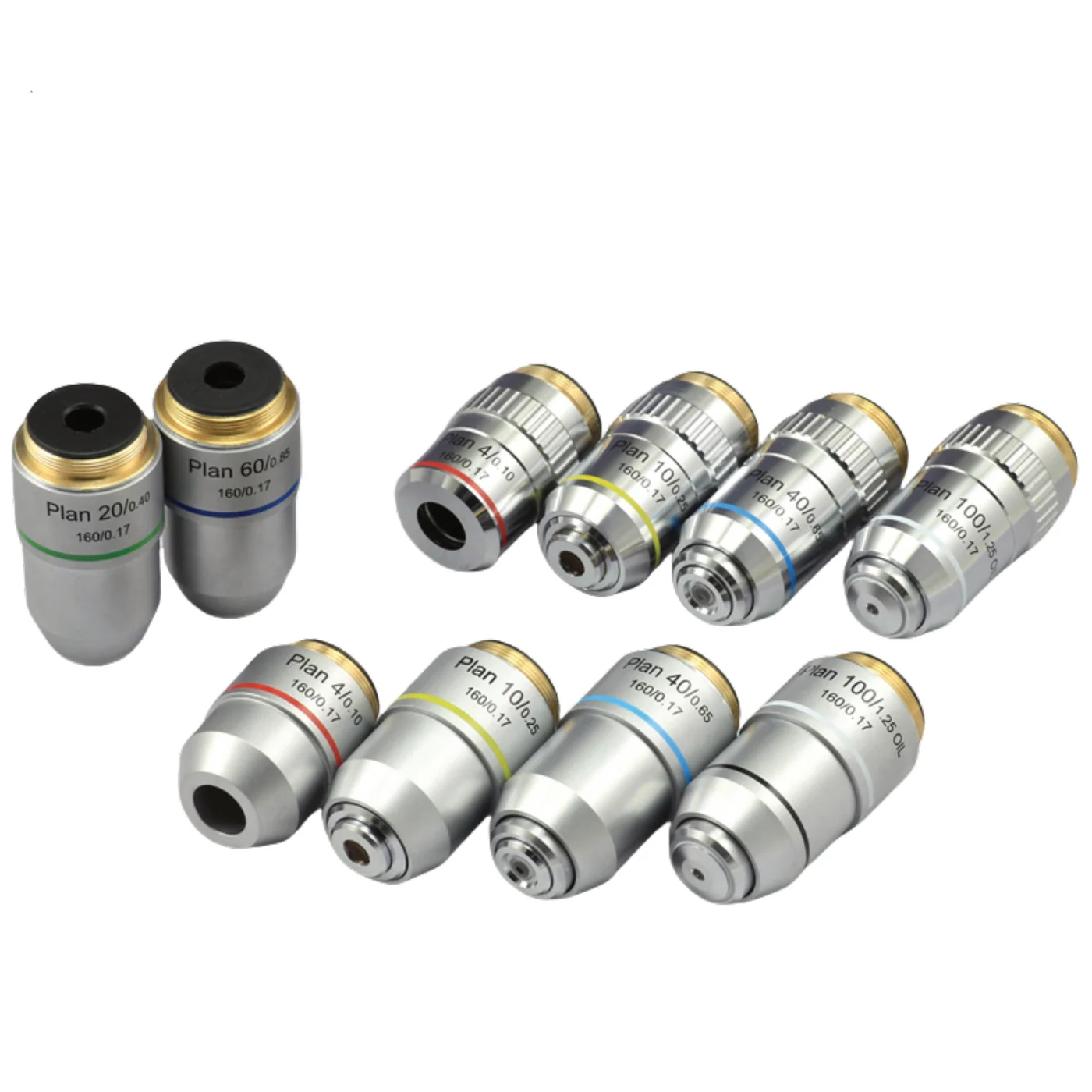
195 PLAN Biological Microscope Objective Lens Frosted 20.2mm RMS Thread
View Details
195 Semi-plan Achromatic Objective Lens for Biological Microscope
View Details
185 Metal Copper Achromatic Optical Microscope Objective Lens
View Details
195 Achromatic Microscope Objective Lens RMS 20.2mm
View Details
195EA 4X 10X 20X 40X 60X 100X Achromatic Microscope Objective Lens
View Details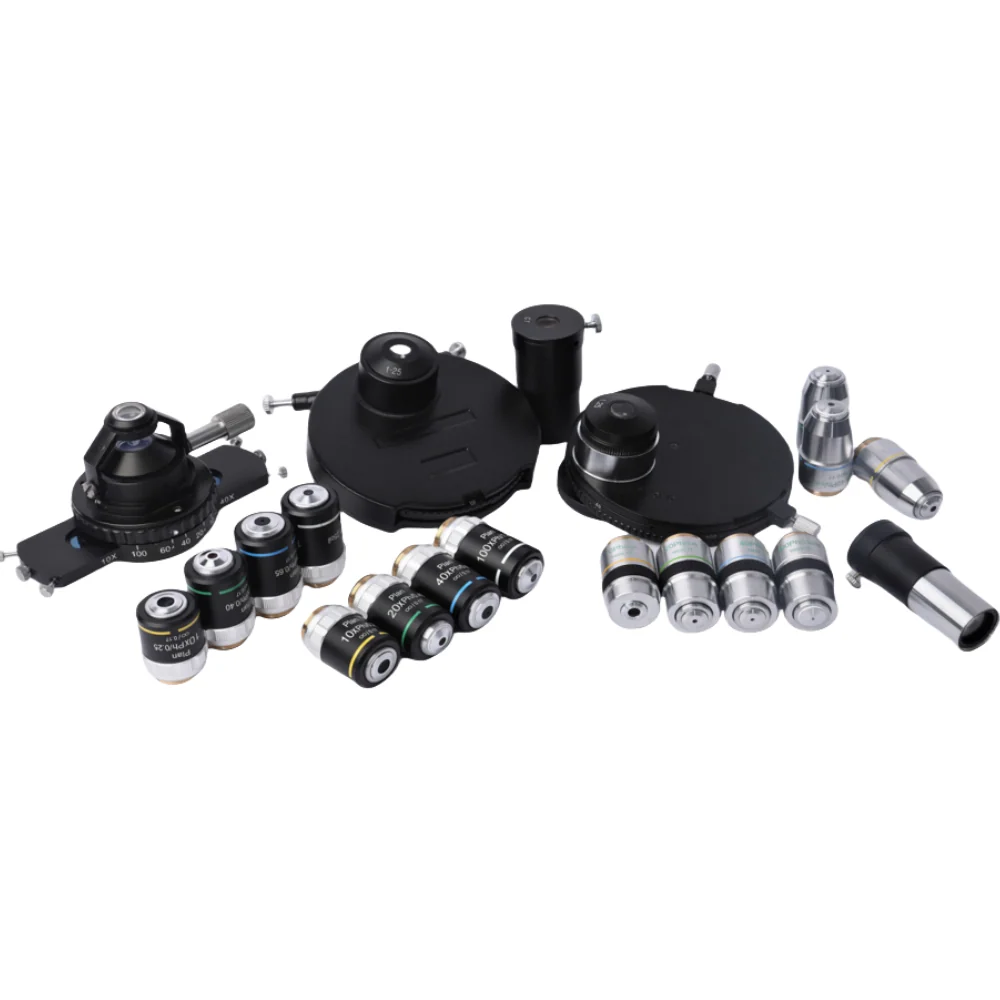
Plan Infinite/Finite Biologocal Phase Contrast Objective
View DetailsFrequently Asked Questions
What is the difference between semiapochromat and apochromat objectives?
Apochromat objectives offer higher correction of chromatic aberration than semiapochromat objectives, resulting in sharper images with less colour fringing.
What is the working distance of the 10X objective?
8.5mm for the standard semiapochromat version, and 14.5mm for the apochromatic LWD version.
What is the numerical aperture of the 50X objective?
0.75 for the standard semiapochromat and apochromat versions, and 0.55 for the apochromat LWD version.
Can these objectives be used with immersion oil?
Yes, the 100X objective is designed for use with immersion oil to improve resolution.
What is the resolution of the 20X objective?
0.68μm for the standard semiapochromat version, and 0.65μm for the semiapochromat and apochromatic LWD versions.
What is the field of view with this objective?
Field of view is dependent on the camera sensor size and intermediate optics; this specification is not provided.
What is the mounting thread size?
This specification is not provided.
Request A Price On The F=180 Bright/Dark Field Semiapochromat/Apochromatic Metallurgical Microscope Objective
Send quantity, destination and the application. We will confirm the configuration, the price and the lead time.