How to Select a Cerium Oxide Polishing Powder Grade
Cerium oxide is bought on index values, not on branding. Once you can read the datasheet, choosing between grades is straightforward.
What cerium oxide does
Glass polishing is not purely mechanical abrasion. Cerium oxide acts chemically as well as mechanically on the silica surface, which is why it produces an optical finish that harder abrasives cannot.
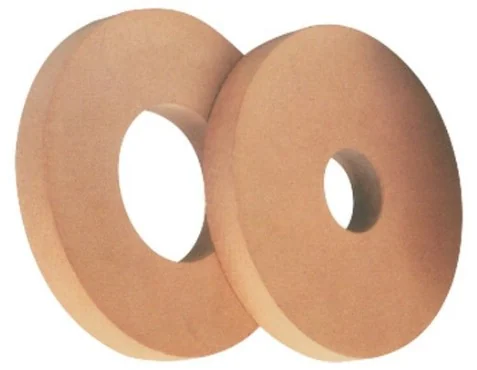
It is used as a slurry with a felt or resin wheel. The wheel carries and presses the powder; the powder does the work.
Reading the chemical index
The chemical index describes rare earth content and the cerium oxide fraction within it. Higher cerium content generally means faster cut and a better final gloss, and a higher price.
High-rate production polishing and fine optical work sit at different points on that scale, which is why we hold thirteen FY grades rather than one.
Reading the physical index
The physical index covers particle characteristics — size distribution and how the powder behaves in suspension. This is what decides whether a grade scratches, whether it stays suspended in the slurry, and how the wheel loads.
A grade with excellent chemistry and the wrong particle distribution for your machine will polish worse than a cheaper grade that suits it.
Running powder and wheels together
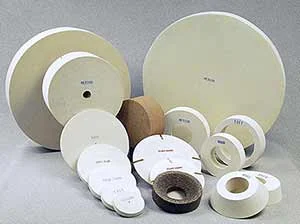
Wool felt wheels are the usual final stage, running from Item IDs GA150WF upwards, after the BD fine polishing wheels. Keep the slurry concentration stable, keep it moving, and do not let the felt dry out and glaze.
If gloss drops through a shift, check slurry concentration and wheel condition before changing powder grade. Most gloss drift is housekeeping.
Choosing a grade in practice
Tell us three things: the glass type, the machine and wheel you run, and the gloss target or the customer specification you have to meet. If you already buy powder, send that specification too — matching or improving on a known grade is faster than starting from the index tables.
Grades are shipped worldwide, so include your destination port and the quantity you expect to use per month.