
How Insulator Glaze Colour Is Determined
Colour has no effect on electrical or mechanical performance, but ANSI grey is defined to a Munsell notation with stated tolerances.
Colour Is Not a Performance Factor
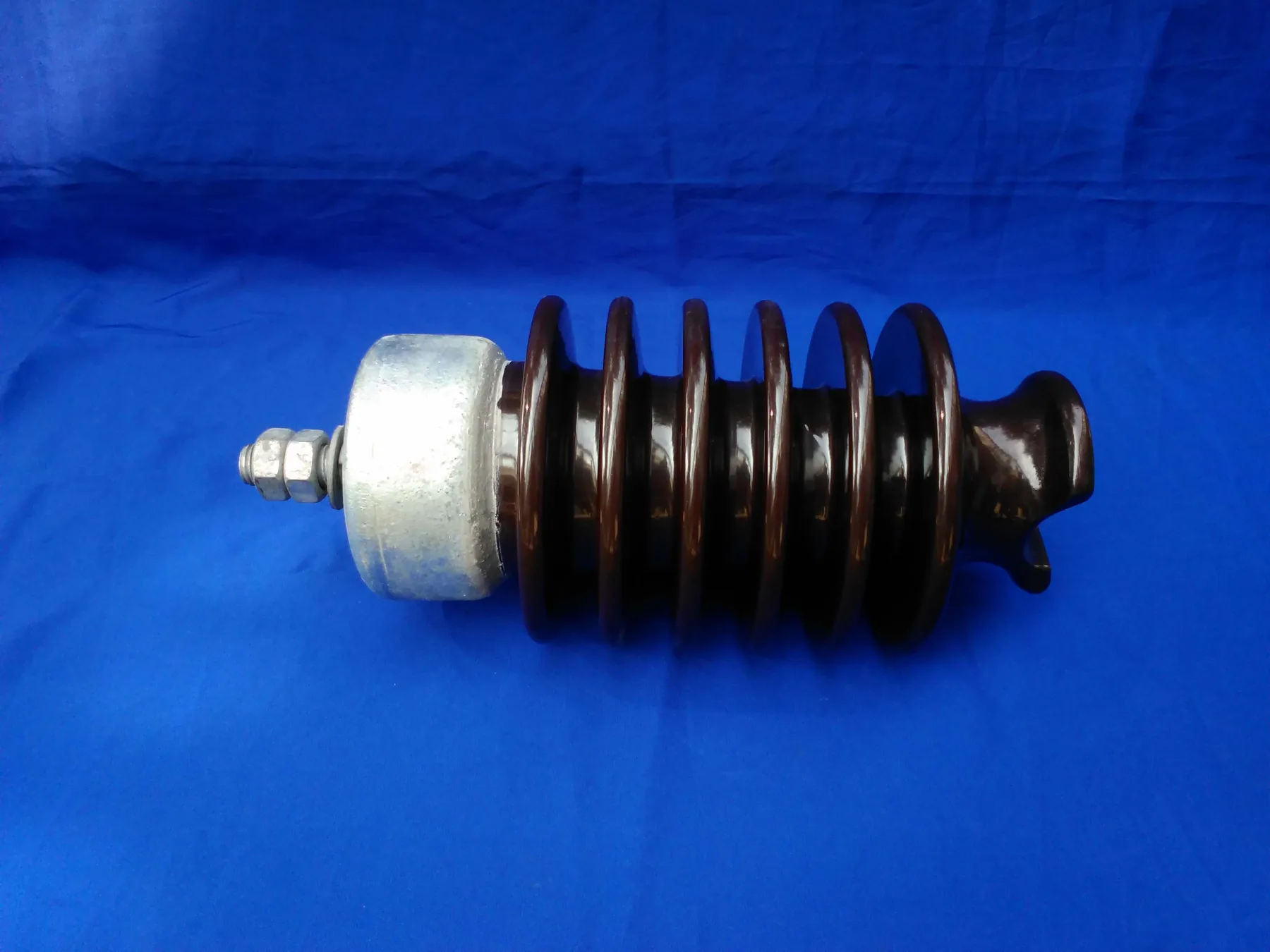
Colour is not a relevant factor for the electrical or mechanical performance of an insulator. Worldwide the most commonly used colours are grey and brown. Grey is often preferred because it has less visual impact and contrasts better against the blue of the sky, which is why it appears in the specifications of many utility companies.
The ANSI Grey Specification
ANSI standards are available only for grey and require compliance with Munsell notation 5BG7.0/0.4, with tolerances of hue plus or minus 12, from 3G to 7B, value plus or minus 0.5, and chroma from minus 0.2 to plus 0.6.
What to Put in the Purchase Order
State the colour explicitly. Our porcelain types are produced in grey and brown, and the long-rod types additionally in white. If the ANSI Munsell notation is a contract requirement, call it out in the specification rather than leaving colour as a preference.
Related Questions
Does brown glaze perform worse than grey?
No. The difference is visual impact only. Grey is chosen in many specifications because it is less conspicuous against the sky.
Which colours can Zhaotong supply?
Grey and brown across the porcelain range, with white also available on the long-rod types.
Designs Referenced Above
Line Post Insulators ANSI 57-2
ANSI 57-2 Line Post for 35 kV Class Distribution
View specifications
Long-Rod Type Suspension Insulators SL-33/40
40 kN Long-Rod Porcelain Insulator With 530 mm Creepage
View specificationsRelated Categories
Other Guides
- What the Black RF Glaze on an Insulator Actually Does
- Which Defects Are Acceptable in a Porcelain Insulator
- How to Dispose of Porcelain Insulators Removed From Service
- Glass or Porcelain Suspension Insulators
- Choosing a Shed Profile for Contaminated Sites
- How Electric Porcelain Is Made in Shangbu
- Reading an Insulator Datasheet Before You Order
Questions This Guide Did Not Answer
Our engineers answer specification questions directly by email.