
Published 2026-08-11
Classification of Polyester DTY Yarn
DTY, network yarns and the other polyester classifications a buyer meets on a specification sheet.
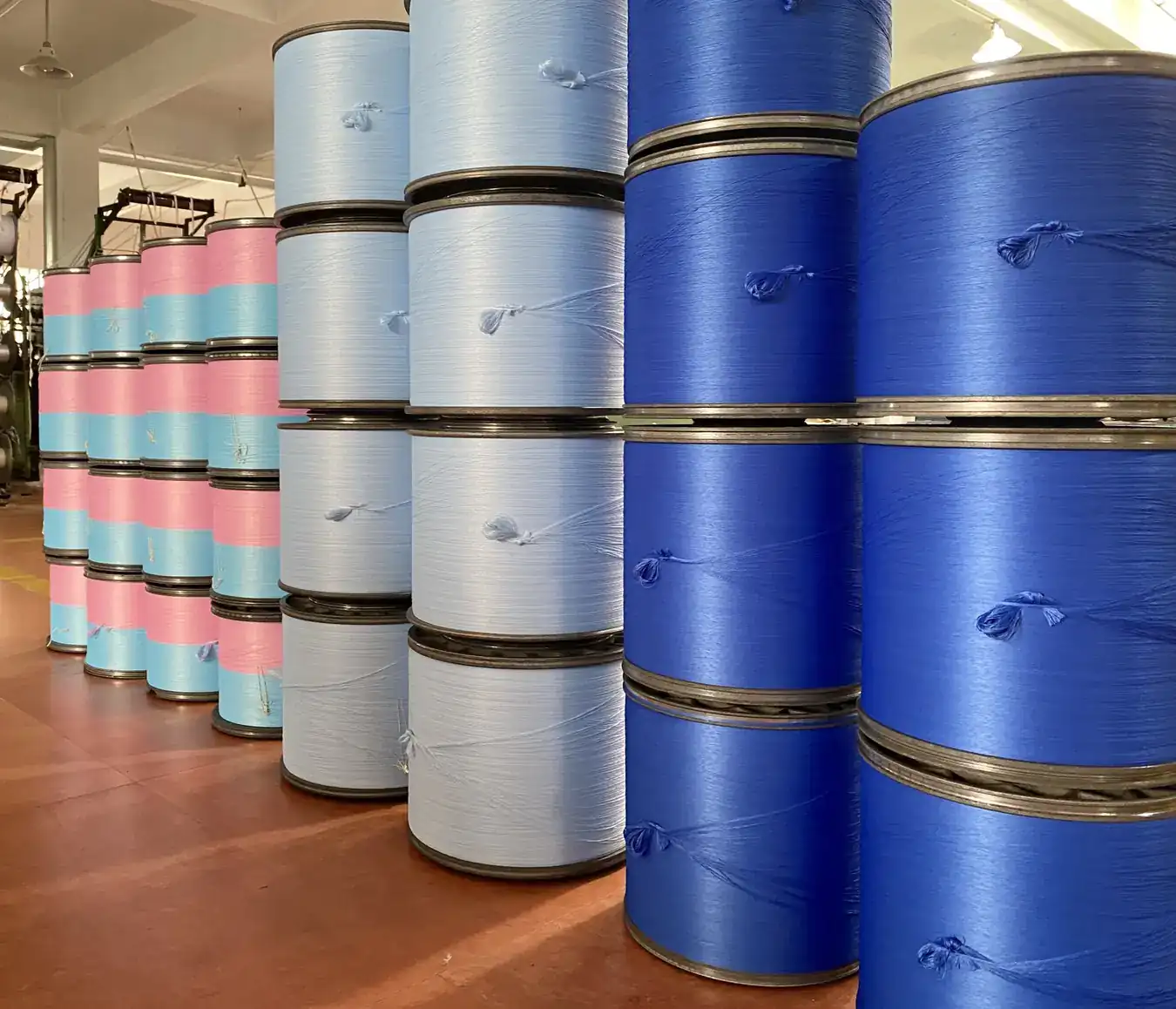
Classification of Polyester
1. Classification by Intermingling / Texturing Type (Most Common)
- DTY (Draw Textured Yarn): The standard low-elastic yarn, offering moderate bulkiness and low elongation properties.
- DTY + Network (Intermingled Yarn): Characterized by network points along the yarn that provide excellent cohesion, preventing fraying during weaving. Commonly categorized as:
- NIM (Normal Intermingled): Light intermingling with fewer nodes.
- SIM (Semi-Intermingled): Medium intermingling.
- HIM (High Intermingled): Heavy intermingling with frequent nodes, often used as a substitute for twisting.
2. Classification by Cross-Sectional Shape
- Round DTY: The most common type, featuring a smooth surface.
- Trilobal DTY: Trilobal cross-section providing a bright luster and slightly firmer hand feel. Often used for reflective or decorative webbing.
- Cationic DTY (CD Yarn): Partially modified for cationic dyeing. Allows for two-tone color effects (bi-color dyeing).
3. Classification by Function / Finish (Relevant to UV Resistance)
- Regular DTY: Standard yarn without UV protection.
- UV-Stabilized DTY: Formulated with UV stabilizer masterbatch; the preferred choice for outdoor webbing to prevent degradation and fading.
- Flame Retardant (FR) DTY: Engineered to resist ignition.
- Anti-Static DTY: Treated to reduce static build-up.
- Recycled DTY (rPET DTY): Made from recycled polyester, commonly used in products requiring GRS (Global Recycled Standard) certification.
4. Classification by Luster
- Semi-Dull DTY: The most versatile option; widely used for general outdoor webbing.
- Full-Dull DTY: Non-reflective (matte finish), offering a premium, “sun-protective” aesthetic.
- Bright DTY: High-gloss finish, typically used for decorative webbing on bags and apparel.
5. Classification by Linear Density (Denier)
- Common Specs: 75D/72F, 100D/96F, 150D/144F, 300D/576F, etc.
- Denier (D): Lower numbers indicate finer yarn thickness.
- Filaments (F): Higher numbers indicate softer, finer yarn.
- Industry Usage:
- 150D & 300D DTY: Standard for medium-to-heavy duty webbing.
- 75D DTY: Used for lightweight, narrow webbing.
6. Classification by Twist Direction
- S Twist / Z Twist: The direction of the twist, which determines the diagonal pattern (twill direction) of the woven webbing.
- Non-Twist DTY: Zero twist, typically used for flat, non-twill webbing.
- Classification of Polyester
Related Range
More Articles
Put This Into A Specification
If you are choosing between two fibres for a strap, tell us the application and we will say which one we would weave and why.