
RAILWAY PLATFORM GAUGE
The Railway Platform Gauge is a portable measuring tool designed for precise measurement of the horizontal distance between the gauge side of the rail near a platform and the platform edge, as well as the verti
RAILWAY PLATFORM GAUGE
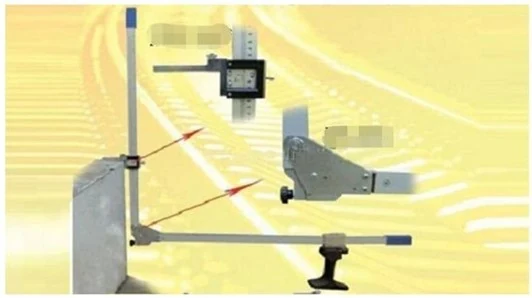
The Railway Platform Gauge is a portable measuring tool designed for precise measurement of the horizontal distance between the gauge side of the rail near a platform and the platform edge, as well as the vertical height from the top of the rail to the platform surface. Constructed from high-quality aluminum alloy, it is lightweight, durable, and folds for compact storage. The device uses a cursor-type reading system with ±1 mm accuracy and is suitable for on-site inspection in rail maintenance and construction environments.
- Measures both horizontal clearance and vertical height in a single setup
- Folds to 158 cm for easy transport and storage
- Lightweight at 3.2 kg, enabling one-person handling
- Clear cursor-type readings with 0.1 mm division value
- Robust aluminum alloy construction resists deformation
- Integrated bubble level ensures accurate horizontal alignment
Problems It Solves
- Manual tape measure methods lack precision and are prone to error
- Fixed gauges cannot adjust to varying platform heights and rail positions
- Lack of portable tools for on-site platform gauge verification
- Inconsistent measurements due to uncalibrated or unstable tools
- Difficulty in measuring both horizontal and vertical dimensions simultaneously
Who It Is For
Railway maintenance crews inspecting platform-to-track clearances
Metro system engineers verifying platform safety margins
Construction teams setting up new platforms or track alignments
Railway safety auditors conducting compliance checks
Platform operators ensuring safe boarding conditions
Application Scenarios
- Inspection of platform-to-rail clearance during track maintenance windows
- Verification of platform gauge before train operations begin
- Installation and commissioning of new platforms or track alignments
- Routine checks on urban metro platforms with tight clearance margins
- Compliance verification for railway safety standards at station platforms
Technical Features
- High-quality aluminum alloy construction for durability and light weight
- Folding design with maximum folded size of 158 cm × 14 cm × 17 cm
- Cursor-type reading system with 0.1 mm horizontal and vertical division value
- Integrated bubble level for precise horizontal alignment
- Adjustable platform positioning rod with fixed magnet for secure attachment
- Sliding frame with locking screw to maintain measurement stability
- Insulating blocks on rail contact points to prevent electrical interference
- Vertical scale with positioning screw to lock the upright section
- Magnifying glass on both scales to improve reading accuracy
Technical Specifications
| Horizontal Measurement Range | 50 ∼ 1800 mm |
|---|---|
| Horizontal Reading Division Value | 0.1 mm |
| Horizontal Error | ±1 mm |
| Vertical Measurement Range | 50 ∼ 1300 mm |
| Vertical Reading Division Value | 0.1 mm |
| Vertical Error | ±1 mm |
| Reading Method | Cursor type |
| Weight | 3.2 kg |
| Maximum Size After Folding | 158 cm × 14 cm × 17 cm |
| Material | High-quality aluminum alloy |
| Folding Design | Yes, for compact storage and transport |
How It Is Operated
Open the vertical ruler and tighten the vertical positioning screw
Place insulating blocks on the rail and ensure measuring head fits tightly against the gauge side
Open the platform positioning rod and secure it to the fixed magnet
Loosen the sliding frame locking screw and align the left edge of the sliding frame with the platform edge
Adjust the sliding frame until the bubble level is centered, then tighten the locking screw
Quality Control
- Device must be calibrated and certified by a professional before use
- Regular verification of zero point and scale alignment recommended
- Inspection of bubble level and locking mechanisms before each use
- Visual check for deformation or damage after handling
Customization Options
- Probe configuration matched to the rail profile in service
- Console and report format adapted to the operating railway
- On-site commissioning and operator training arranged with the order
How It Compares With Other Options
| Steel tape measure | The gauge provides higher precision and dual-axis measurement in one setup, while tape measures are prone to sag and misalignment |
|---|---|
| Fixed platform gauge | The portable gauge adjusts to varying platform heights and rail positions, while fixed gauges are limited to one installation point |
| Laser distance meter | The gauge offers direct mechanical reading without power or calibration drift, and is more stable in metallic environments |
Use Guide
- Inspect the device for damage before use
- Ensure the bubble level is centered before starting measurement
- Verify the insulating blocks are properly placed on the rail
- Lock the vertical scale and sliding frame securely during measurement
- Do not apply force to the measuring head or platform rod
- Fold the device carefully after use and store in a dry, protected location
Related Products
Track Geometry Measurement
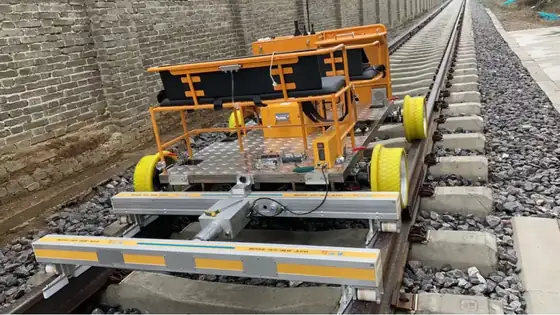
The GJY-H-CK-22CM Track Geometry Measurement system is integrated into an electric flaw detection vehicle and runs at a...
View Product →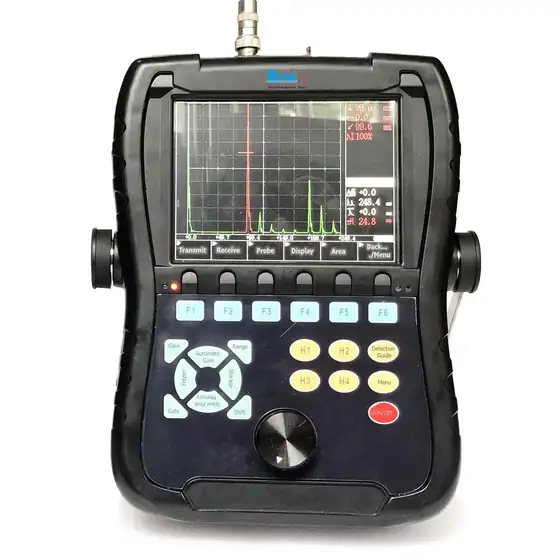
CK2108 Ultrasonic Flaw Detector
The CK2108 is a portable handheld ultrasonic flaw detector designed for rapid, accurate detection and evaluation of...
View Product →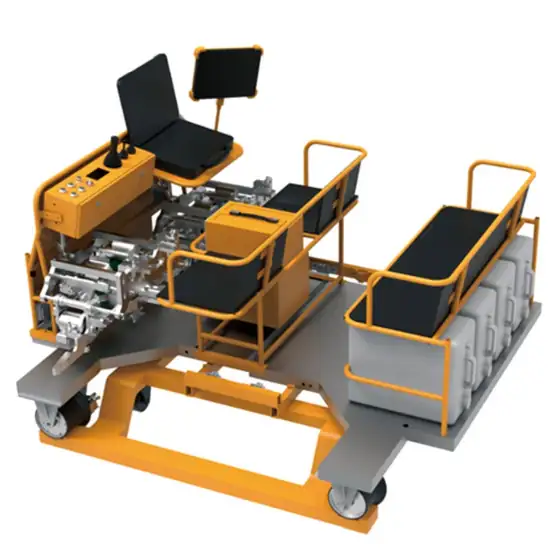
RS-20 Integrated Rail State Inspection Vehicle
The RS-20 is a portable, integrated rail state inspection vehicle designed to replace manual track patrols with...
View Product →Frequently Asked Questions
What is the measurement range for horizontal and vertical distances?
Horizontal range is 50 to 1800 mm, vertical range is 50 to 1300 mm.
How accurate is the reading?
The division value is 0.1 mm, with a total error of ±1 mm for both horizontal and vertical measurements.
Can one person use it?
Yes. The device weighs 3.2 kg and folds for easy carrying, allowing one person to operate it safely.
Is it suitable for use on electrified tracks?
Yes. The insulating blocks on the rail contact points prevent electrical conduction, making it safe for use on electrified lines.
How do I ensure accurate readings?
Check the bubble level is centered, ensure the measuring head is tightly against the rail, and verify the locking screws are secure before reading.
What should I do if the device is dropped?
Inspect for visible damage, check the bubble level, and verify scale alignment. If any component is deformed, the device must be recalibrated or replaced.
How often should it be calibrated?
It must be calibrated and certified by a professional before first use and at regular intervals as per internal safety procedures.
Get a Configuration for the RAILWAY PLATFORM GAUGE
Send the rail profile, line type and annual inspection kilometres. Our engineers reply with a configuration and a price, not a brochure.