Night Window Metro Inspection
Urban metro track can only be inspected between the last train and the first train. Everything about the equipment has to suit that: it has to go on the track fast, work in the dark, cover useful distance in a few hours
The Full Picture
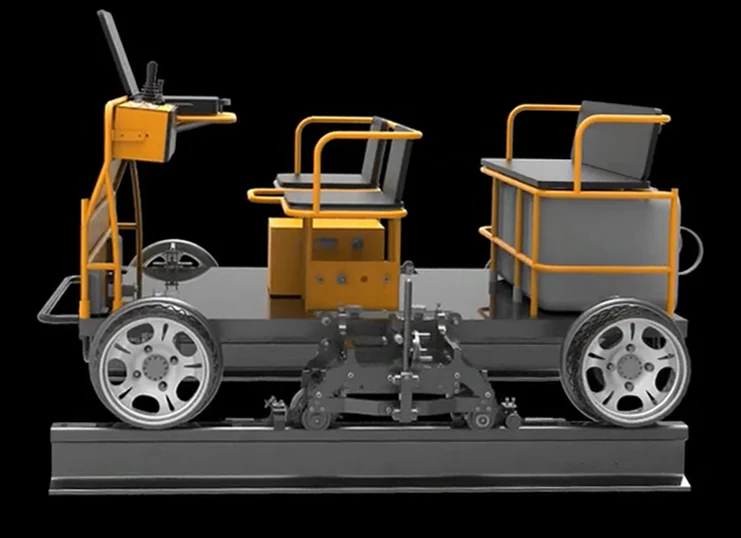
Urban metro track can only be inspected between the last train and the first train. Everything about the equipment has to suit that: it has to go on the track fast, work in the dark, cover useful distance in a few hours and come off again before service resumes. In 2017 our dual-rail ultrasonic flaw detection vehicle served city rail in Canada under exactly these conditions.
Stage by Stage
Get On Track Fast
Problem: A vehicle that needs lifting gear eats the first part of every possession window.
How we solve it: The UR18-D uses a patented disassembled platform, no module weighs more than 48 kg, and two people assemble or disassemble it within five minutes.
Work In The Dark
Problem: Night work makes it hard to read instruments and to see the track ahead.
How we solve it: Lighting reaches not less than 2 lx at 50 m and the speed, power and warning displays are readable at night.
Cover Both Rails In One Pass
Problem: Inspecting one rail at a time doubles the number of runs a short window has to absorb.
How we solve it: The dual rail configuration inspects both rails in a single pass at a continuous 15 km/h.
Record For Later Review
Problem: There is no time to argue about an indication while the window is closing.
How we solve it: A-scan and B-scan data is recorded so the run can be played back and reviewed after the window has closed.
Clear The Line
Problem: Service resumes whether the crew is finished or not.
How we solve it: The same five minute disassembly that got the vehicle on track gets it off, and endurance of 60 km or 4 hours covers a full night shift on one battery.
What You End Up With
- Both rails inspected in one pass inside a short possession window
- Vehicle on and off track within five minutes without lifting equipment
- Night readable instruments and lighting to 2 lx at 50 m
- Recorded data reviewed after the window instead of during it
Equipment Used in This Solution
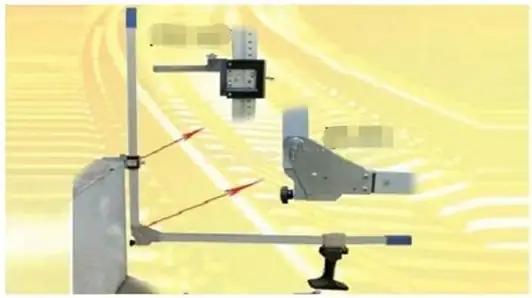
RAILWAY PLATFORM GAUGE
The Railway Platform Gauge is a portable measuring tool designed for precise measurement of the horizontal distance...
View Product →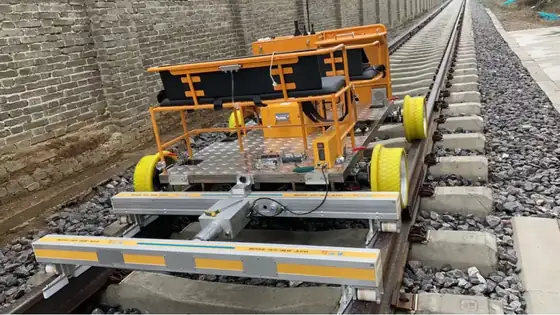
Track Geometry Measurement
The GJY-H-CK-22CM Track Geometry Measurement system is integrated into an electric flaw detection vehicle and runs at a...
View Product →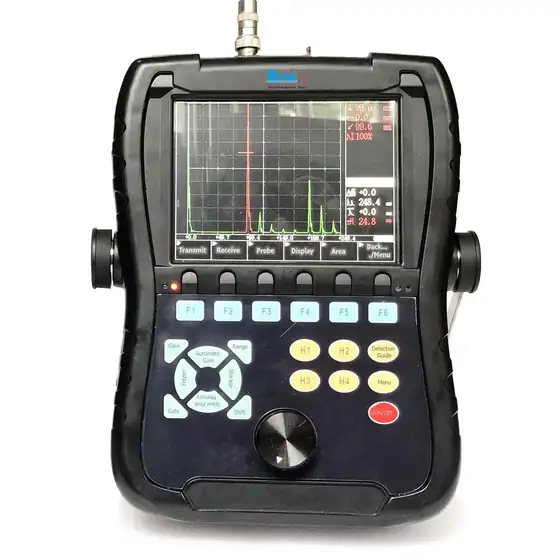
CK2108 Ultrasonic Flaw Detector
The CK2108 is a portable handheld ultrasonic flaw detector designed for rapid, accurate detection and evaluation of...
View Product →Frequently Asked Questions
Has this been used on a metro system?
Yes. In 2017 our dual-rail ultrasonic flaw detection vehicle served city rail in Canada.
How long does it take to get on track?
Assembly or disassembly is within five minutes with a two-person crew, because no module weighs more than 48 kg.
Is the battery enough for a night shift?
Endurance is not less than 60 km or 4 hours of continuous work, with detection at 15 km/h and travel at up to 20 km/h.
Can the crew see well enough at night?
Lighting reaches not less than 2 lx at 50 m and all instruments display speed, power and warnings visibly at night.
What happens to the data after the shift?
Recorded A-scan and B-scan data plus job information is transferred for expert review, which decides where manual verification is needed.
Design This Around Your Network
Send us your line inventory and inspection frequency and we will map the equipment and training you need.