Building a Rail Flaw Detection Program
Most railways do not buy one instrument, they build an inspection programme: how often each line is checked, at what speed, by how many people, and who reviews the data afterwards. Ultra Instrument supplies equipment at
The Full Picture
Most railways do not buy one instrument, they build an inspection programme: how often each line is checked, at what speed, by how many people, and who reviews the data afterwards. Ultra Instrument supplies equipment at three detection speeds so the programme can be matched to the line rather than the other way round, and supports it with engineer training and construction team support.
Stage by Stage
Assess The Line
Problem: A branch line with a two hour possession window and a busy main line need different equipment, but both are often quoted the same vehicle.
How we solve it: We start from rail profile, line type, annual kilometres and the length of your possession window, then match a detection speed to it.
Select Detection Speed
Problem: Buying too much speed wastes budget, buying too little means the programme never covers the network.
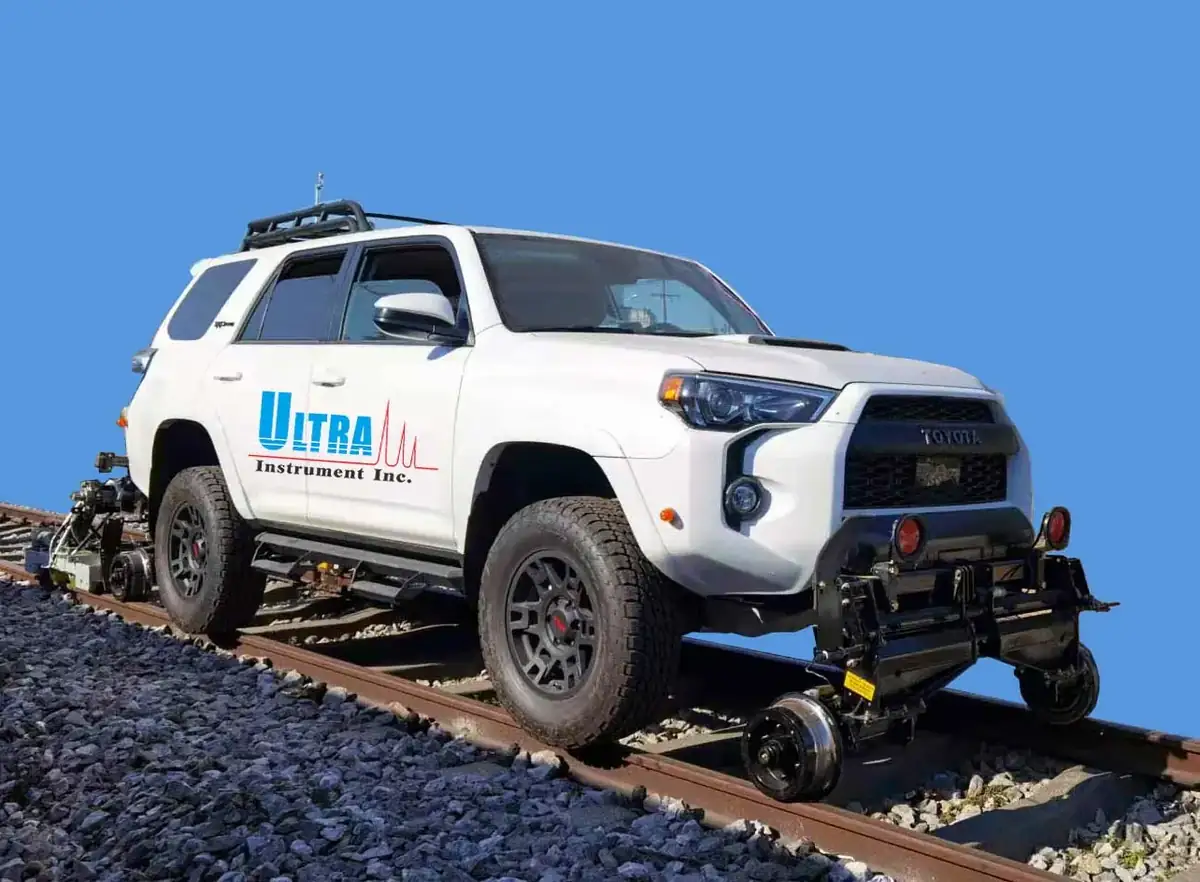
How we solve it: RT10-C hand push trolley at 5 km/h, UR18-D dual rail vehicle at 15 km/h and GT6600 hi-rail vehicle at 40 km/h cover light, medium and heavy inspection loads.
Train The Crew
Problem: Ultrasonic results depend on the operator, and a new crew reads indications inconsistently for the first months.
How we solve it: We provide on-site technical training for engineers, practical training and construction team support, and customer technical teams can also train at our company.
Run Scheduled Inspection
Problem: Inspection slips when the equipment is slow to put on and off the track.
How we solve it: The UR18-D platform is disassembled into modules two people can carry and assembles within five minutes, so a shift is spent inspecting rather than rigging.
Review And Verify
Problem: An indication found on site is not yet a decision about the rail.
How we solve it: Test data is uploaded to an analysis centre and reviewed by experts who determine the locations requiring manual verification.
What You End Up With
- Detection speed matched to each line rather than to one vehicle
- Inspection data recorded and reviewable away from site
- Crews trained by the engineers who built the equipment
- One supplier for trolleys, dual rail vehicles and hi-rail vehicles
Equipment Used in This Solution
RAILWAY PLATFORM GAUGE
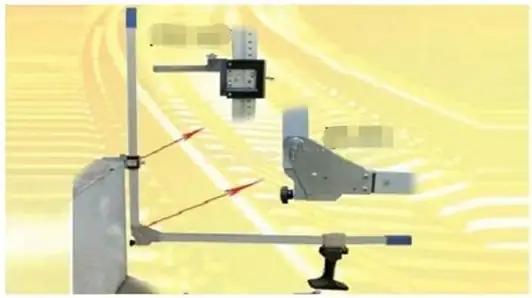
The Railway Platform Gauge is a portable measuring tool designed for precise measurement of the horizontal distance...
View Product →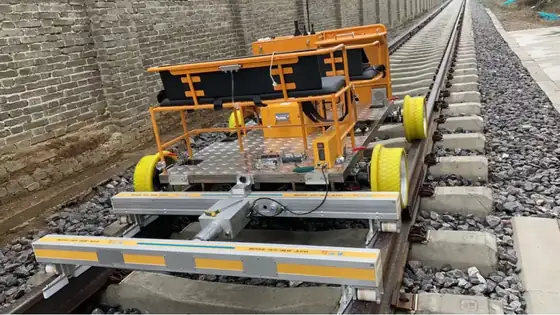
Track Geometry Measurement
The GJY-H-CK-22CM Track Geometry Measurement system is integrated into an electric flaw detection vehicle and runs at a...
View Product →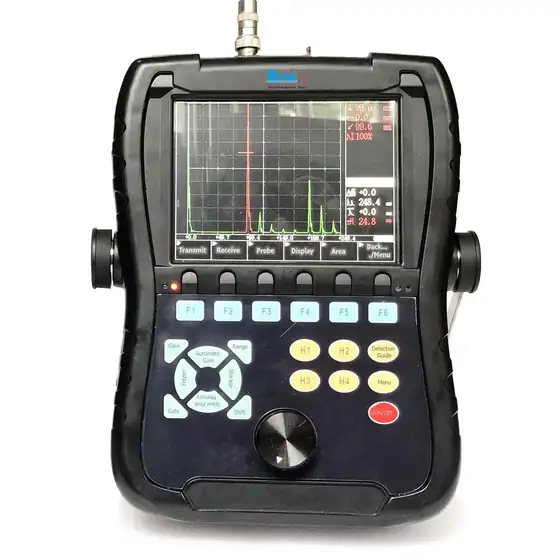
CK2108 Ultrasonic Flaw Detector
The CK2108 is a portable handheld ultrasonic flaw detector designed for rapid, accurate detection and evaluation of...
View Product →Frequently Asked Questions
Which equipment should we start with?
It depends on annual kilometres and possession windows. A short industrial line is usually served by the RT10-C at 5 km/h, a busy main line by the UR18-D at 15 km/h or the GT6600 at 40 km/h.
Can we run more than one type of equipment?
Yes, and most railways do. All of our detection equipment applies the same non-destructive wheel probe technology, so results stay comparable across the fleet.
Do you help set up the inspection schedule?
We provide pre-sales, in-sales and after-sales technical service and on-site training, and our engineers advise on how the equipment is deployed on your lines.
Who reviews the recorded data?
Test data is uploaded to an analysis centre and reviewed by experts who determine which locations need manual verification before any rail action is taken.
How do we start?
Email [email protected] with your rail profile, line type and annual inspection kilometres and our engineers will propose a configuration.
Design This Around Your Network
Send us your line inventory and inspection frequency and we will map the equipment and training you need.