State Owned Railways
State-owned main line railways require reliable, repeatable ultrasonic rail flaw detection to identify internal defects such as transverse cracks in the rail head, which are invisible to visual inspection. Ultra Instrume
Pain Points on These Lines
- Transverse cracks in the rail head cause derailments and cannot be detected by walking inspection
- Manual inspection is slow and subject to human error, limiting coverage during short possession windows
- Single rail inspection equipment requires two passes per kilometre, doubling inspection time
- Heavy or complex equipment requires lifting gear to deploy on track, increasing setup time
- Lack of recorded data prevents re-review of inspection results after crew departure
What These Operators Need
- Equipment capable of continuous detection at 15 km/h or higher to maximize track coverage in limited time
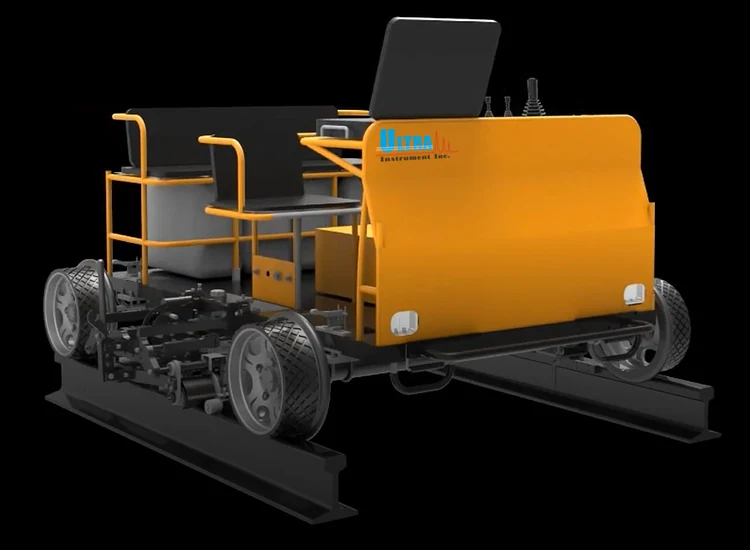
- Dual-rail detection vehicles that inspect both rails in one pass to reduce inspection runs
- Lightweight, modular design that allows two people to carry and assemble the vehicle on track without lifting equipment
- Robust data recording of A-scan and B-scan for later expert review and verification
- Compliance with national rail inspection standards and proven performance in real-world railway environments
Recommended Equipment
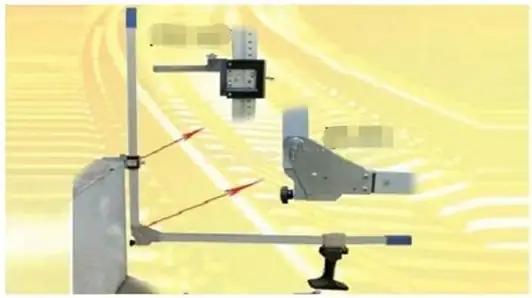
RAILWAY PLATFORM GAUGE
The Railway Platform Gauge is a portable measuring tool designed for precise measurement of the horizontal distance...
View Product →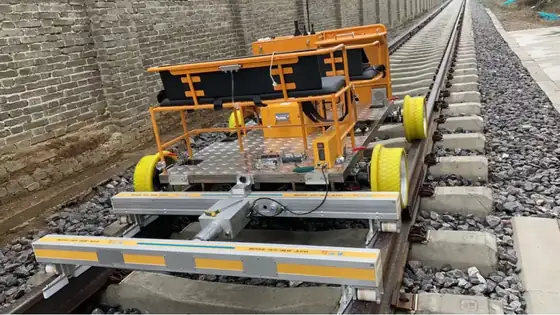
Track Geometry Measurement
The GJY-H-CK-22CM Track Geometry Measurement system is integrated into an electric flaw detection vehicle and runs at a...
View Product →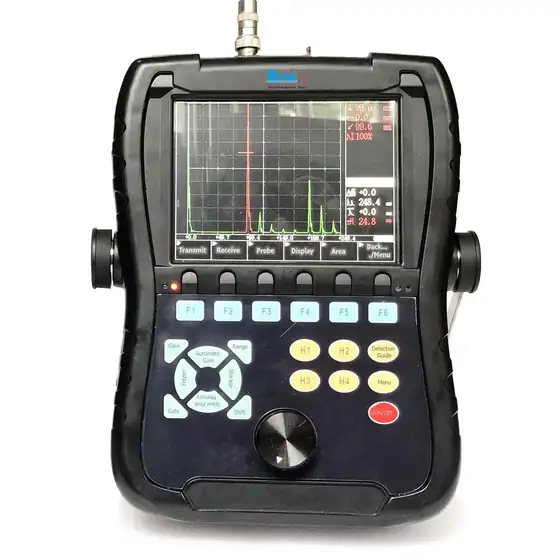
CK2108 Ultrasonic Flaw Detector
The CK2108 is a portable handheld ultrasonic flaw detector designed for rapid, accurate detection and evaluation of...
View Product →Typical Application Scenarios
- Scheduled ultrasonic inspection of state-owned main line track during daytime or night maintenance windows
- Periodic inspection of high-traffic rail corridors where downtime must be minimized
- Inspection of remote or difficult-to-access sections where lifting equipment is unavailable
- Verification runs after rail grinding, welding or replacement to confirm defect-free track
- Integration of inspection data into central monitoring systems for long-term track health assessment
How a Project Runs
Confirm possession window and prepare track section for inspection
Assemble the dual-rail vehicle on track using two-person crew with no lifting gear required
Fill coupling water tank and verify probe position and angle from console
Begin continuous detection at 15 km/h while A-scan and B-scan data are recorded
Mark suspected defect locations for manual verification after the run
Delivery and Support
- Equipment delivered to site with full technical documentation and safety instructions
- On-site commissioning and operator training provided by Ultra Instrument engineers
- Support for integration with existing inspection workflows and data management systems
- Remote technical assistance available during deployment and operation
Frequently Asked Questions
What inspection speeds are available for state-owned railways?
RT10-C hand push trolley operates at 5 km/h, UR18-D dual rail vehicle at 15 km/h, and GT6600 hi-rail vehicle at 40 km/h.
Is the UR18-D suitable for use on main line railways?
Yes. The UR18-D is designed for state-owned main line railways and passed the review of standard measurement technology by the Chinese Academy of Railway Sciences.
How is the equipment deployed on track without lifting gear?
The UR18-D uses a patented disassembled platform where no single module exceeds 48 kg, allowing two people to carry and assemble the vehicle on track within five minutes.
Does the equipment meet national inspection standards?
Yes. Ultra Instrument passed the rail flaw detection equipment inspection and review of Xi'an Railway Bureau in 2016 and joined the industry standard designation of rail flaw detection equipment of China Railway Corporation.
Can inspection data be reviewed after the crew leaves the site?
Yes. The system records A-scan and B-scan data, speed, sensitivity and job information, which can be transferred and replayed for expert review at a later time.
Is operator training provided?
Yes. Pre-sales, in-sales and after-sales technical support, on-site engineer training and construction team support are included with each order.
How do I get started with inspection equipment for my railway?
Email [email protected] with your rail profile, line type and annual inspection volume. Our engineers will provide a configuration and support plan.
Talk About Your State Owned Railways Programme
Tell us how many kilometres you inspect and how long your possession windows are and we will suggest the right equipment.