Private and Industrial Railways
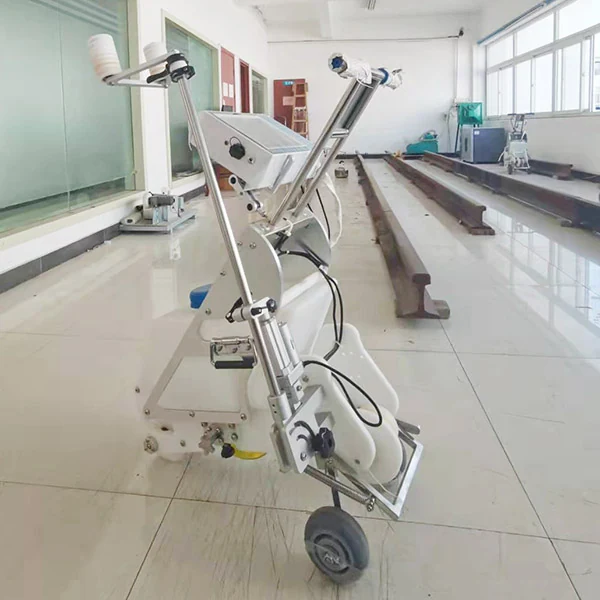
Private and industrial railways face challenges in maintaining rail integrity with limited inspection resources. The UR18-D dual-rail ultrasonic flaw detection vehicle and RT10-C hand push trolley are designed for small
Pain Points on These Lines
- Small inspection teams cannot manage large, heavy detection equipment that requires cranes or multiple personnel
- Limited crew size restricts the amount of track that can be inspected during short possession windows
- Manual inspection misses internal defects like transverse cracks in the rail head
- Lack of trained personnel leads to inconsistent results and poor data quality
- Existing equipment is not easily transportable to remote or low-access industrial sites
What These Operators Need
- Lightweight, modular detection systems that two people can carry and assemble
- Equipment that operates at 15 km/h or 5 km/h respectively, enabling inspection at operating speed
- On-site technical training for engineers and construction teams to ensure correct operation
- Data recording for A-scan and B-scan playback and expert review
- Support from the manufacturer during commissioning and daily operations
Recommended Equipment
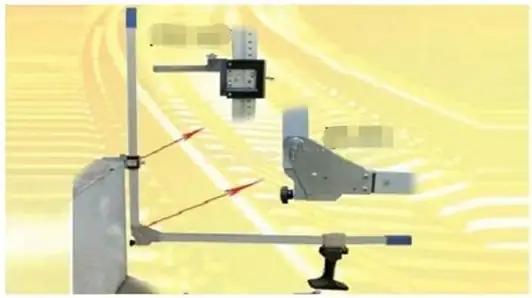
RAILWAY PLATFORM GAUGE
The Railway Platform Gauge is a portable measuring tool designed for precise measurement of the horizontal distance...
View Product →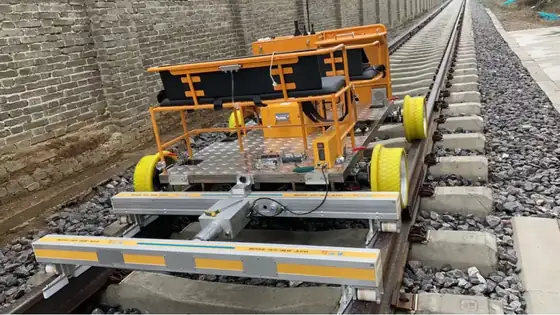
Track Geometry Measurement
The GJY-H-CK-22CM Track Geometry Measurement system is integrated into an electric flaw detection vehicle and runs at a...
View Product →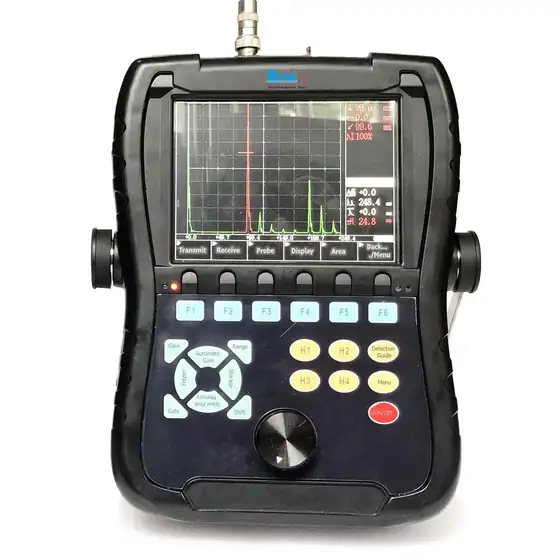
CK2108 Ultrasonic Flaw Detector
The CK2108 is a portable handheld ultrasonic flaw detector designed for rapid, accurate detection and evaluation of...
View Product →Typical Application Scenarios
- Periodic inspection of industrial railway lines with limited maintenance staff
- Routine flaw detection on private rail lines serving mines, ports, or factories
- Inspection of track in remote locations with no access to lifting equipment
- Night or shift-based inspections during limited track possession windows
- Verification of rail condition after maintenance, grinding, or replacement
How a Project Runs
Two-person crew carries disassembled UR18-D modules or RT10-C trolley to the inspection site
Modules are assembled on track or trolley is deployed without lifting gear
Coupling water tank is filled and probe position is set from the console
Continuous detection runs at 15 km/h (UR18-D) or 5 km/h (RT10-C) with data recorded
Suspected defect locations are marked for manual verification
Delivery and Support
- UR18-D or RT10-C delivered as disassembled modules or trolley
- On-site technical training provided for engineers and construction teams
- Support during commissioning and initial operation
- Access to pre-sales, in-sales and after-sales technical service
- Software and data management tools included for data playback and reporting
Frequently Asked Questions
How many people are needed to operate the UR18-D or RT10-C?
Two people can carry and assemble every module of the UR18-D, and the RT10-C is designed for one or two operators. No lifting equipment is required.
Can the equipment be used on remote industrial lines?
Yes. Both the UR18-D and RT10-C are modular and lightweight, allowing transport and operation in locations without access to cranes or heavy vehicles.
Is technical training provided?
Yes. Ultra Instrument provides on-site technical training for engineers and construction teams, as well as pre-sales, in-sales and after-sales support.
What data is recorded during inspection?
A-scan and B-scan data, speed, sensitivity settings, and job information are recorded for playback and expert review.
How is the equipment maintained in the field?
The systems are designed for field use with durable components. Support is available through on-site engineers and technical service teams.
Can the inspection be done at night?
Yes. The UR18-D and RT10-C are equipped with lighting that provides visibility at night, suitable for shift-based inspections.
How do I get support after delivery?
Ultra Instrument offers on-site engineer training, construction team support, and ongoing technical service for both UR18-D and RT10-C systems.
Talk About Your Private and Industrial Railways Programme
Tell us how many kilometres you inspect and how long your possession windows are and we will suggest the right equipment.