Port and Mining Railways
Port and mining railways operate under heavy axle loads and require reliable, repeatable inspection methods that can be deployed quickly in remote or low-access locations. Our ultrasonic rail flaw detection equipment is
Pain Points on These Lines
- Heavy axle loads accelerate rail fatigue and increase the risk of transverse cracks in the rail head
- Remote or low-access track locations make heavy inspection vehicles difficult to transport and deploy
- Short inspection windows limit how much track can be covered with traditional methods
- Manual inspection is slow and cannot detect internal defects that lead to derailments
- Lack of data recording makes it impossible to verify results after the crew has left site
What These Operators Need
- Equipment that can be carried and assembled by two people without lifting gear
- Detection speed that matches operational constraints and keeps possession windows short
- Consistent inspection results using the same non-destructive wheel probe technology across all tools
- Data recording for later review and verification by experts
- Robust design suitable for harsh industrial environments with frequent use
Recommended Equipment
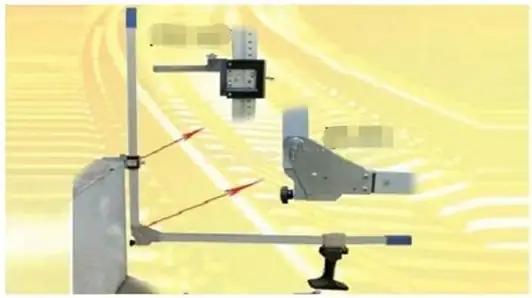
RAILWAY PLATFORM GAUGE
The Railway Platform Gauge is a portable measuring tool designed for precise measurement of the horizontal distance...
View Product →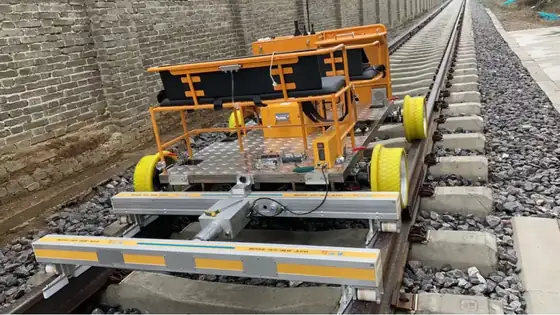
Track Geometry Measurement
The GJY-H-CK-22CM Track Geometry Measurement system is integrated into an electric flaw detection vehicle and runs at a...
View Product →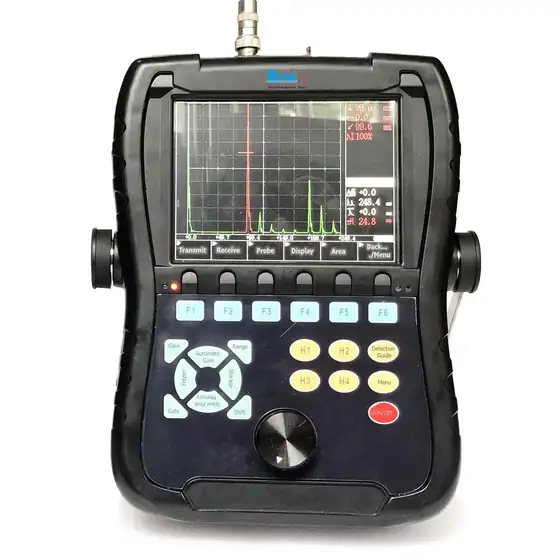
CK2108 Ultrasonic Flaw Detector
The CK2108 is a portable handheld ultrasonic flaw detector designed for rapid, accurate detection and evaluation of...
View Product →Typical Application Scenarios
- Routine ultrasonic inspection of port yard tracks with limited access and tight maintenance windows
- Periodic inspection of mineral company heavy haul lines where track access is restricted
- Verification runs after rail grinding or replacement on industrial sidings
- Inspection of track sections in remote mining areas where crane or transport support is unavailable
- Night shift inspections on port lines with high operational activity during daylight
How a Project Runs
Transport the disassembled modules to the inspection site by hand
Assemble the vehicle on track using a two-person crew within five minutes
Fill the coupling water tank and set probe position and angle from the console
Run continuous detection at operating speed while A-scan and B-scan data records
Mark suspected defect locations for manual verification
Delivery and Support
- Equipment shipped in modular form for easy transport
- All components designed to be carried by two people, with no single module exceeding 48 kg
- On-site commissioning and operator training provided with each order
- Technical support available during installation and first use
- Full documentation and operation manuals included
Frequently Asked Questions
Can the equipment be used in remote mining areas without lifting gear?
Yes. The UR18-D and RT10-C are designed with a disassembled platform and modules under 48 kg, so they can be carried and assembled by two people without lifting equipment.
What types of defects are detected on port and mining railways?
The equipment uses non-destructive wheel probe technology to detect transverse cracks in the rail head, which are invisible to visual inspection and can lead to derailments.
How fast can the equipment inspect track?
The UR18-D runs continuous detection at 15 km/h, and the RT10-C operates at 5 km/h, both suitable for short possession windows and high-traffic industrial environments.
Is the same technology used across all inspection tools?
Yes. All our products, including hand push trolleys and dual rail vehicles, use the same non-destructive wheel probe technology for consistent detection performance.
How is inspection data managed after the run?
The software records A-scan and B-scan data, speed, sensitivity, and job details, allowing playback and transfer for expert review and verification.
Do you provide on-site support during delivery?
Yes. We provide on-site commissioning, operator training, and technical support as part of the delivery process.
What is the endurance of the equipment per shift?
The UR18-D has an endurance of not less than 60 km or 4 hours of continuous work, and the RT10-C supports extended use for multiple inspection runs.
Talk About Your Port and Mining Railways Programme
Tell us how many kilometres you inspect and how long your possession windows are and we will suggest the right equipment.