
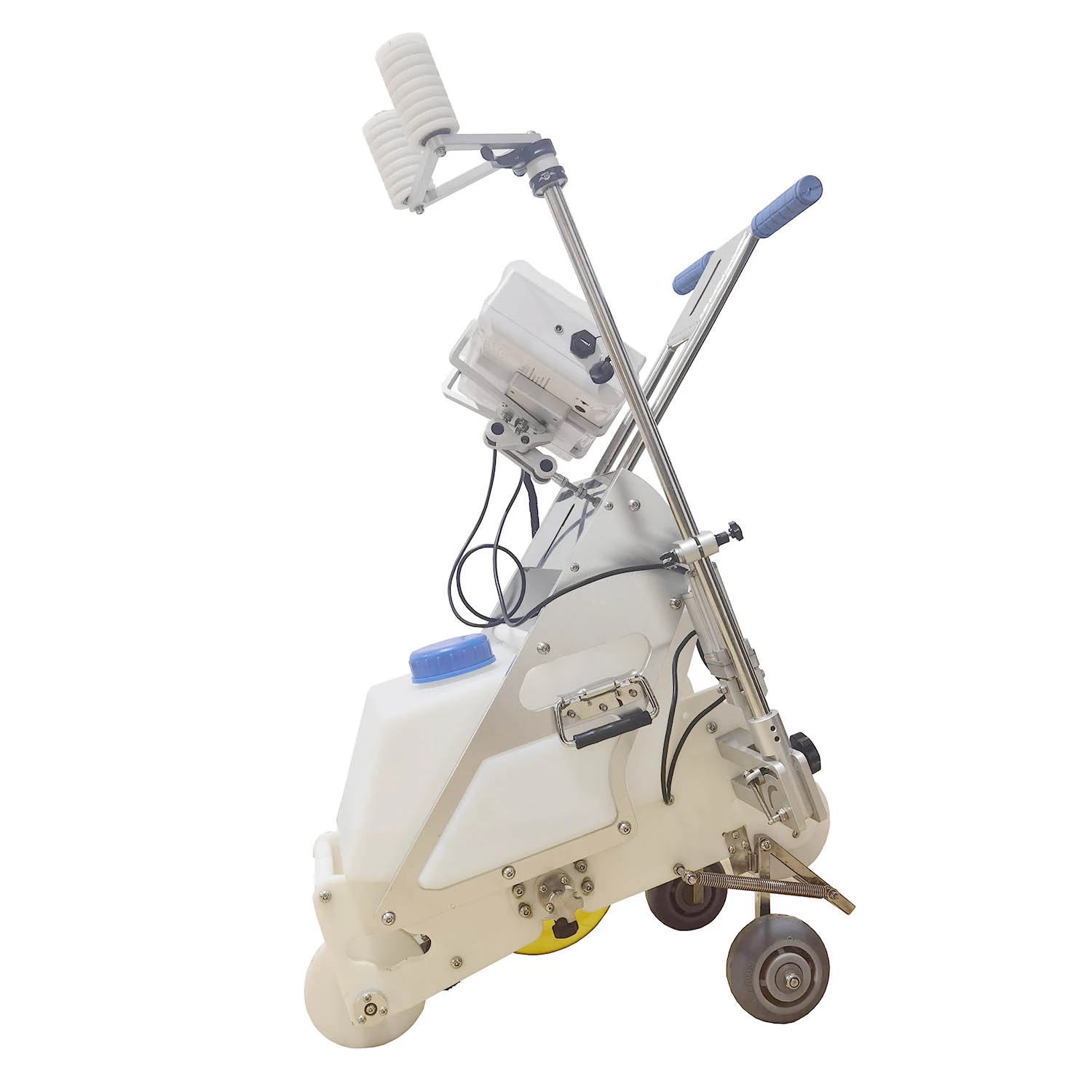
RT10-C Hand Push Portable Rail Flaw Detector
The RT10-C is a hand push portable rail flaw detector designed for manual inspection of single rails. It uses a 9-channel wheel probe with encoder-driven pulse every 3 mm and supports simultaneous A-scan and B-
RT10-C Hand Push Portable Rail Flaw Detector
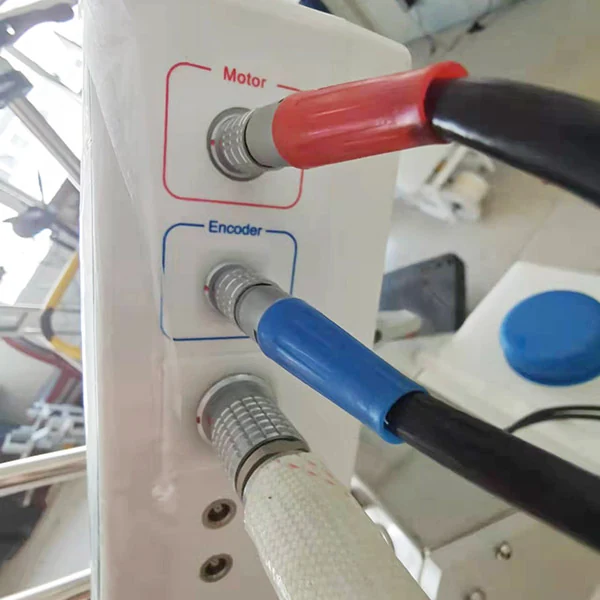
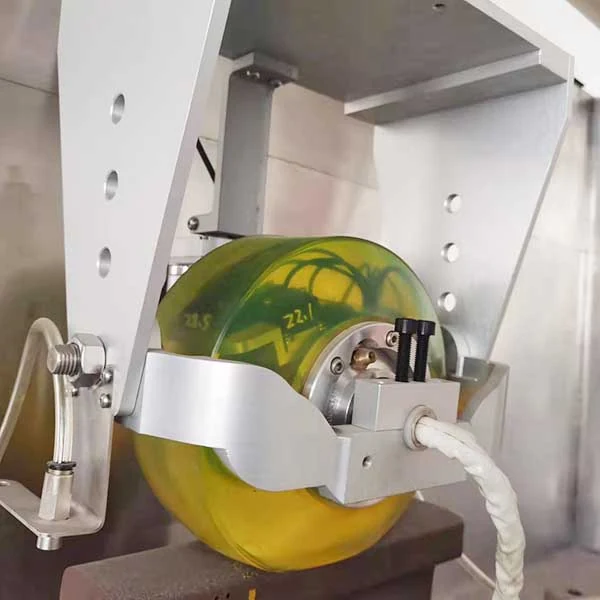
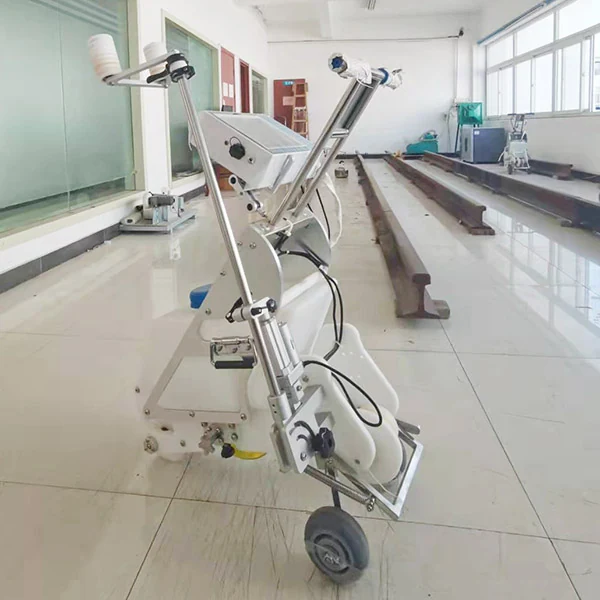
The RT10-C is a hand push portable rail flaw detector designed for manual inspection of single rails. It uses a 9-channel wheel probe with encoder-driven pulse every 3 mm and supports simultaneous A-scan and B-scan recording. The system runs on a high-performance industrial computer with a rugged tablet interface and operates in extreme temperatures from -30°C to 80°C. It records data up to 400 miles and includes differential GPS for location tracking.
- Single rail inspection with 9-channel wheel probe and encoder-driven 3 mm pulse
- Simultaneous A-scan and B-scan recording with B-scan as recommended mode
- High brightness 8.4 inch TFT LCD display readable in direct sunlight
- Operates in extreme temperatures from -30°C to 80°C for field use in harsh environments
- Data recording up to 400 miles with selectable file range and GPS location tagging
- Lithium battery provides up to 9 hours of continuous operation
- Lightweight design at 4 kg including battery, easy to carry on foot patrols
- Windows-based user interface with customizable screen icons and intuitive controls
Problems It Solves
- Manual walking inspection is slow and lacks consistent data recording
- Single rail inspection requires two separate passes for both rails
- Standard handheld tools lack real-time data recording and GPS tagging
- Low visibility displays fail in bright sunlight or low-light conditions
- Battery life under 6 hours limits inspection range per shift
- No system for replaying or reviewing inspection data after the crew leaves site
- Lack of temperature resilience limits use in extreme climates
Who It Is For
Railway maintenance crews conducting manual inspections on single rails
Industrial and private railway operators with limited access to inspection vehicles
Port and mining companies maintaining heavy haul track with frequent short windows
Metro systems requiring portable verification tools for defect confirmation
Contractors performing spot checks on track after grinding or welding
Application Scenarios
- Routine inspection of industrial railway lines during short possession windows
- Manual verification of suspected defects after automated detection runs
- Inspection of track sections where vehicle access is not possible
- Maintenance checks on port and mine railway lines with limited access
- Night-time inspection on urban metro lines with minimal disruption
Technical Features
- 9-channel wheel probe with encoder-driven 3 mm pulse for consistent scanning
- Simultaneous A-scan and B-scan recording with B-scan as recommended mode
- High brightness amorphous silicon TFT LCD display for visibility in sunlight
- Windows-based user interface with customizable screen icons and touch control
- Differential GPS with 1 Hz update and <5 meter accuracy for location tagging
- Operating temperature range from -30°C to 80°C for use in extreme climates
- Battery life of up to 9 hours with 4-hour recharge cycle
- Hand verification channel allows manual testing in test mode
- Data files are stored with speed, sensitivity, and scan information for later review
- Water tank with 18 L capacity for coupling fluid during inspection
Technical Specifications
| Detection Speed | Up to 5 km/h |
|---|---|
| Channels | 10 channels, 9 for rail scanning, 1 for hand verification |
| Scan Modes | Simultaneous A-scan and B-scan |
| Pulse Frequency | 2~4 MHz |
| Pulse Interval | 3 mm/pulse driven by encoder |
| Pulser Voltage | 520V negative spike |
| Gain Range | 0~80 dB in 1 dB steps |
| Alarm | Threshold level adjustable, slope line detection |
| Data Recording Range | Up to 400 miles, selectable |
| Battery | Lithium 14.4V, 10.0 Ah, up to 9 hours |
| Recharge Time | 4 hours |
| Power Input | 100~240VAC, 50~60Hz |
| Display | 8.4 inch amorphous silicon TFT LCD, 800×600, high brightness |
| GPS | Differential GPS, 1 Hz, <5 meter accuracy |
| Operating Temperature | -30°C to 80°C (-22°F to 176°F) |
| Storage Temperature | -40°C to 85°C (-40°F to 185°F) |
| Device Size | 330×240×220 mm (13×9.4×8.5 inch) |
| Weight | 4 kg (9 lb) including battery |
| Walking Stick Material | ABS |
| Water Tank Capacity | 18 L |
| Walking Stick Size | 430×850×920 mm (16.9×33.4×36.2 inch) |
| Walking Stick Weight | 20 kg with ground part, 16 kg without |
How It Is Operated
Assemble the walking stick and attach the detection unit at the inspection site
Fill the 18 L water tank with coupling fluid and check for leaks
Power on the system and verify GPS lock and battery level
Set probe position and gain level based on rail profile and inspection mode
Begin walking at up to 5 km/h while the system records A-scan and B-scan data
Quality Control
- System tested under operating temperature range from -30°C to 80°C
- Data recording accuracy verified with known defect standards
- Battery life tested to meet 9-hour continuous operation claim
- Display brightness measured to ensure readability in direct sunlight
- GPS location accuracy confirmed to be under 5 meters in field trials
Customization Options
- Probe configuration adjusted to match rail profile in service
- Software interface adapted to customer reporting format
- On-site commissioning and operator training provided with delivery
How It Compares With Other Options
| UR18-D dual-rail vehicle | The RT10-C is lighter and portable but works at 5 km/h and covers less track per shift |
|---|---|
| GT6600 hi-rail vehicle | The hi-rail vehicle operates at 40 km/h and drives on roads, but the RT10-C is usable in areas with no vehicle access |
| Single-channel handheld flaw detectors | The RT10-C uses 9-channel scanning and records data continuously, unlike single-channel tools that rely on manual notes |
Use Guide
- Verify the water tank is filled before starting the inspection
- Check GPS signal and battery level before each shift
- Confirm probe alignment and gain settings on a known rail section at start
- Maintain walking speed below 5 km/h to ensure consistent data capture
- Use the hand verification channel to confirm suspected defects in test mode
- Back up data files immediately after each inspection run
- Store the device in a dry place within -40°C to 85°C storage temperature range
Related Products
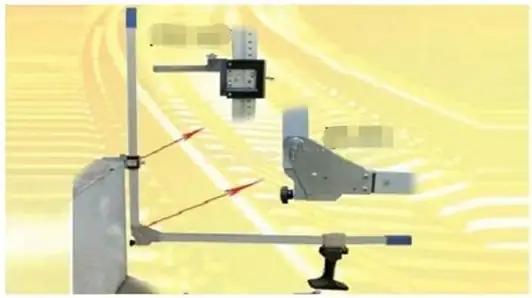
RAILWAY PLATFORM GAUGE
The Railway Platform Gauge is a portable measuring tool designed for precise measurement of the horizontal distance...
View Product →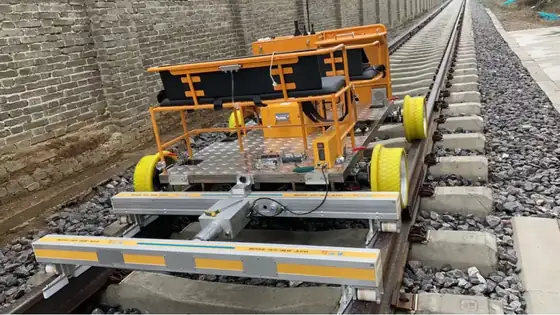
Track Geometry Measurement
The GJY-H-CK-22CM Track Geometry Measurement system is integrated into an electric flaw detection vehicle and runs at a...
View Product →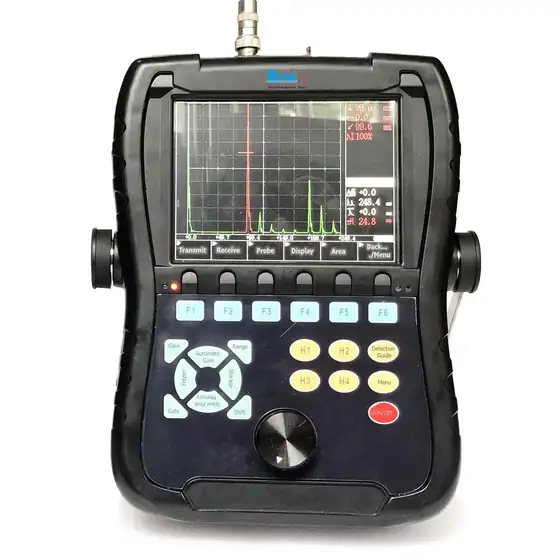
CK2108 Ultrasonic Flaw Detector
The CK2108 is a portable handheld ultrasonic flaw detector designed for rapid, accurate detection and evaluation of...
View Product →Frequently Asked Questions
What is the maximum speed for reliable detection?
The system is designed for detection at up to 5 km/h. Speeds above this reduce data quality and sensitivity.
How long does the battery last?
The lithium battery provides up to 9 hours of continuous operation under normal use conditions.
Can I record data beyond 200 miles?
Yes. The data file recording range is selectable up to 400 miles.
Is the display readable in sunlight?
Yes. The high brightness amorphous silicon TFT LCD is designed for visibility in direct sunlight.
What temperature range can it operate in?
The system operates from -30°C to 80°C (-22°F to 176°F) during use.
Do you provide training?
Yes. We provide on-site commissioning, operator training, and technical support with every order.
How do I get a quote?
Email [email protected] with your rail profile, inspection frequency, and annual track length to receive a configuration and pricing proposal.
Get a Configuration for the RT10-C Hand Push Portable Rail Flaw Detector
Send the rail profile, line type and annual inspection kilometres. Our engineers reply with a configuration and a price, not a brochure.