
Self-Drilling vs Self-Tapping Screws
When a drill point earns its cost and when a sharp point is the faster, cheaper and more reliable choice.
The distinction in one sentence
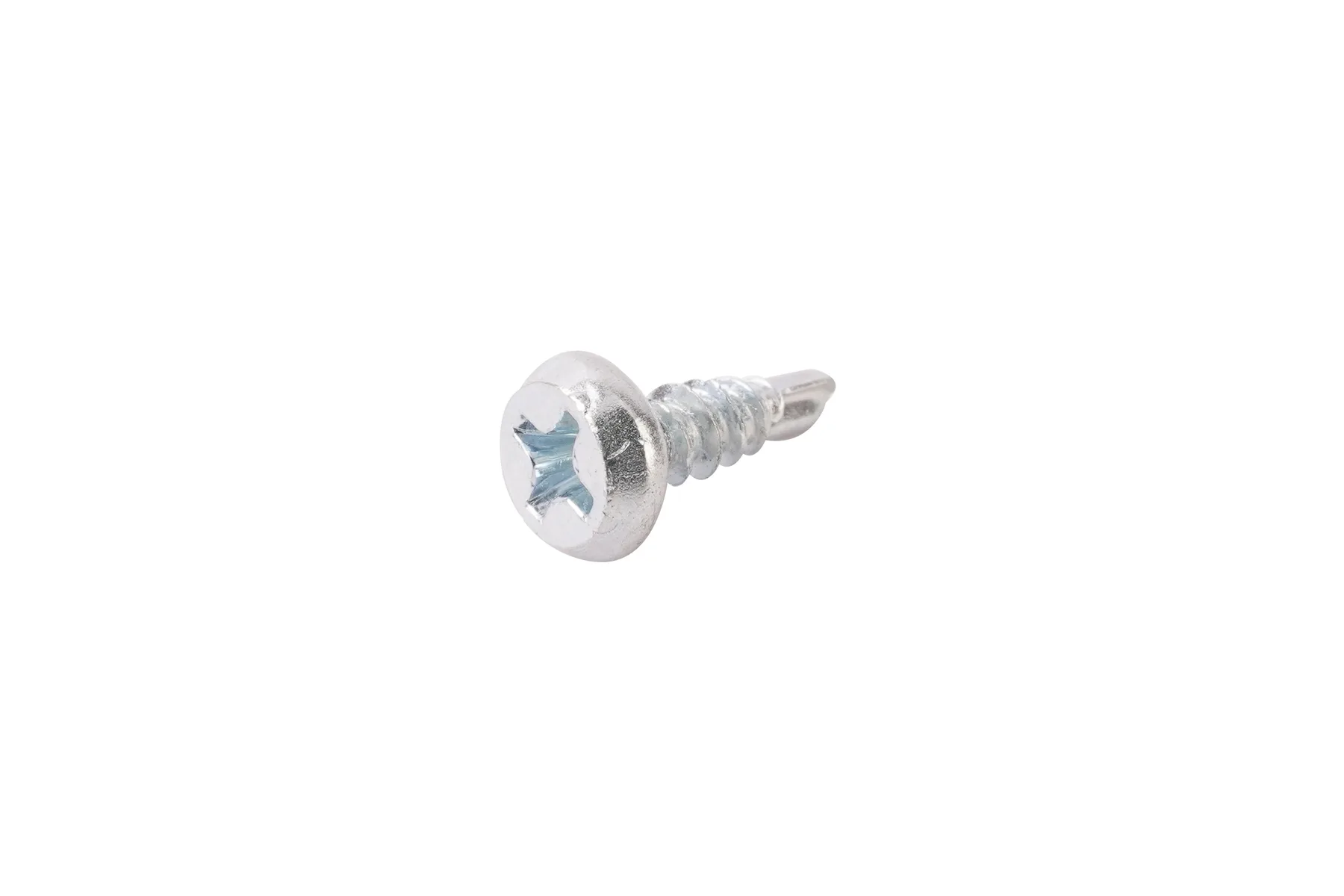
A self-drilling screw cuts its own hole before its thread engages; a self-tapping screw needs a hole already there and forms a thread in it. Everything else follows from that.
Where the sharp point wins
In thin gauge steel, in pre-punched track and in soft materials, a sharp point pierces and taps faster than a drill point cuts. It is also cheaper, because the point is a simpler forming operation and there is less hardened length to heat treat. On a partition job with thousands of stud-to-track fixings, that difference is real money.
Where the drill point wins
Once the steel is thick enough that a sharp point walks across the surface or pushes two sheets apart instead of piercing, the drill point is not an upgrade but a requirement. The same applies wherever no hole exists and drilling a separate hole would mean a second pass with a second tool.
Drill capacity is the number that matters
A drill point has a maximum total steel thickness it can pass through, set by the point length and the flute design. That capacity has to exceed the combined thickness of everything the screw goes through. Ordering by screw length alone is the usual way people get this wrong.
Why points burn out
A drill point that is too soft burnishes rather than cuts, generates heat and loses what hardness it had. One that is too hard is brittle and snaps. The balance is set in heat treatment, which is why case hardness is tested on samples from each batch rather than assumed from the furnace setting.
Practical selection
State the total steel thickness, the head style the assembly needs and the exposure. Those three settle point type, point size and coating between them. Everything else is preference.
Previous guide
Next guide
Put this into a quotation
Send the substrate, the thickness and the exposure and the right thread form, point and coating come back with the price.