
Buying Guide
Reading Timing Belt References
How to read a marking such as 10TT5 8600, and how to measure a belt when the marking is gone.
What the marking contains
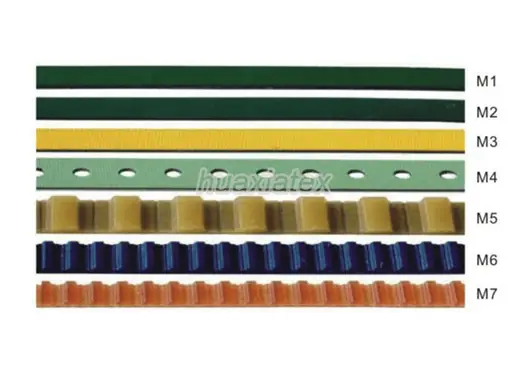
A feeder drive belt reference normally carries three things, the belt width, the tooth pitch designation and the belt length in millimetres. In a reference written as 10TT5 8600, the leading number is the width, TT5 is the pitch type and the final number is the length.
Why all three matter
Wrong width and the belt does not sit properly on the feeder wheels. Wrong pitch and the teeth do not mesh. Wrong length and the tensioner cannot take up the slack, or the belt will not go on at all.
Measuring when the marking is unreadable
Follow the belt path around the machine with a tape, keeping to the same route the belt takes, and give us the machine diameter as a cross check. Measure the belt width and count the teeth over a known length to confirm pitch.
Jointed against jointless
A jointless loop runs more smoothly and is the usual choice. A jointed belt is easier to fit on some layouts. Order the same type the machine currently runs unless you have a reason to change.
Punched belts
Some machines use a punched belt that engages the feeder wheels through holes rather than teeth. These are not interchangeable with toothed belts, so quote what is currently fitted.
Frequently Asked Questions
How often should a drive belt be replaced?
When it has stretched enough that the tensioner is at the end of its travel, or when the teeth show wear. A stretched belt slips and quietly lowers delivery on every feeder.
Can I fit a slightly different length?
Only if the tensioner can take up the difference. Quote the length you have and we will match it.
Apply This to Your Machine
Send the machine builder, model, diameter and gauge and we will tell you which parts to order.
Contact Matthew · [email protected] · WhatsApp and WeChat 0086-18910628679