


Material Guide
Choosing Yarn Guides
Ceramic against metal, when a guide is worn out, and what to measure before you order.
Why ceramic is used
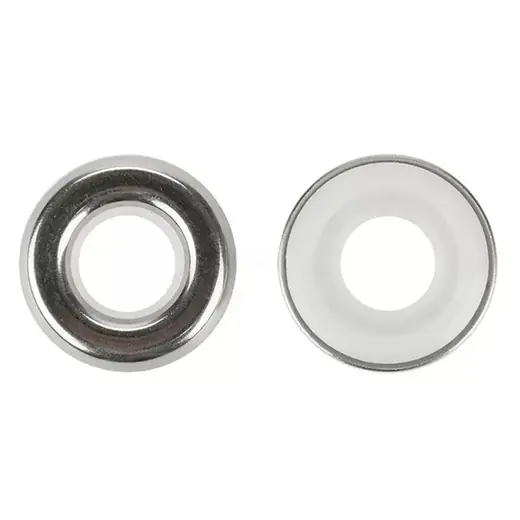
Yarn is abrasive. A ceramic guide is far harder than the yarn running across it, so the running surface stays smooth for a long service life. Zirconia and alumina are the usual choices for yarn contact surfaces.
What a worn guide does
A metal eyelet grooves. Once the groove has an edge, filament yarns split and staple yarns shed more fluff. Tension at that position rises, and if only some positions are grooved, the fabric shows the difference as barre.
How to check
Run a fingernail through the bore. Any catch means the guide is grooved. Guides are usually replaced across a feeder row rather than one at a time, so tension stays even across the machine.
What to measure
Bore diameter, overall length and the mounting form. A photo of the guide beside a ruler, plus a photo of it mounted, is enough to identify most guides when there is no marking.
Do not forget the holders
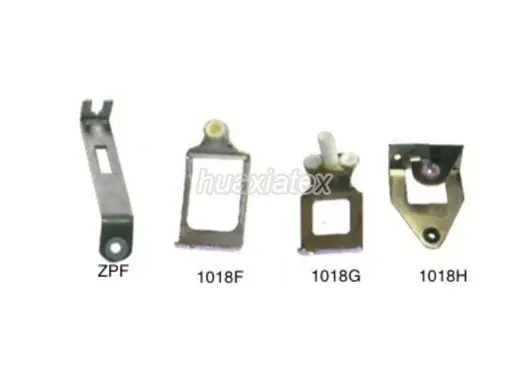
A guide that is not held square changes the yarn angle. Bent brackets and loose holders cause the same faults as a worn guide, so check both.
Frequently Asked Questions
Are all ceramic guides the same?
No. Bore diameter, radius and mounting form vary by machine and position. Match the part, not just the material.
How often should guides be replaced?
When they groove. That depends on yarn type, speed and running hours rather than a fixed interval.
Apply This to Your Machine
Send the machine builder, model, diameter and gauge and we will tell you which parts to order.
Contact Matthew · [email protected] · WhatsApp and WeChat 0086-18910628679