What Asian Seabass Is
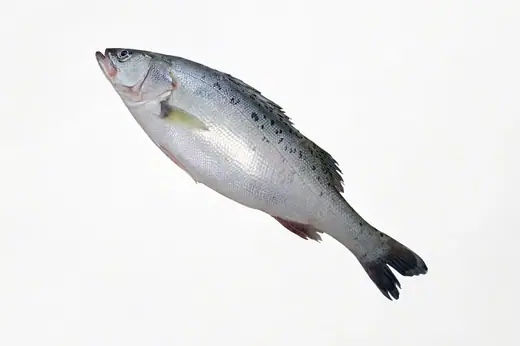
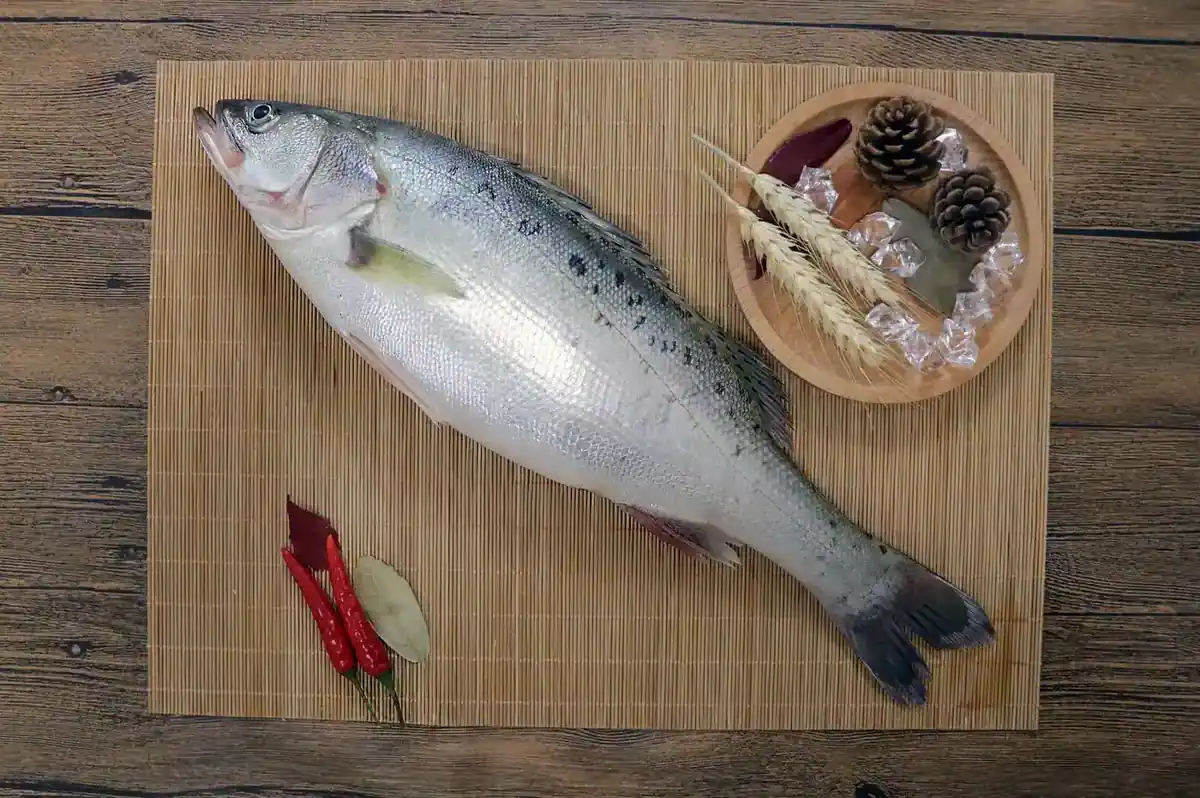
Asian seabass, also called sea perch and traded simply as seabass, carries the scientific name Lateolabrax japonicus. It is one of the most commercially valuable marine species in Northeast Asia, valued for firm white flesh, a delicate flavour and wide culinary use across restaurants, processors and retail. One natural identifying feature is the small black spots distributed along the upper back.
Biological Traits That Make It Suitable for Farming
Seabass has a streamlined, laterally compressed body with ctenoid scales and a moderately pointed head. It is carnivorous, grows quickly and tolerates a wide range of conditions. Best growth occurs at a salinity of 2 to 20 parts per thousand. The species survives from 0 to 38 C with optimal growth between 22 and 28 C. Feeding declines below 12 C and above 28 C and nearly stops below 7 C. It lives in shallow coastal waters and estuaries and is distributed across the Yellow Sea, Bohai Sea, Beibu Gulf, the Taiwan Strait and coastal Japan.
Why Baijiao in Zhuhai Leads the Industry
Zhuhai contributes over 80% of China's sea bass production, with more than 50,000 acres of farming area and an annual output of nearly 160,000 MT. The brackish water formed where the Pearl River system meets the South China Sea, combined with an average annual temperature of 22 C, sits inside the optimal growth window for the species. Our processing facility is inside that farming hub, and live fish reach the plant from nearby farms within minutes rather than hours.
What This Means for a Buyer
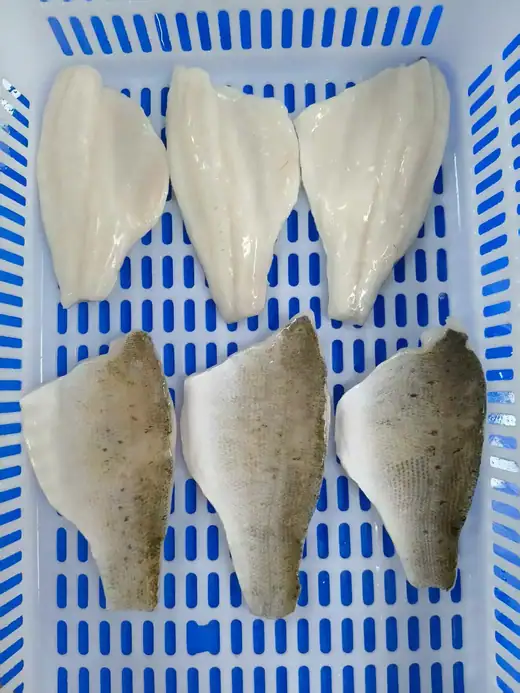
Concentrated production in one region is what makes stable size grading possible. Instead of assembling fish from scattered sources, a processor at the centre of the hub can hold 400-600g, 600-800g, 800-1000g, 1-1.5kg and 1.5-2kg bands through the year, and can cut fillets to 80-120g, 120-160g, 160-200g and 200-300g against a written specification.
Product Forms Built on This Raw Material
The same fish supports whole round, GGS, boneless fillet skin on or skinless, slices for hot and sour soup dishes, and flower cut presentations such as squirrel fish. A buyer can therefore run several retail and foodservice formats from one species and one plant code.