
GPCMOS C+1.25" Mount USB2.0 CMOS Guiding Astronomy Camera
The GPCMOS C+1.25" Mount USB2.0 CMOS Guiding Astronomy Camera is a CMOS-based astrophotography camera with a 1.25-inch outer interface for telescope eyepiece mounting and a C-mount inner interface for
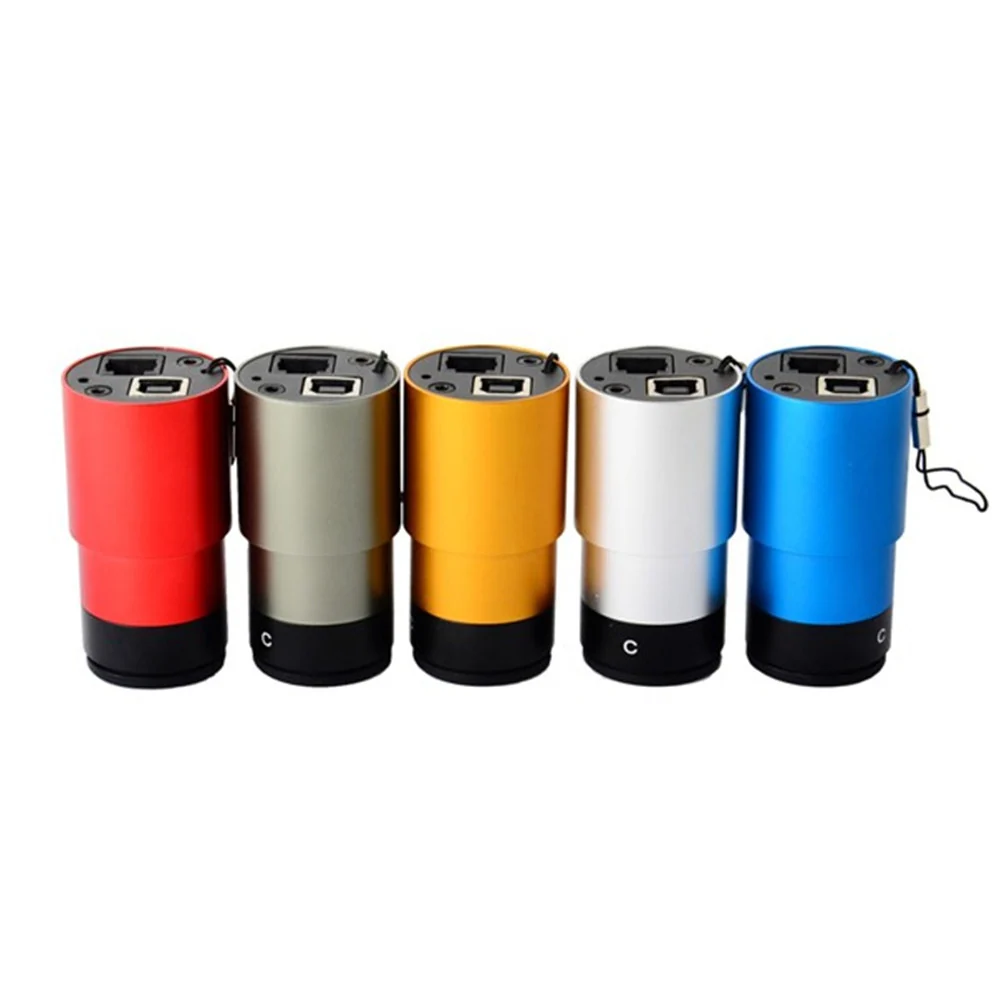
Product Overview
The GPCMOS C+1.25" Mount USB2.0 CMOS Guiding Astronomy Camera is a CMOS-based astrophotography camera with a 1.25-inch outer interface for telescope eyepiece mounting and a C-mount inner interface for industrial lenses. It features a built-in ST4 auto guider port and supports USB2.0 data transfer. The camera is designed for guiding and imaging the Moon, Sun, planets, galaxies, clusters, and nebulae using third-party astrophotography software via Native, ASCOM, or WDM drivers.
- Sensor2.0M/IMX290(C), 2.0M/IMX290(M), 2.0M/IMX327(C), 1.2M/AR0130(C), 1.2M/AR0130(M), 1.2M/IMX224(C)
- Sensor Size1/2.8" (5.60x3.10mm), 1/3" (4.80x3.60mm)
- Pixel Size2.9x2.9μm, 3.75x3.75μm
- Responsivity1300mv with 1/30s, 1200mv with 1/30s (F8.0), 2519mv with 1/30s, 5.5v/lux-sec, 6.5v/lux-sec, 2040mv with 1/30s
- Dark Signal0.15mv with 1/30s, 85.3dB, 44dB
- Frame Rate16@1920x1080, 18@1920x1080, 29@1280x960, 30@640x480, 27@1280x960, 54@640x480
Key Benefits
- 1.25-inch outer interface fits standard telescope eyepiece holders
- C-mount inner interface accepts standard industrial lenses
- Built-in ST4 auto guider port enables direct connection to autoguiding systems
- USB2.0 interface provides data transfer and power from a PC
- Supports 1x1 and 2x2 binning for faster frame rates and lower noise
- Exposure range from 0.105ms to 1000s for planetary and deep-sky imaging
- Native, ASCOM, and WDM drivers allow integration with third-party astrophotography software
Application Scenarios
- Guiding a telescope during long-exposure astrophotography of galaxies and nebulae
- Capturing planetary details of Jupiter or Saturn with high frame rates
- Solar imaging using a solar filter and the camera's 380-650nm spectral range
- Lunar surface detail capture with 1x1 binning for maximum resolution
- Mounting the camera on a telescope for automated tracking with an autoguider
Who It Is For
- Amateur and educational astronomy dealers
- Astrophotography hobbyists using Newtonian or refractor telescopes
- Educational institutions teaching observational astronomy
- Amateur astronomers conducting planetary and lunar imaging
- Small-scale observatories using automated guiding systems
Problems It Solves
- A camera without a built-in ST4 port requires an external adapter for autoguiding
- A non-standard interface prevents direct mounting on a telescope eyepiece
- Lack of USB2.0 power delivery forces the use of a separate power supply
- No support for binning limits frame rate and noise performance in low-light conditions
- Incompatible drivers prevent integration with popular astrophotography software
Technical Features
- CMOS sensor with ultra-high performance for low-light imaging
- 1.25-inch outer interface for telescope eyepiece mounting
- C-mount inner interface for standard industrial lenses
- Built-in ST4 auto guider port for direct autoguider connection
- USB2.0 interface for data transfer and power from PC
- Supports 1x1 and 2x2 binning modes for faster frame rates
- Exposure time range from 0.105ms to 1000s
- Spectral range 380-650nm with IR-cut filter, 350-1050nm with double-side AR coating
- White balance and manual temperature/tint adjustment available
- SDK available for Windows, Linux, macOS, Android in C/C++, C#, VB.NET, Python, Java, DirectShow, Twain
Specifications
| Sensor | 2.0M/IMX290(C), 2.0M/IMX290(M), 2.0M/IMX327(C), 1.2M/AR0130(C), 1.2M/AR0130(M), 1.2M/IMX224(C) |
|---|---|
| Sensor Size | 1/2.8" (5.60x3.10mm), 1/3" (4.80x3.60mm) |
| Pixel Size | 2.9x2.9μm, 3.75x3.75μm |
| Responsivity | 1300mv with 1/30s, 1200mv with 1/30s (F8.0), 2519mv with 1/30s, 5.5v/lux-sec, 6.5v/lux-sec, 2040mv with 1/30s |
| Dark Signal | 0.15mv with 1/30s, 85.3dB, 44dB |
| Frame Rate | 16@1920x1080, 18@1920x1080, 29@1280x960, 30@640x480, 27@1280x960, 54@640x480 |
| Resolution | 1920x1080, 1280x960, 640x480 |
| Binning | 1x1, 2x2 |
| Exposure Time | 0.105ms~1000s |
| Spectral Range | 380-650nm (with IR-cut filter), 350-1050nm (with double-side AR coating) |
| White Balance | ROI, Manual Temp Tint Adjustment, NA for Monochromatic Sensor |
| Color Technique | Ultra-Fine TM Color Engine, NA for Color Sensor |
| Capture/Control | Still Picture and Movie |
| Cooling System | Natural with High Performance Cooling Structure |
| Guiding Port | ST4-port |
| Operating Temperature | 10~50°C |
| Storage Temperature | 20~60°C |
| Operating Humidity | 30~80%RH |
| Storage Humidity | 10~60%RH |
| Power Supply | DC 5V over PC USB Port |
| Software Environment | Microsoft Windows XP/Vista/7/8/10 (32 & 64 bit), Linux/Mac OSX |
| PC Requirements | CPU: Equal to Intel Core2 2.8GHz or Higher, Memory: 2GB or More |
Specifications are taken from the AMADA product data for this item. Confirm critical dimensions with us in writing before ordering.
Customization Options
- Choose between IMX290(C), IMX290(M), IMX327(C), AR0130(C), AR0130(M), or IMX224(C) sensor variants
- Select 1.2M or 2.0M resolution models based on imaging needs
- Choose between C-mount or 1.25-inch interface models for compatibility
- Request SDK integration for custom software control
Comparison With Other Options
| Standard USB3.0 astronomy camera | The GPCMOS uses USB2.0, which limits bandwidth but reduces cost and power draw; suitable for guiding, not high-speed video capture. |
|---|---|
| Camera without ST4 port | The built-in ST4 port allows direct autoguider connection, eliminating the need for an external interface box. |
| Camera with only 1x1 binning | This model supports 2x2 binning, improving frame rate and reducing noise in low-light conditions. |
Use Guide
- Mount the camera on a telescope using the 1.25-inch outer interface
- Connect the ST4 port to the autoguider system for real-time tracking correction
- Plug the USB2.0 cable into a PC to power the camera and transfer data
- Use the Native, ASCOM, or WDM driver to connect to astrophotography software
- Set exposure time between 0.105ms and 1000s depending on target brightness
- Enable 2x2 binning for faster frame rates during guiding or low-light imaging
- Adjust white balance and temperature/tint settings for color accuracy
Guides and Applications
Frequently Asked Questions
What is the interface size for mounting on a telescope?
The camera has a standard 1.25-inch outer interface for fitting into telescope eyepiece holders.
Can I use this camera with an autoguider?
Yes. The built-in ST4 auto guider port allows direct connection to an autoguider system.
Does the camera need a separate power supply?
No. The camera draws power from the PC via the USB2.0 port.
What is the exposure time range?
Exposure time ranges from 0.105ms to 1000s, suitable for planetary and deep-sky imaging.
Which operating systems are supported?
Windows XP/Vista/7/8/10 (32 & 64 bit), Linux, and macOS are supported with Native, ASCOM, and WDM drivers.
Can I use this camera for color imaging?
Yes. The color models support Ultra-Fine TM Color Engine for color imaging; monochrome models are available for scientific use.
Request A Price On The GPCMOS C+1.25" Mount USB2.0 CMOS Guiding Astronomy Camera
Send quantity, destination and the application. We will confirm the configuration, the price and the lead time.