
Inverted Fluorescence Microscope
Inverted fluorescence microscopes designed for observing live cells, tissue cultures and fluorescently labelled samples on culture dishes or slides mounted on a stage below the objective lens.
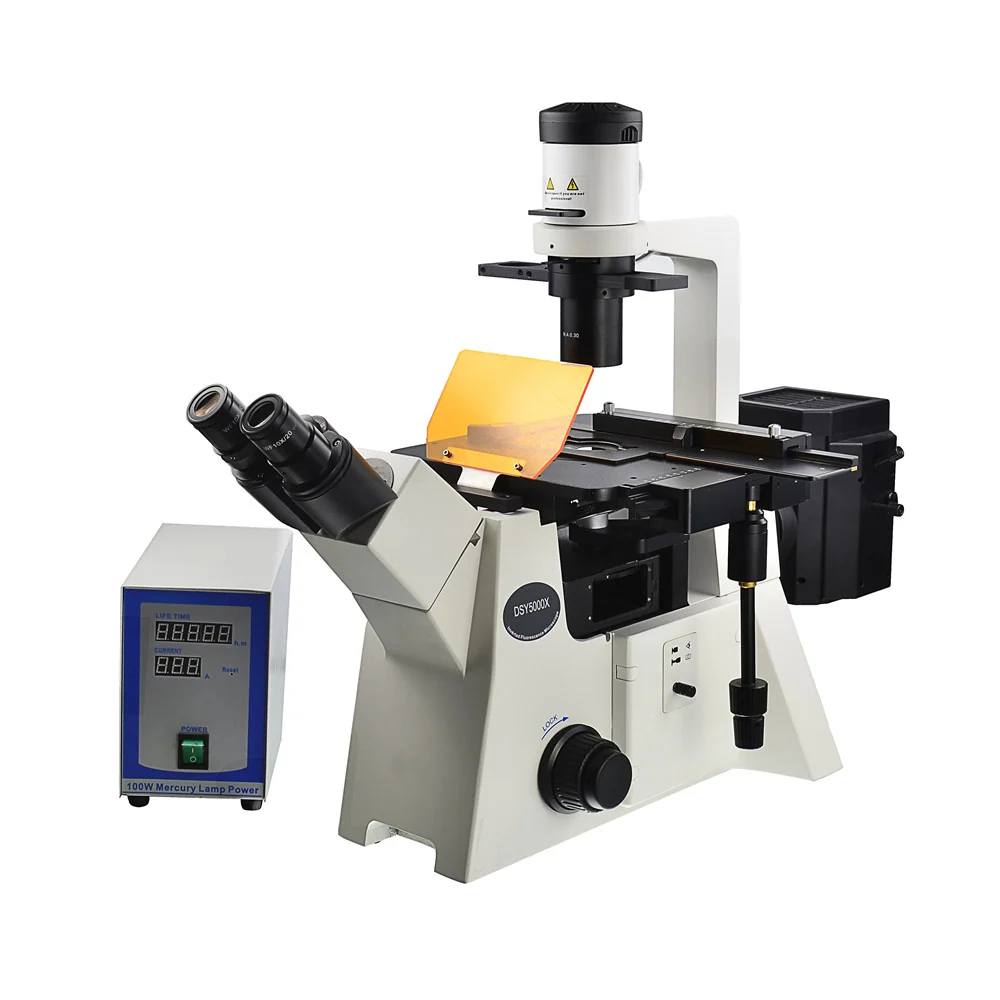
An inverted fluorescence microscope positions the objective lens below the sample stage, allowing the illumination path to pass upward through the specimen. This design is ideal for observing samples in culture dishes, flasks or multi-well plates without interference from the container base. The XIF200 and XIF100 models feature an infinity independent achromatic optical system with a one-piece structure for stability and reliable performance. Both models support binocular and trinocular viewing with adjustable interpupillary distance and diopter correction.
Every Inverted Fluorescence Microscope In Stock
All 2 items in this category, listed in full.
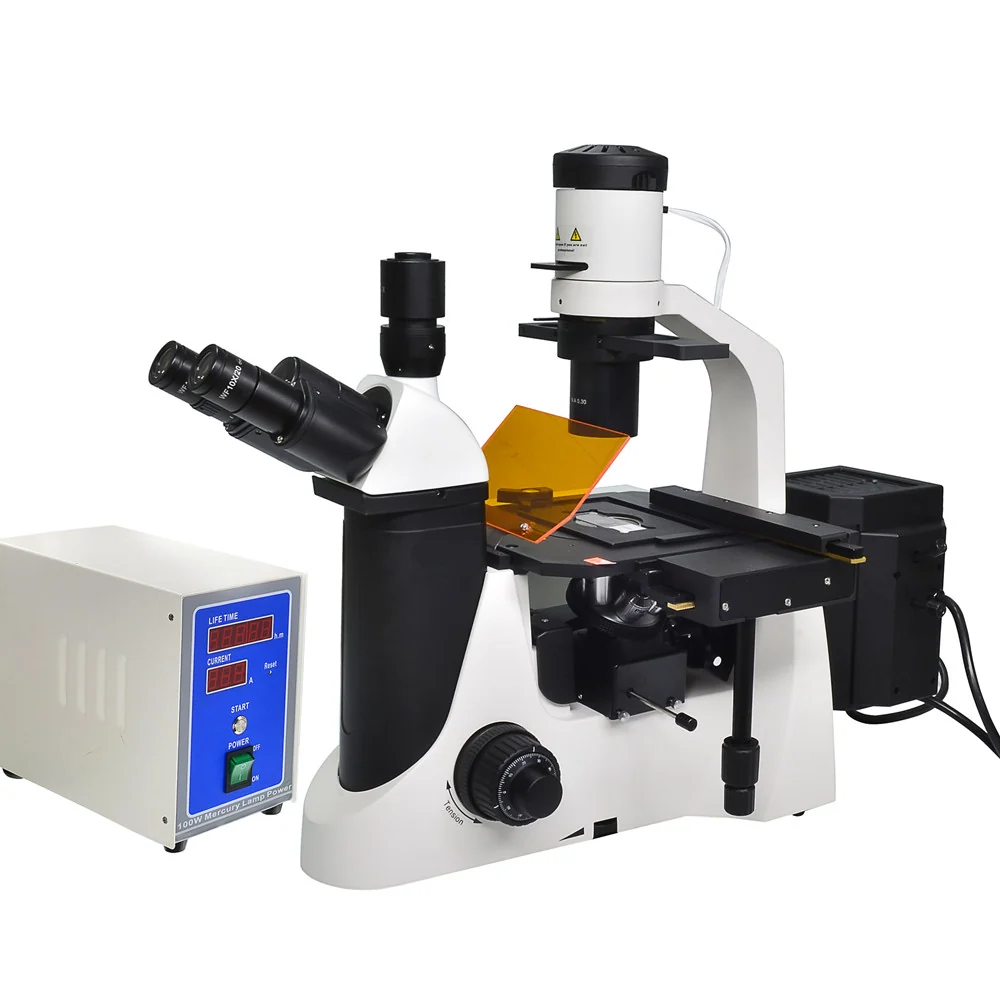
What Goes Wrong Without the Right Inverted Fluorescence Microscope
- Traditional upright microscopes struggle with thick culture dishes or flasks because the objective cannot focus through the bottom without distortion
- Fluorescent samples in liquid media require even illumination from below to avoid uneven excitation and signal loss
- Vibration from the lab bench can degrade image stability during long-term time-lapse imaging
- Inconsistent interpupillary distance forces users to adjust head position, causing fatigue during extended observation
- Lack of trinocular port limits the ability to capture images with a camera without removing the eyepiece
Who Buys From This Category
- Life science researchers studying live cell dynamics and fluorescence markers
- Clinical laboratories performing cytology and immunofluorescence staining
- Pharmaceutical and biotech labs conducting drug screening on cell cultures
- University teaching labs demonstrating fluorescence techniques in cell biology
- Biomedical engineering teams observing cell adhesion and growth on substrates
Why These Items
- Inverted design allows direct observation of samples in culture dishes, flasks and multi-well plates without interference from container base
- Infinity independent achromatic optical system provides consistent image quality across magnification levels
- One-piece structure enhances mechanical stability, reducing vibration during long-term imaging
- Binocular and trinocular configurations with adjustable interpupillary distance and diopter correction reduce user fatigue
- High eye-point plan eyepiece WF10X/20 improves comfort for users wearing glasses or working at low working distances
Where These Are Used
- Observing live cell migration in a 35mm culture dish with minimal focus adjustment
- Capturing fluorescence images of a multi-well plate during a drug response assay
- Monitoring calcium flux in neurons over time using time-lapse fluorescence imaging
- Teaching students how to align and focus a fluorescence microscope with a trinocular port
- Inspecting fluorescently labelled proteins in a tissue section mounted on a slide
Before You Order
- Confirm the stage size and sample height clearance before selecting a model for your culture vessels
- Choose the trinocular version if you need to connect a digital camera for image capture
- Ensure your lab bench has a stable surface to minimize vibration during high-magnification imaging
- Check that the eyepiece tube diameter matches your camera adapter if using a digital imaging system
- The high eye-point eyepiece is recommended for users who wear corrective lenses
Frequently Asked Questions
Can I use an inverted fluorescence microscope with culture dishes and flasks?
Yes. The inverted design allows the objective to focus upward through the bottom of culture dishes, flasks and multi-well plates without obstruction.
What is the difference between the XIF200 and XIF100 models?
The XIF200 has a binocular inclined 45o head with interpupillary distance 52-75mm and diopter adjustment. The XIF100 offers both binocular (52-75mm) and trinocular (48-75mm) configurations with similar optical specifications.
Do these microscopes support digital imaging?
Yes. The trinocular version of the XIF100 includes a port for attaching a digital camera. The XIF200 is binocular only and does not have a trinocular port.
Is the optical system suitable for high-magnification fluorescence imaging?
Yes. The UCIS infinity independent achromatic optical system is designed to maintain image quality across magnification levels, suitable for fluorescence applications.
Can I use the high eye-point eyepiece if I wear glasses?
Yes. The high eye-point plan eyepiece WF10X/20 is designed for users who wear glasses, allowing full field of view without requiring removal of eyewear.
Get A Price On Inverted Fluorescence Microscope
Send the model numbers you are considering, or describe the task and let us shortlist them for you.