
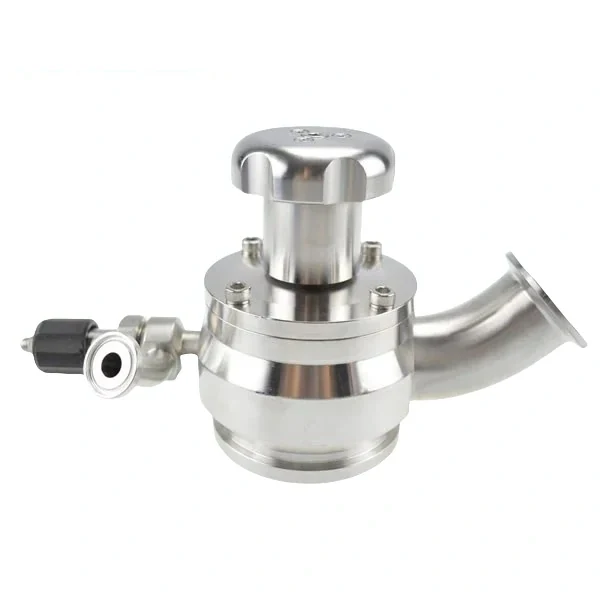
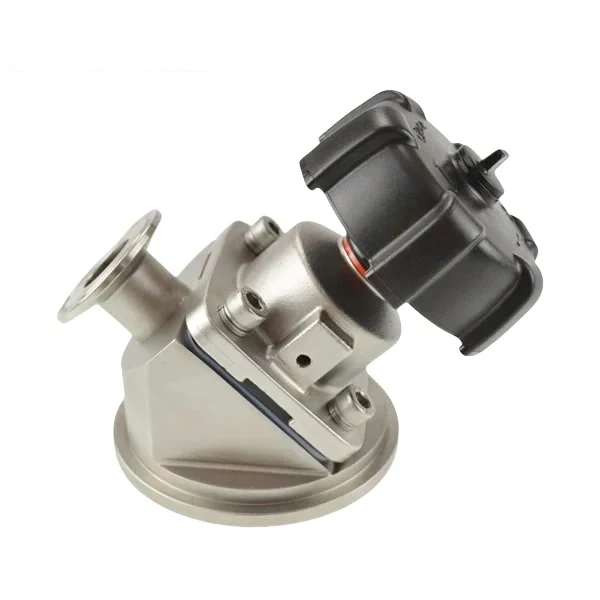
Manual Stainless Steel Sanitary Tank Bottom Valve for Food Processing-Diaphragm Valve
The Sanitary Tank Bottom Valve diaphragm valve is engineered with premium 304/316L stainless steel for superior corrosion resistance and durability in hygienic applications.
Why Engineers Specify This Item
- Its quick-release tri-clamp design enables fast disassembly for thorough cleaning, meeting AS, BS, 3A, SMS, and DIN standards with FDA, 3A, and CE certifications.
- The full-drainage structure eliminates dead zones, making it ideal for pharmaceutical and dairy processing where zero contamination is critical.
- Precision-machined surfaces (Ra≤0.8μm) ensure seamless integration with sanitary pipelines.
What It Prevents
- Stem seals on conventional valves that leak into product after repeated steam cycles
- Pockets in the valve body that hold liquid and will not drain on a sloped line
- Frequent diaphragm changes because the wrong elastomer was fitted for the duty
Technical Data
Figures below are the catalogue range for this item. Exact dimensions are confirmed in writing against the standard you work to before production.
| Material | SS 304 or SS 316L for option |
|---|---|
| Media | Water, oil, milk, beverage, sanitary fluid etc |
| Connection | Butt-Welded, Thread, Clamped, Flange |
| Size Range | 1"-6" |
| Pressure | 0-20Bar |
| Working Temperature | -20 C to 120 C |
| Standard | AS, BS, 3A, DIN, SMS, ISO |
| Gasket | EPDM/SILICON/PTFE/VITON |
| Certification | 3A, FDA, CE Ball Valve Catalog |
Materials
- SS 304
- SS 316L
Manufacturing Process
- Machining
- Forming and welding
- Interior polishing
- Assembly
- Quality inspection
Quality Control
- Dimensional check against the standard stated on the order
- Surface finish verified against the specified Ra figure
- Visual and leak inspection before packing
- Material certificates to EN 10204 3.1 available on request
Where It Is Installed
- Purified water ring main take-off points
- Sterile media addition into a fermenter
- Tank bottom outlet where the valve must drain fully
- Dosing aggressive additives that would attack a ball seat
Who Buys It
- Pharmaceutical and biotech plants running purified water and WFI loops
- Cosmetic and fine chemical producers handling sterile or aggressive media
- Anyone who has to prove there is no dynamic seal in the product path
What It Is Built To
- 3A
- FDA
- CE Ball Valve Catalog
What We Can Change
- Non-standard sizes made to your dimensions
- Special connection types and mixed-standard ends
- Customised surface finish down to Ra 0.4 um
- Seal material selected for your media and CIP cycle
How It Compares
Compared with Sanitary Butterfly Valves
Specify the Manual Stainless Steel Sanitary Tank Bottom Valve for Food Processing-Diaphragm Valve where the duty is what this category is built for: the valve to use when the actuation mechanism must be completely isolated from the product, for high purity water, media and sterile transfer. Move to sanitary butterfly valves instead where the requirement is compact on-off isolation for hygienic pipework, from a hand lever on a 1 inch transfer line to a pneumatic actuator on a tank outlet.
Compared with Sanitary Ball Valves
Specify the Manual Stainless Steel Sanitary Tank Bottom Valve for Food Processing-Diaphragm Valve where the duty is what this category is built for: the valve to use when the actuation mechanism must be completely isolated from the product, for high purity water, media and sterile transfer. Move to sanitary ball valves instead where the requirement is full bore shut-off where the line must drain clean and the pressure drop has to stay near zero, including 3-way and 4-way diverting bodies.
Compared with A general industrial equivalent
An industrial-grade part of the same nominal size is usually cheaper and carries no declared hygienic surface finish, no crevice-free joint geometry and no material certificate. On a product contact line that difference shows up at the first swab test, not on the purchase order.
Installing and Living With It
Bring the two ferrule faces square before closing the clamp. Fit the gasket dry and seated in the groove, then tighten the clamp evenly; overtightening extrudes the gasket into the bore.
Purge the bore with inert gas before welding and keep heat input low so the heat affected zone does not discolour. Polish the internal weld to the finish specified for the rest of the line.
Do not use tape or sealant on a hygienic union thread. The seal is made by the gasket at the liner seat, not by the thread, so check the gasket is seated before tightening the nut.
Align the flange faces parallel before drawing the bolts up, and tighten opposite pairs in stages so the gasket is loaded evenly across the face.
Keep the duty inside the stated working temperature range of -20 C to 120 C. Running a CIP cycle hotter than the seal material allows is the most common cause of early failure on this item.
Do not exceed the 0-20Bar working pressure. Where the line sees pressure pulsation, specify a heavy duty or bolted clamp at the joints either side.
Record the standard, size, material and seal material fitted, so the replacement ordered in two years matches what is installed today.
Others in the Diaphragm Valves Range
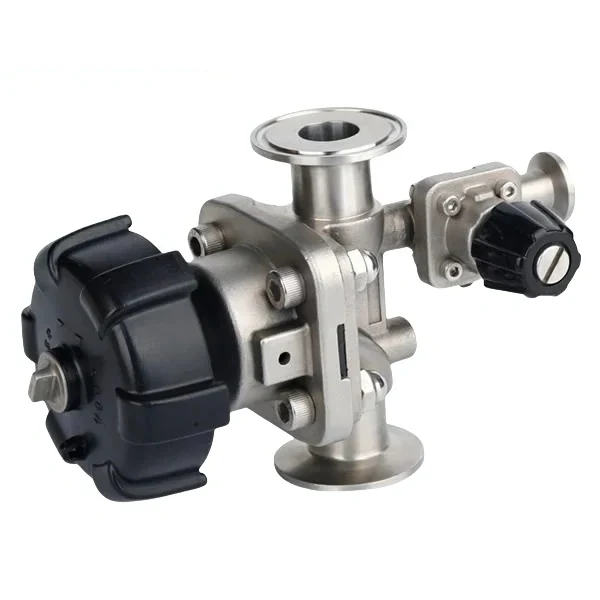
Manual Clamped Sanitary Diaphragm Valve with Drain - Stainless Steel
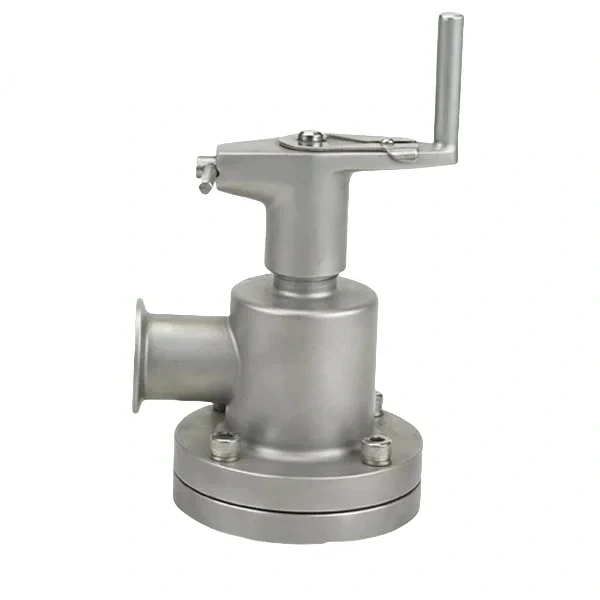
Sanitary Manual Tank Bottom Seat Valve - Stainless Steel Food Equipment
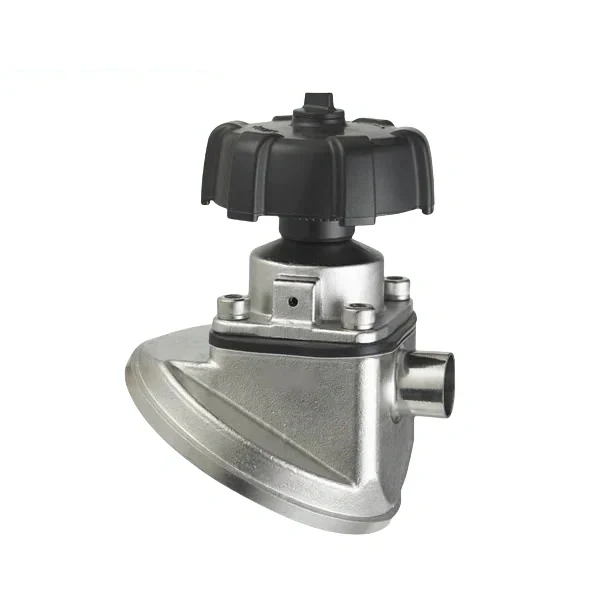
Hygienic Manual Tank-Bottom Diaphragm Valve - Stainless Steel
Manual Operated Stainless Steel Clamped Tank Bottom Diaphragm Valve
Guides That Cover This Item
Surface Finish Ra and Why Polished Is Not a Specification
Ra 0.8 um is the standard finish on everything here, with Ra 0.6 um and Ra 0.4 um available. This is what the figure means and whe...
How to Choose Between Butterfly Ball Diaphragm and Check Valves
Four valve families, four different jobs. Picking on price rather than duty is how you end up with a valve that cleans badly or we...
Industries This Item Serves
Related Capability
Manual Stainless Steel Sanitary Tank Bottom Valve for Food Processing-Diaphragm Valve FAQ
What we are asked before this item is ordered.
What sizes is the Manual Stainless Steel Sanitary Tank Bottom Valve for Food Processing-Diaphragm Valve available in
The catalogue range is 1"-6". Dimensions follow the AS, BS, 3A, DIN, SMS, ISO standards. Confirm the tube outside diameter and wall thickness you work to when you enquire and we will match the exact dimensions before production.
Which material should I specify for the Manual Stainless Steel Sanitary Tank Bottom Valve for Food Processing-Diaphragm Valve
Material options are SS 304 or SS 316L. Choose 316L where chlorides are present or where the item will be welded into a line that has to be validated; 304 is adequate for neutral product and standard caustic CIP. Material certificates to EN 10204 3.1 are available on request.
Which seal material suits my cleaning cycle
The Manual Stainless Steel Sanitary Tank Bottom Valve for Food Processing-Diaphragm Valve is supplied with EPDM/SILICON/PTFE/VITON sealing options. EPDM is the default for hot water and caustic CIP, silicone for high temperature steam contact, PTFE for aggressive chemicals and Viton for oils and fats. Tell us the media and the peak CIP temperature and we will specify it on the order.
What is the lead time and minimum order for this item
Standard catalogue items such as the Manual Stainless Steel Sanitary Tank Bottom Valve for Food Processing-Diaphragm Valve are typically 7-15 days, and small quantity orders of standard items are accepted. Custom sizes, special connections and bulk quantities are quoted with a confirmed date before production starts.
Quote the Manual Stainless Steel Sanitary Tank Bottom Valve for Food Processing-Diaphragm Valve
Send the size, media, working pressure, temperature and the standard you work to. We confirm dimensions, material and finish in writing before quoting.