
Making a Tri-Clamp Joint That Does Not Leak
The tri-clamp joint is three parts working together. When it weeps after a CIP cycle, it is almost always because one of the three was chosen or fitted wrongly.
On This Page
The Three Parts Have to Match
Ferrule, gasket and clamp are one system. A gasket with the wrong bore intrudes into the flow path and gets eaten away at the edge. A clamp made for a different ferrule standard will not close square. Buy the three together from one range and the joint closes flat every time.
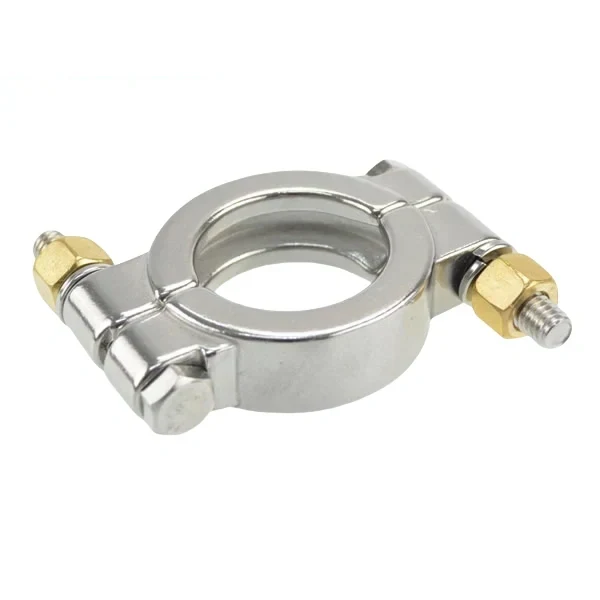
Choose the Clamp for the Duty
A single-pin clamp is right for everyday joints that are opened for cleaning. Heavy duty and high pressure bolt closure clamps belong on filter housings, homogeniser discharge and anywhere the joint sees pressure pulsation or has to be torqued to a figure. Using a light clamp on a high pressure joint is how joints creep open.
Match the Gasket to the Media
EPDM is the default for hot water and caustic CIP. Silicone suits high temperature steam contact. PTFE suits aggressive chemicals and solvents. Viton suits oils and fats. A gasket that has taken a set after repeated hot cycles should be replaced, not retightened.
Align Before You Tighten
Bring the two ferrule faces square and parallel before closing the clamp. If the joint has to be pulled into line by the clamp, the pipework is fighting the joint and the gasket will be loaded unevenly. Fix the alignment at the supports instead.
Tighten Evenly and Do Not Overtighten
Overtightening extrudes the gasket into the bore, which creates exactly the crevice the joint is meant to avoid and destroys the gasket. Close bolted clamps evenly across the closure rather than pulling one side down first.
Inspect on a Schedule
Gaskets are consumables. Replace them on a schedule based on cycle count and temperature rather than waiting for the joint to weep. Keep a stock of the sizes and materials your line actually uses.
Items Covered In This Guide
Questions On This Topic
Why does my joint leak only after a hot CIP cycle
Usually the gasket material is wrong for the temperature, or the gasket has taken a compression set and no longer recovers between cycles. Check the elastomer against your peak CIP temperature before assuming the clamp is at fault.
Can I reuse a gasket
A gasket in good condition that has not taken a set can be reused, but a gasket that shows flattening, cracking or extrusion at the bore should be replaced. They are the cheapest part of the joint and the most common cause of failure.
Want This Checked Against Your Line
Send the drawing, the line list or a photograph of the joint you are trying to match. We confirm the specification in writing before quoting.