
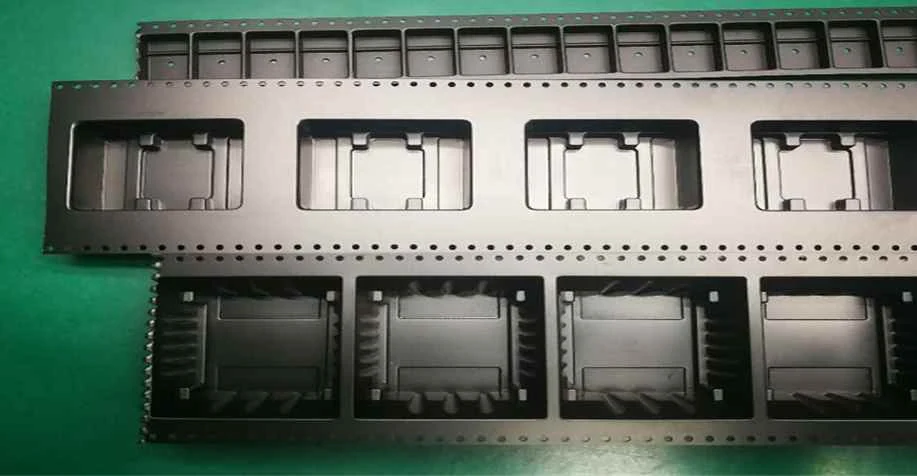
Carrier Tape Types By Width, Pocket And Anti Static Level
The carrier tape is a tape-shaped product with equidistant cavities for holding electronic components.
- Home
- Knowledge Center
- Carrier Tape Types By Width, Pocket And Anti Static Level
On this page
- Carrier Tape Is Defined By Width, Pocket Type And Anti Static Level
- Embossed Carrier Tape Forms Pockets By Stretching The Material
- Punched Carrier Tape Uses Die-Cutting For Transparent Or Perforated Pockets
- Anti Static Level Must Match The Component Sensitivity
- Carrier Tape Works With Cover Tape To Form A Sealed Reel
- Width And Pocket Size Are Customized To Match The Device Profile
- Material Choice Affects Performance And Compatibility
Carrier Tape Is Defined By Width, Pocket Type And Anti Static Level
The carrier tape is a tape-shaped product with equidistant cavities for holding electronic components. Its width, pocket molding method and anti-static classification are determined by the component type and application. Common widths include 8mm, 12mm, 16mm, 24mm, 32mm, 44mm, 56mm, and 4mm for small components. The pocket is formed either by embossing (blistering) or die-cutting (punched). The anti-static level is classified as conductive, anti-static (static dissipative), or non-conductive.
Embossed Carrier Tape Forms Pockets By Stretching The Material
Embossed carrier tape uses a mold to partially stretch the base material, forming a concave pocket. This method allows custom pocket sizes to match specific component dimensions. The profile is formed during extrusion or embossing, and the pocket depth and shape are controlled to hold the component securely during handling and SMT placement.
Punched Carrier Tape Uses Die-Cutting For Transparent Or Perforated Pockets
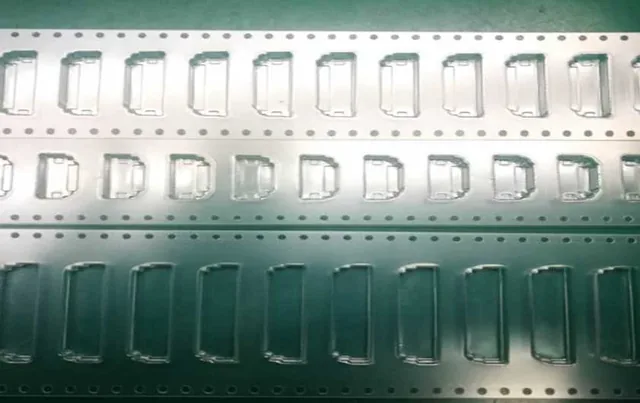
Punched carrier tape is formed by die-cutting, creating penetrating or semi-transparent pockets. This method is used when visibility of the component is required or when the component needs to be secured without stretching the base material. The die-cutting process allows for consistent pocket alignment and indexing.
Anti Static Level Must Match The Component Sensitivity
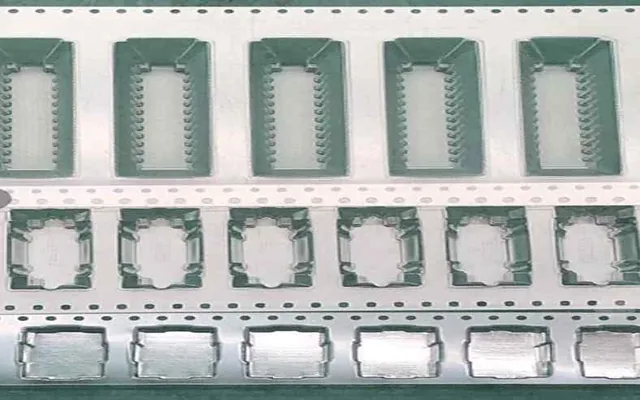
The anti-static level of the carrier tape must match the ESD sensitivity of the component. Conductive tapes are used for highly sensitive devices. Anti-static (static dissipative) tapes are used for general-purpose components. Non-conductive tapes are used when electrical isolation is required. The material choice (PVC, PS/HIPS, PC, PETG, ABS) affects the anti-static performance.
Carrier Tape Works With Cover Tape To Form A Sealed Reel
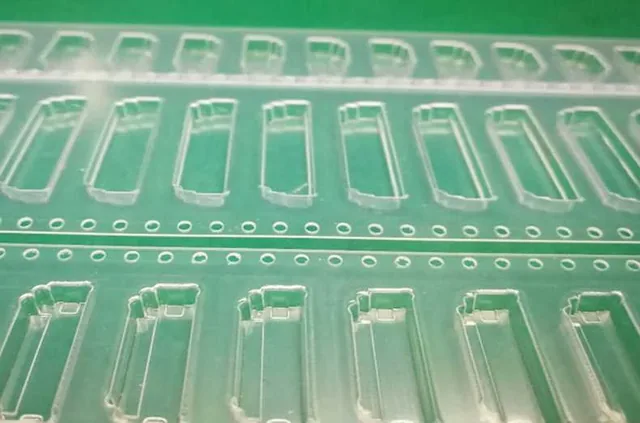
The carrier tape is sealed with a cover tape (upper tape) to form a closed, protective structure. The cover tape is peeled off during SMT placement. The sealed tape ensures components are protected from dust, moisture, and mechanical shock during shipping and storage. The index positioning cavities on the carrier tape allow the pick and place machine to accurately locate and remove each component.

Width And Pocket Size Are Customized To Match The Device Profile
The width of the carrier tape and the size of the pocket are determined by the physical dimensions of the component. For example, a 4mm tape is used for small, high-density components. The pocket must hold the component without movement, and the index cavity must align with the pick and place machine’s feed mechanism. Custom tooling is required for non-standard profiles.
Material Choice Affects Performance And Compatibility
The base material (PVC, PS/HIPS, PC, PETG, ABS) is selected based on the component’s environmental and mechanical requirements. PVC offers good flexibility and ESD control. PS/HIPS is used for low-cost, low-sensitivity applications. PC and PETG provide higher strength and thermal resistance. ABS is used for mechanical durability. Each material has different anti-static properties and must be tested for compliance.
Products In This Guide
The products this guide applies to.
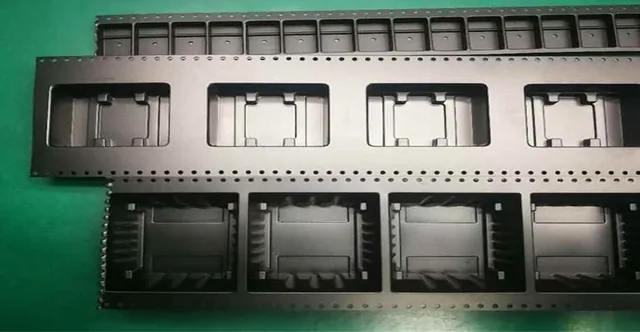
Embossed Carrier Tape
Embossed carrier tape is a precision-formed plastic tape with regularly spaced pockets that hold electronic components in fixed positions during shipping, storage, and automated placement.
View Details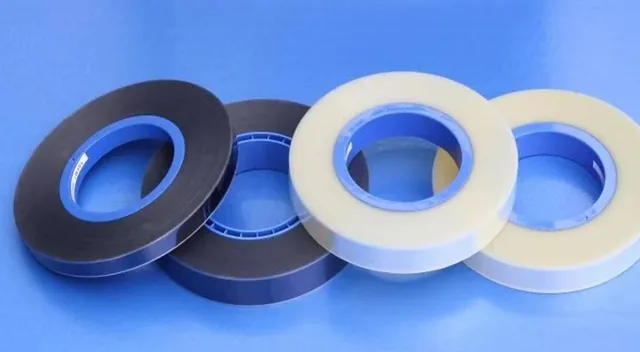
Cover Tape
Cover tape seals onto carrier tape to protect electronic components during transport and storage.
View Details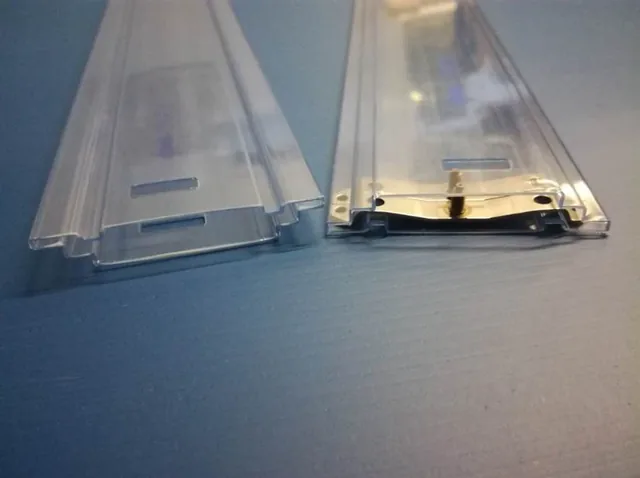
Anti Static IC Shipping Tubes
Anti Static IC Shipping Tubes are extruded plastic channels designed to protect electronic components from electrostatic discharge, mechanical shock, and environmental damage during transport and storage.
View DetailsKeep Reading
Guides that cover the next question.
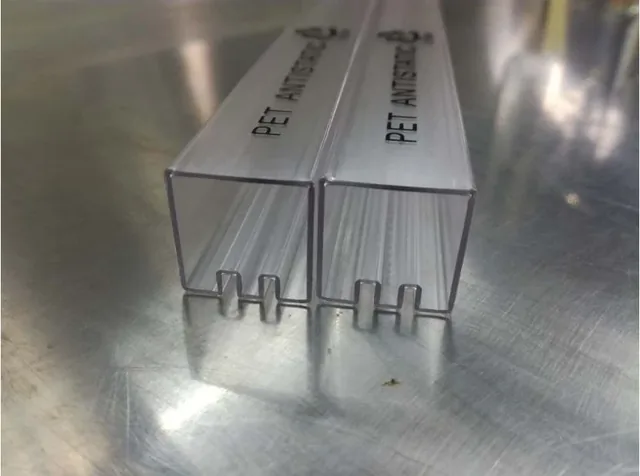
Custom IC Tubes For Specific Device Profiles
Each IC tube is extruded to match a unique device profile—shape, width, cavity depth and end plug type.
Read Guide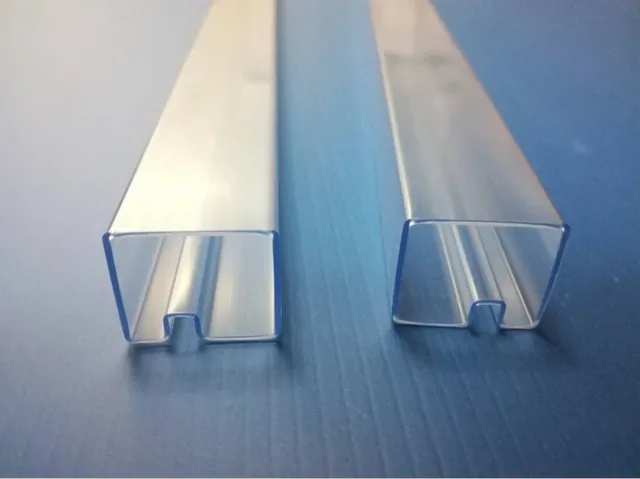
Custom Anti Static IC Tube Guidelines
To begin customization, supply four items: the tube material, part size, desired tube length, and plug type.
Read Guide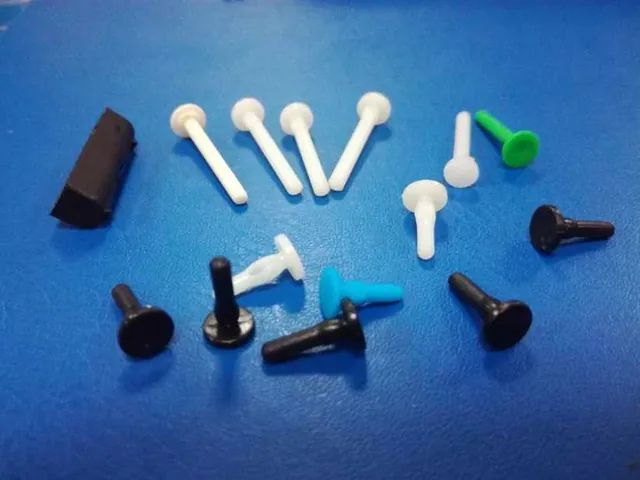
How To Choose IC Tube Stoppers
An anti-static IC tube is a precision profile designed to hold components during transport and feeding.
Read GuideQuestions From This Guide
What carrier tape widths are available?
Available widths include 8mm, 12mm, 16mm, 24mm, 32mm, 44mm, 56mm, and 4mm for small components. Custom widths are possible with tooling.
What is the difference between embossed and punched carrier tape?
Embossed carrier tape forms pockets by stretching the material using a mold. Punched carrier tape uses die-cutting to create penetrating or semi-transparent pockets. Embossed is used for custom shapes; punched is used for visibility or minimal material deformation.
What anti-static levels are available?
Carrier tape is available in conductive, anti-static (static dissipative), and non-conductive types. The level is selected based on the component’s ESD sensitivity and application requirements.
Can you make carrier tape for non-standard component profiles?
Yes. Custom tooling is required for non-standard component profiles. The lead time for custom tooling is 25 days for basic low volume, 4–6 weeks for typical volume, and 10–12 weeks for complex or high-volume tools.
What materials are used in carrier tape?
Materials include PVC, PS/HIPS, PC, PETG, and ABS. The choice depends on the component’s sensitivity, environmental conditions, and mechanical requirements. Each material has its own anti-static and mechanical properties.
How is the carrier tape sealed with cover tape?
The cover tape is sealed over the carrier tape using heat or pressure. The seal must be strong enough to prevent contamination but easy to peel during SMT placement. The sealing method depends on the material and application.
What is the MOQ for carrier tape?
The minimum order quantity is 10,000 pieces. This applies to both standard and custom profiles.
Apply This to Your Own Parts
Send the device and the current packaging. The recommendation comes back with a material, a profile and a lead time.