
Spur Gears
Custom gears transmit torque and rotational motion across mechanical drives, and NOWARUN manufactures them to customer drawings from module 0.5 to module 10. Gears are produced to precision levels from DIN 5 to DIN 10 across carbon steel, alloy steel, stainless steel, and polymer grades. Cutting processes include hobbing, shaping, shaving, and grinding to match the target accuracy, followed by specified heat and surface treatments.
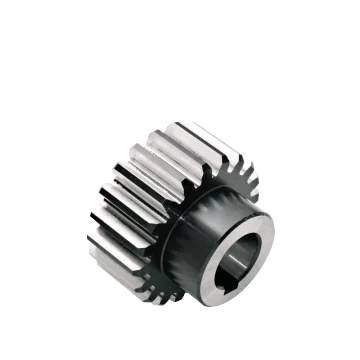
Published Data for Spur Gears
Every value below is taken from NOWARUN's own specification for this part.
| Module | 0.5 to 10 |
|---|---|
| Gear Precision | DIN 5 to DIN 10 |
| Processes | Hobbing, shaving, grinding, shaping |
| Materials | Carbon steel, alloy steel, stainless steel, polymer, international standard grades |
| Heat Treatment | Carburizing, carbonitriding, QT, quenching, tempering, induction hardening |
| Surface Treatment | E-coating, plating, oiling, Geomet, Dacromet, Delta, brushing, polishing, laser engraving |
| Packaging | PP bag, carton, crate, box or according to customer requirements |
| Origin | Hangzhou, Zhejiang, China |
Key Benefits
- Module range from 0.5 to 10 covers small mechanical mechanisms up to heavy industrial drive systems
- Gear precision from DIN 5 to DIN 10 allows balancing manufacturing cost against backlash and noise requirements
- Multiple tooth cutting options including hobbing, shaping, shaving, and grinding support diverse gear geometries
- Thermal treatment options include carburizing, carbonitriding, QT, quenching, tempering, and induction hardening
- Broad material support covers carbon steel, alloy steel, stainless steel, polymer, and international standard grades
- Surface protection options include E-coating, plating, oiling, Geomet, Dacromet, Delta, brushing, polishing, and laser engraving
Problems It Solves
- Standard off-the-shelf catalog gears lack the specific bore, hub geometry, or module required by custom machinery
- Accelerated tooth wear on drive components caused by inappropriate core toughness or insufficient flank case depth
- Corrosion and surface degradation in harsh industrial environments solved by targeted treatments like Geomet, Dacromet, or plating
- Gearbox vibration and tooth engagement noise resulting from inadequate tooth finishing methods
Who It Is For
- Procurement engineers sourcing custom gears machined strictly to internal drawing tolerances
- Equipment designers specifying tailored gear geometries across carbon steel, alloy steel, or polymer
- Machinery maintenance departments requiring replacement gears made to drawing rather than standard stock
- Contract manufacturing managers seeking verified heat treatment and tooth finishing on custom gear orders
Application Scenarios
- Gearbox drivelines for agriculture equipment exposed to varying operating loads
- Drive mechanisms within food processing machinery requiring stainless steel or polymer construction
- Power transmission systems in wood processing equipment subject to continuous operational cycles
- Drive trains in mining and aggregate machinery operating under heavy shock loading
- Custom gear assemblies for general machine construction built strictly to customer drawings
Technical Features
- Tooth cutting capabilities spanning hobbing, shaping, shaving, and precision grinding
- Module capacity covering 0.5 to 10 across diverse external and internal profiles
- Comprehensive heat treatment including carburizing, carbonitriding, QT, quenching, tempering, and induction hardening
- Surface finishes including plating, E-coating, Geomet, Dacromet, Delta, brushing, polishing, and oiling
- Traceable identification via laser engraving directly on the gear body
Materials
- Carbon steel for general duty gearing requiring balanced machinability and strength
- Alloy steel for gears requiring carburizing or induction hardening to handle heavy torque
- Stainless steel for equipment operating in corrosive environments or requiring clean operation
- Polymer for applications requiring lower operating noise or self-lubricating characteristics
- Custom metal grades sourced to match specific international national standards
How It Is Made
- 1
Engineering review of the customer drawing, module, tooth geometry, and specified DIN grade
- 2
Turning the blank to final outer diameter, bore, and face width dimensions
- 3
Tooth generation utilizing hobbing, shaping, or milling processes
- 4
Heat treatment via carburizing, carbonitriding, QT, quenching, tempering, or induction hardening
- 5
Tooth finishing by shaving or grinding to achieve the specified DIN 5 to DIN 10 precision
- 6
Application of surface treatments like plating, E-coating, Dacromet, Geomet, or protective oiling
- 7
Final inspection, laser engraving if specified, and protective packaging into bags, cartons, or crates
Quality Control
- Verification of tooth profile, lead, and pitch accuracy against the designated DIN 5 to DIN 10 grade
- Dimensional measurement of bores, keyways, face widths, and mounting locations
- Hardness and case depth verification following carburizing, carbonitriding, or induction hardening
- Visual inspection of surface finishes, including plating, coating thickness, and laser engraving clarity
Customization Options
- Custom gear cutting fully made to customer print rather than off-the-shelf sizes
- Bore configurations, keyways, splines, and mounting holes machined to match customer shafting
- Selection of tooth generation methods from hobbing to grinding depending on precision needs
- Choice of surface coatings from rust-preventative oiling to Geomet, Dacromet, or plating
Compared With the Alternatives
| Alternative | Honest trade off |
|---|---|
| Ground gear teeth | Tooth grinding reaches higher precision such as DIN 5 but requires additional machine time compared to hobbing or shaving |
| Standard catalog gears | Catalog gears ship immediately but require secondary machining on bores and hubs to match custom equipment |
| As-machined unhardened gears | Unhardened gears are faster to produce but wear rapidly under high-load continuous machine operation |
Use Guide
- Provide complete drawing files indicating module, tooth number, pressure angle, and precision grade
- Specify the required DIN precision level between DIN 5 and DIN 10 to establish appropriate grinding processes
- Identify heat treatment parameters including required surface hardness, core toughness, or case depth
- State the operating environment to determine whether oiling, plating, Geomet, or Dacromet is required
- Inspect gear mounting alignment and backlash during installation into the final drive assembly
Spur Gears Questions
What module range do you manufacture for custom gears?
Custom gears are cut across a module range from module 0.5 to module 10 according to your drawing.
What gear precision standards can you maintain?
Gears are manufactured to gear precision levels ranging from DIN 5 to DIN 10 depending on the cutting and grinding operations specified.
What tooth cutting methods are available?
Manufacturing processes include hobbing, shaping, shaving, and grinding to match the required drawing tolerances and tooth geometry.
Which materials can be used for gear production?
Materials include carbon steel, alloy steel, stainless steel, polymer, and grades meeting various international national standards.
What heat treatment options can you provide?
Available heat treatments include carburizing, carbonitriding, quench and temper (QT), quenching, tempering, and induction hardening.
What surface finishes and treatments can be applied?
Available surface treatments include E-coating, plating, oiling, Geomet, Dacromet, Delta, brushing, polishing, and laser engraving.
How are custom gears packaged for export shipping?
Parts are packaged in PP bags, cartons, crates, boxes, or packed according to specific customer requirements.
Related Products
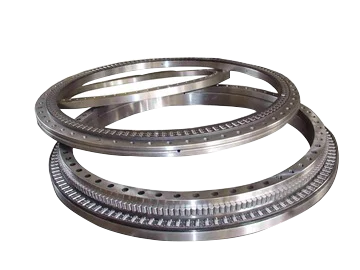
Slewing Ring
Slewing ring spur gears provide rotational drive and torque transmission for rotating machinery, cut to your print…
View specifications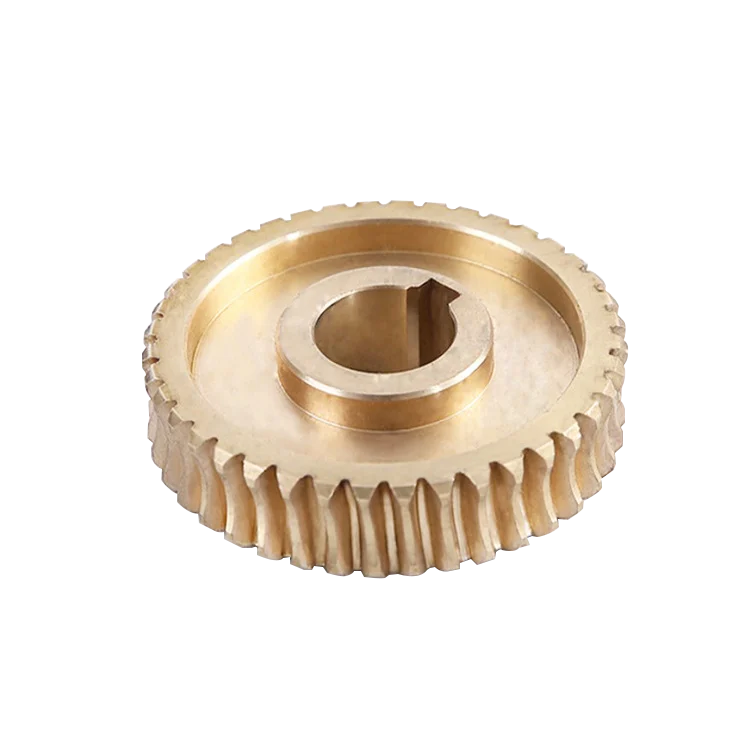
Worm Gear
Worm gears provide smooth speed reduction and high ratio torque transmission across perpendicular non-intersecting…
View specifications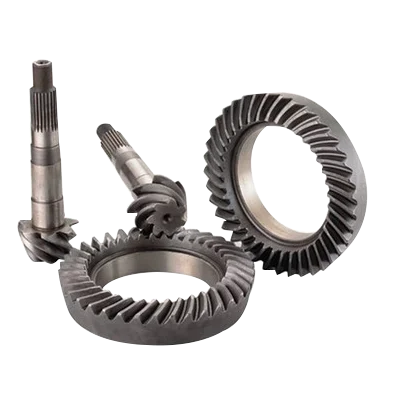
Crown Gear
Grown gears are manufactured to customer drawings across module 0.5 to module 10 for angular driveline…
View specifications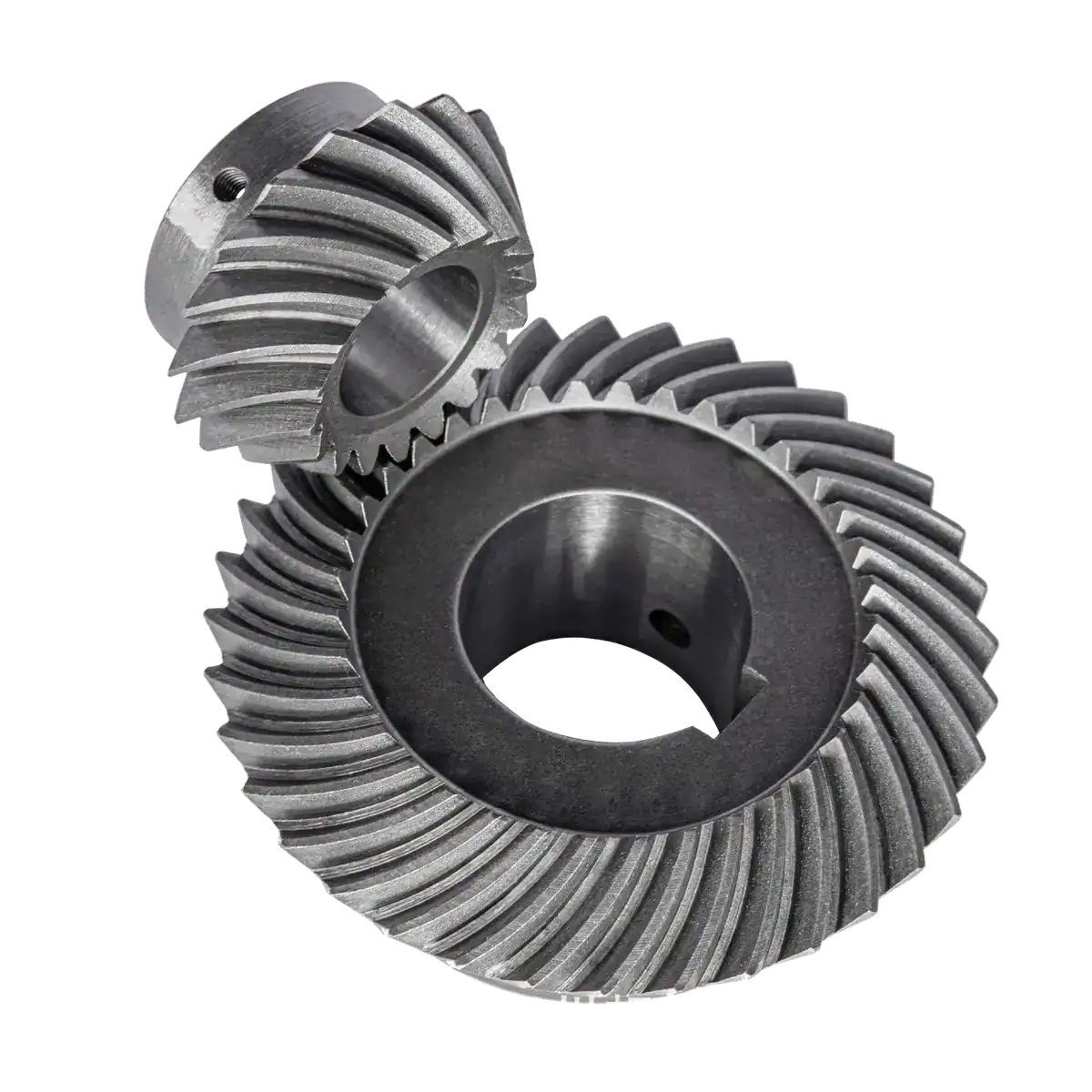
Spiral Bevel Gear
NOWARUN produces custom spiral bevel gears cut to the GLEASON or KLINGELNBERG system to match the exact driveline…
View specificationsRelated Guides
How to Specify Gear Precision Using DIN Grades
Specify DIN 3 to DIN 10 gear precision across module 0.5 to 10, matching hobbing, shaping, and grinding processes to your mechanic
ComparisonMetal Injection Molding or Machining for Small Gears
Compare MIM and machining for small gears from module 0.5 to 10. Precision from DIN 5 to DIN 10 with carburizing, grinding and cus
Product GuideWorm Gear Drives and When Self Locking Matters
Source custom worm gears from module 0.5 to 10 with precision from DIN 5 to DIN 10 in bronze, brass, and copper to customer drawin
Industries That Use It
Agriculture Equipment
Agricultural machinery operates under extreme field conditions where drive lines, belt drives and vibrating screens bear continuou
IndustryFood Processing
Food processing machinery demands corrosion-resistant materials and precise sealing surfaces to prevent contamination and withstan
Quote Spur Gears to Your Drawing
Send the print with the quantity, material, tolerance and surface treatment. Missing details get asked about, not assumed.