
Under Vehicle Inspection Mirrors Cameras and Scanners Compared
Three different tools for the same job, separated by what they record and how many vehicles you have to process.
Mirrors are instant and record nothing
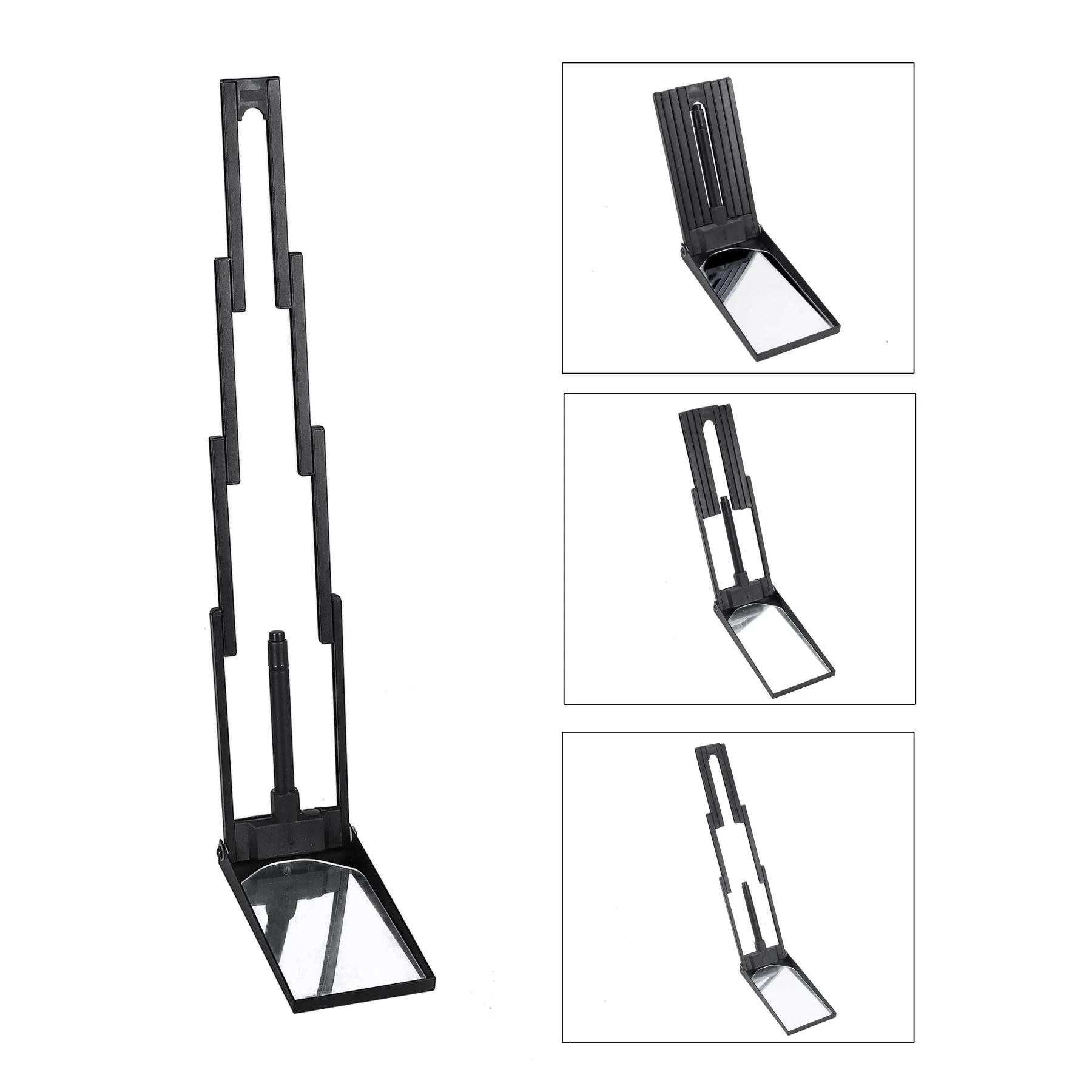
An inspection mirror needs no power, no setup and no training, and it is the cheapest way to look at an undercarriage. The range runs from the WD-MP at 260 g, folding to pocket size with a rigid handle extending to 460 mm, through a 14 cm mirror on a 45 to 110 cm rod, to the UVSM-2 with a 30 cm convex mirror on wheels with LED lighting. What none of them do is produce a record, which matters after an incident.
Cameras add light and a recording
A camera on a rod gives an image the operator can study rather than glance at, infrared illumination for dark undercarriages, and with a DVR module an actual record on an SD card. The Vfinder and the 170 degree camera run about 5 hours at 1.5 kg, on a three-section rod extending to 110 cm so a tall operator does not stoop. They cost more than a mirror and need charging, which is the trade.
Scanners remove the operator from the loop
An under vehicle surveillance system images the undercarriage automatically as the vehicle drives over. The mobile system scans at 1 to 65 km/h and bears more than 30 tonnes in an 18 kg IP68 head that needs no civil works. The fixed VX3300 uses a 5000 x 2048 line-scan camera with a dedicated host and triggers from induction coils. Neither stops traffic, which is the whole point.
Choosing by vehicle volume
Below roughly a vehicle every few minutes, mirrors and a camera are proportionate. Above that, manual inspection becomes the queue, and a scanner pays for itself in throughput rather than in detection. The honest test is how long your approach road can hold a queue before it reaches a public highway.
Records and comparison
A scanner's real advantage over both mirrors and cameras is image comparison: the undercarriage image can be stored, retrieved, searched and compared against earlier scans of the same vehicle. With optional ALPR and RFID, that comparison happens against a vehicle identity rather than a timestamp. That is how a modification between visits gets noticed.
Most sites end up with both
A scanner covers the undercarriage; wheel arches, cabs, engine bays and loads are still checked by hand. Buying a scanner does not retire the mirrors, and any supplier suggesting it does has not worked a vehicle gate.
Products referenced in this guide
WD-MP Pocket Under Vehicle Search Mirror
View specification →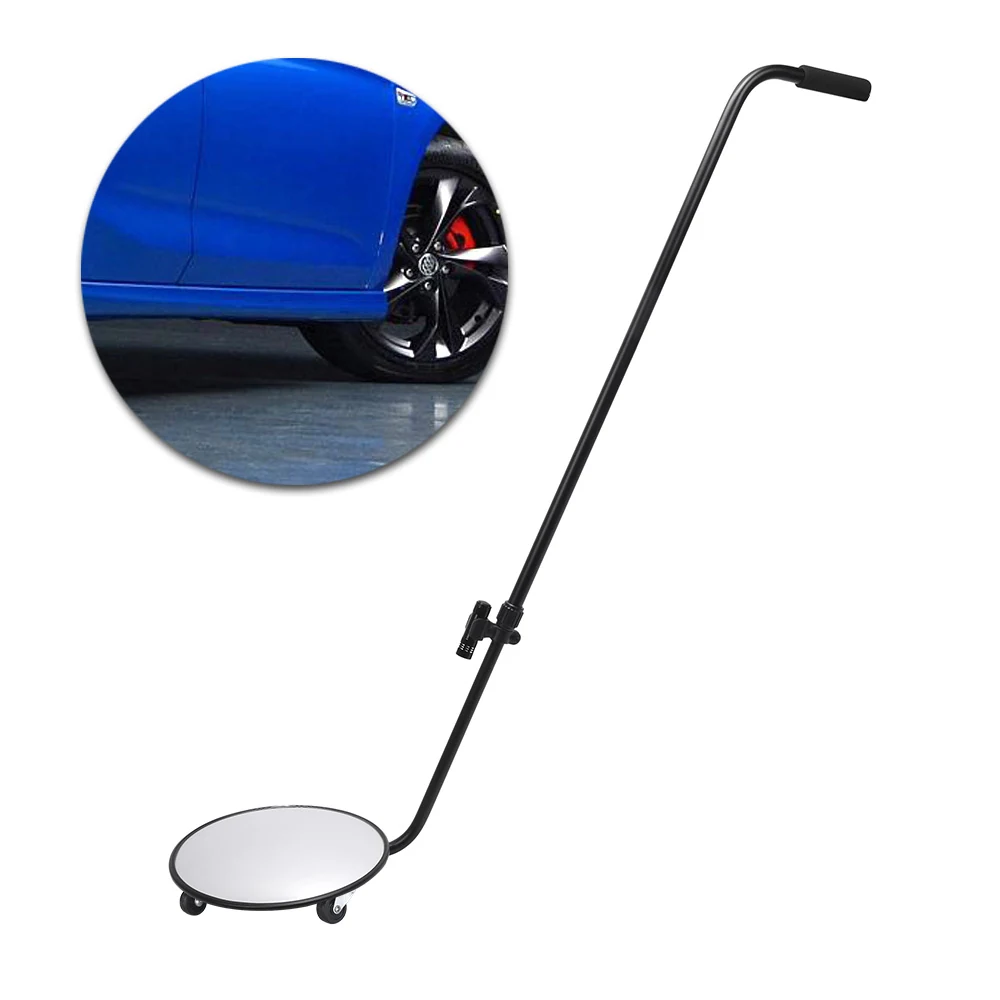
UVSM-1 Illuminated Under Vehicle Search Mirror
View specification →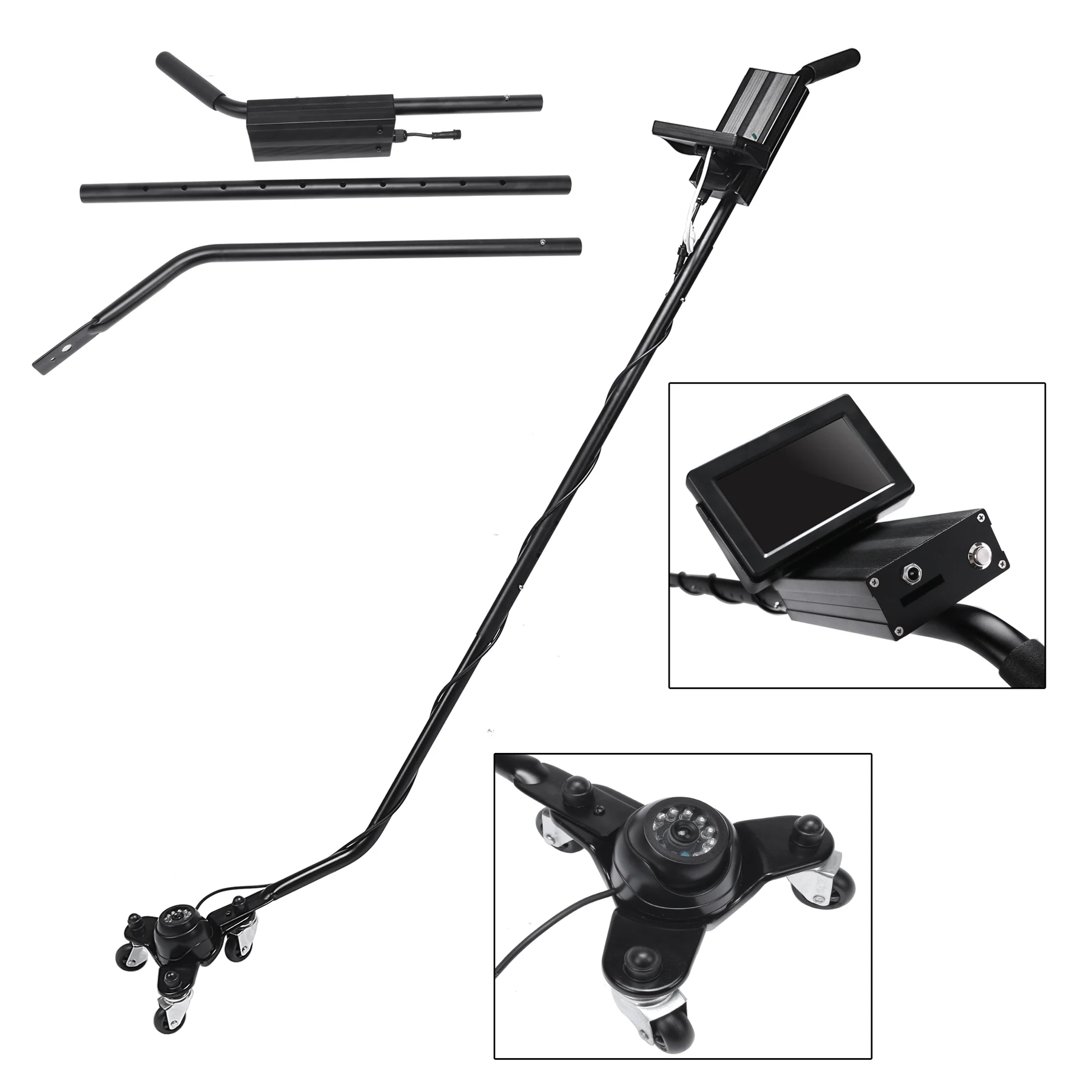
Vfinder Portable Under Vehicle Search Camera
View specification →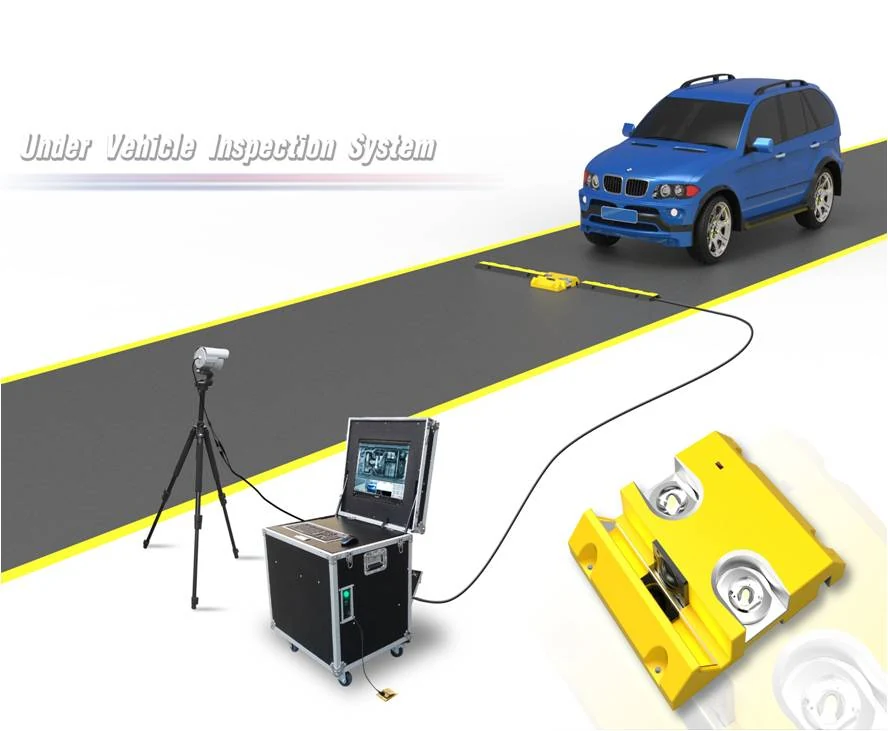
Mobile Under Vehicle Scanning System
View specification →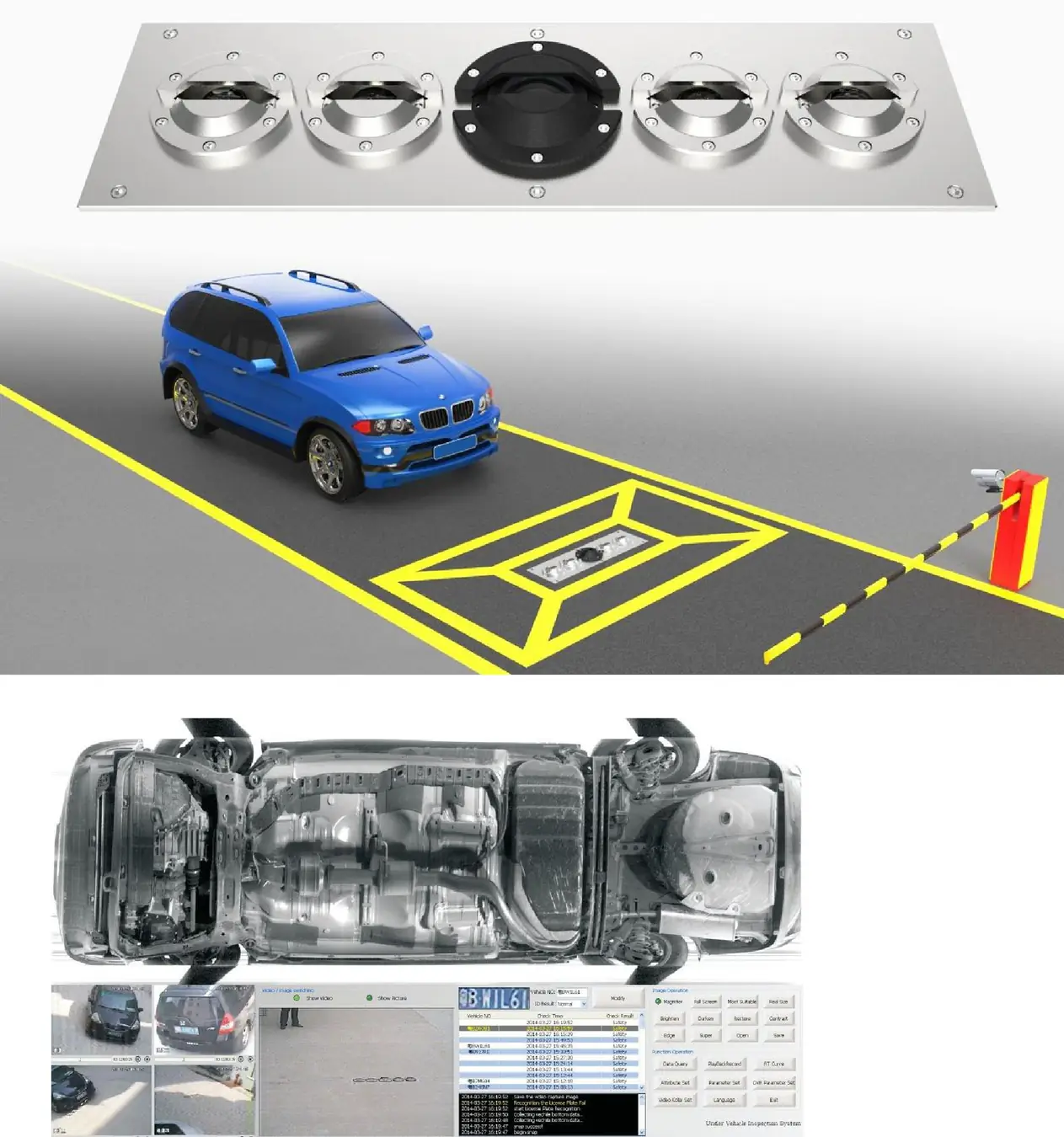
VX3300 Fixed Under Vehicle Surveillance System
View specification →Frequently Asked Questions
Is a mirror still worth buying if we have a scanner
Yes. The scanner covers the undercarriage only. Wheel arches, cabs and loads are still manual.
Which mirror can an officer carry all shift
The WD-MP at 260 g, folding into a jacket pocket with a rigid 460 mm handle.
Do we need civil works for a scanner
Not for the mobile system, which is an 18 kg head requiring no groundwork. The fixed VX3300 is a permanent installation.
Can the inspection be recorded
With a DVR-equipped camera, yes, to an 8 GB SD card. Scanners store images with search and comparison as standard.
What vehicle weight can a mobile scanner take
More than 30 tonnes on the mobile scanning head.
Have a specific requirement
Send the dimensions, throughput and conditions. We will answer against your case rather than in general.