
Metal Detector or X-Ray for Food Inspection
The choice is decided by your hazard analysis and your packaging, not by budget. Each misses things the other catches.
Start with the hazard analysis, not the machine
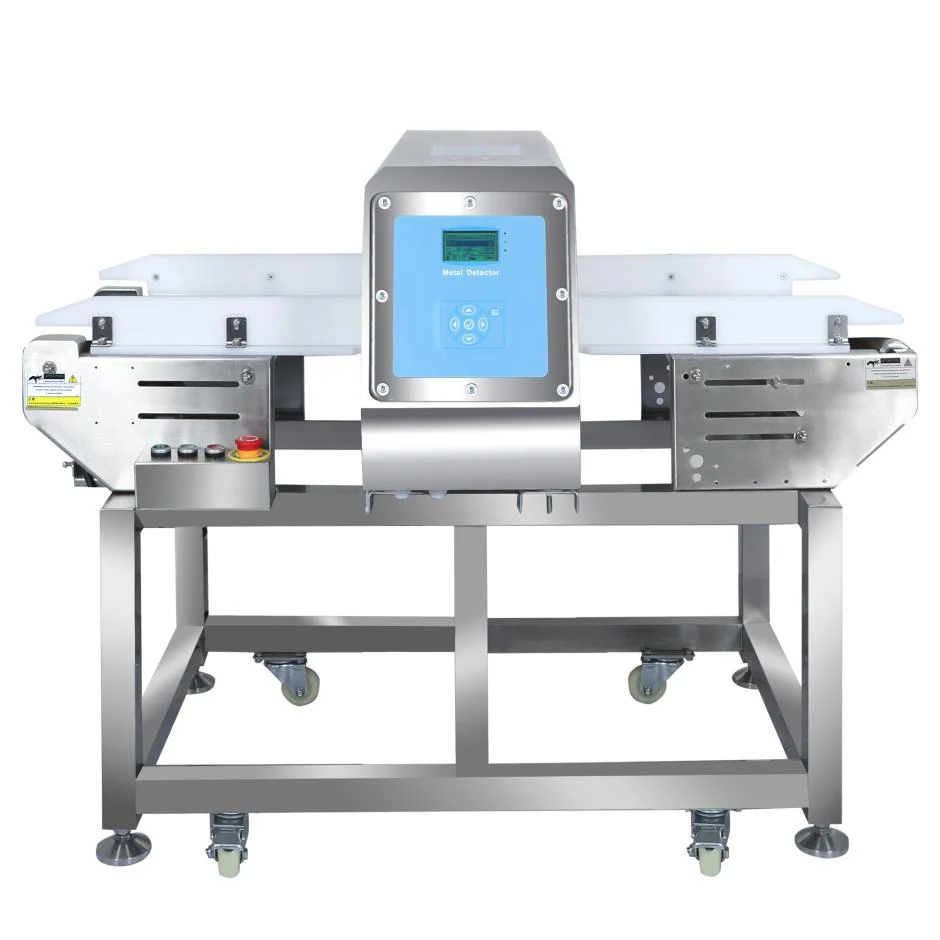
If your hazard analysis lists only metal, a metal detector is usually the better buy: it is cheaper, and on fine ferrous contamination it is often more sensitive than X-ray. The moment glass, stone, bone, ceramic or hard plastic appears on that list, a metal detector will never see them, and no amount of sensitivity adjustment changes that.
What X-ray adds
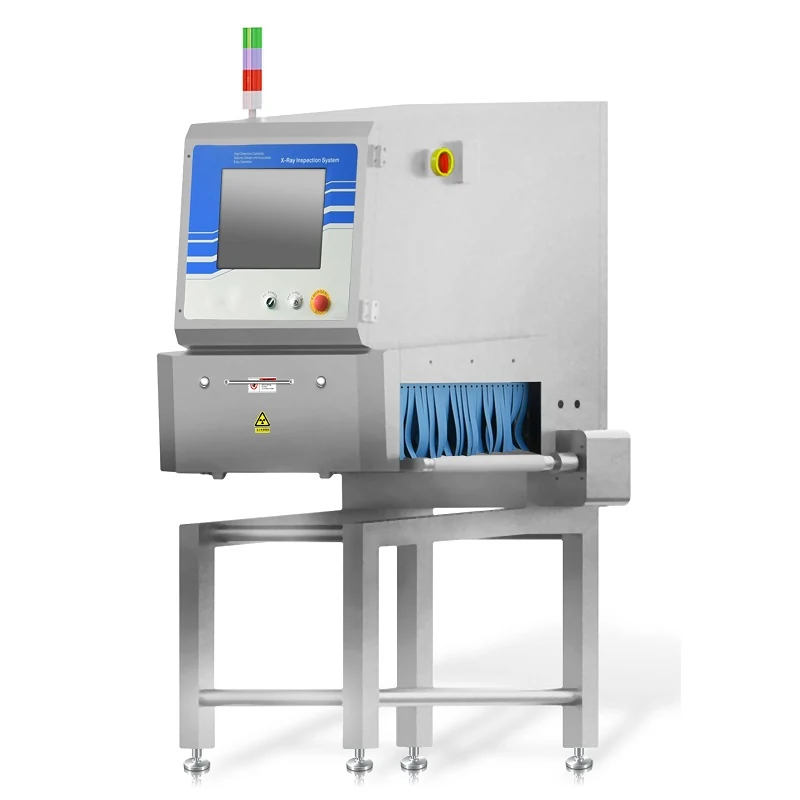
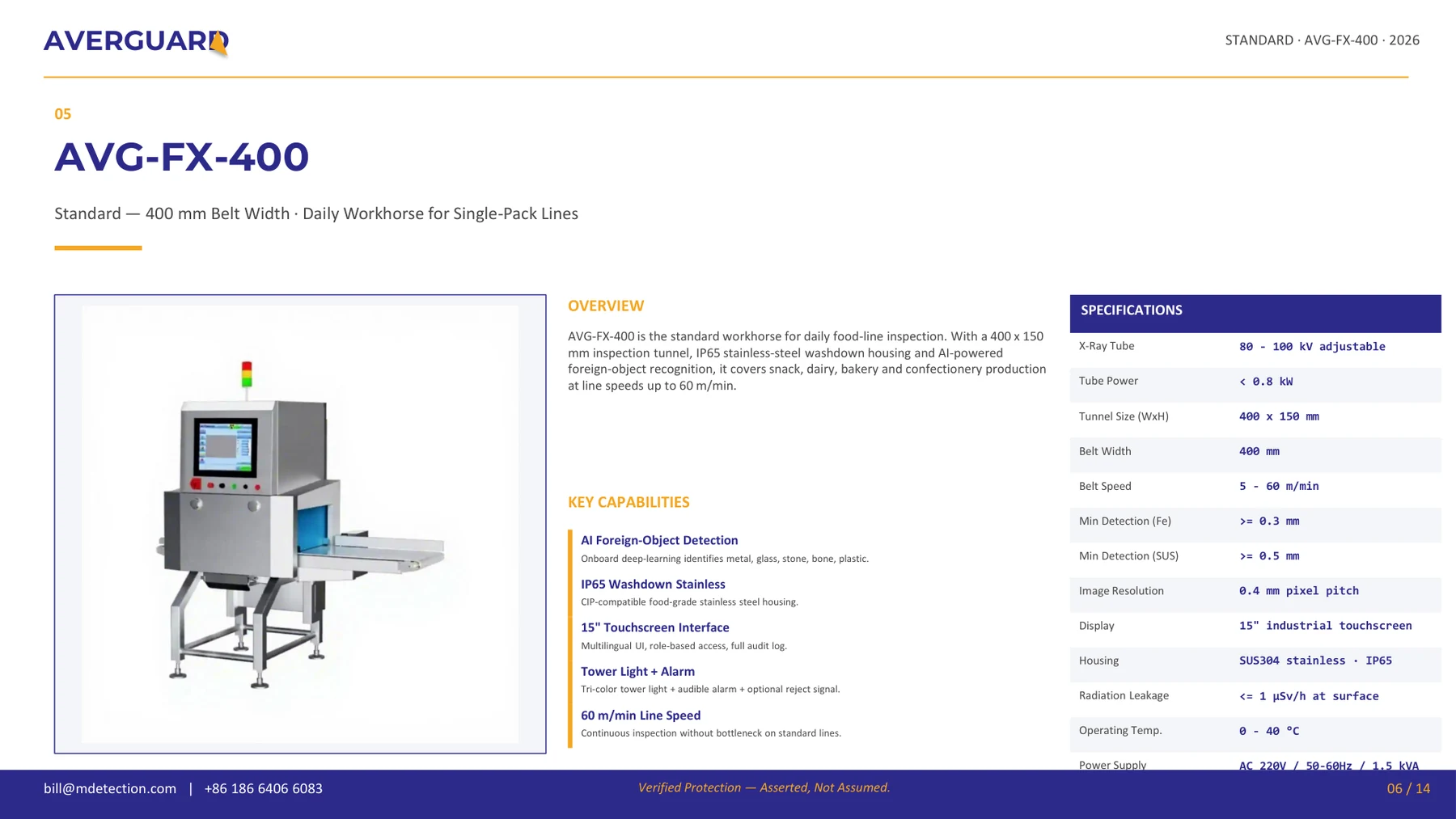
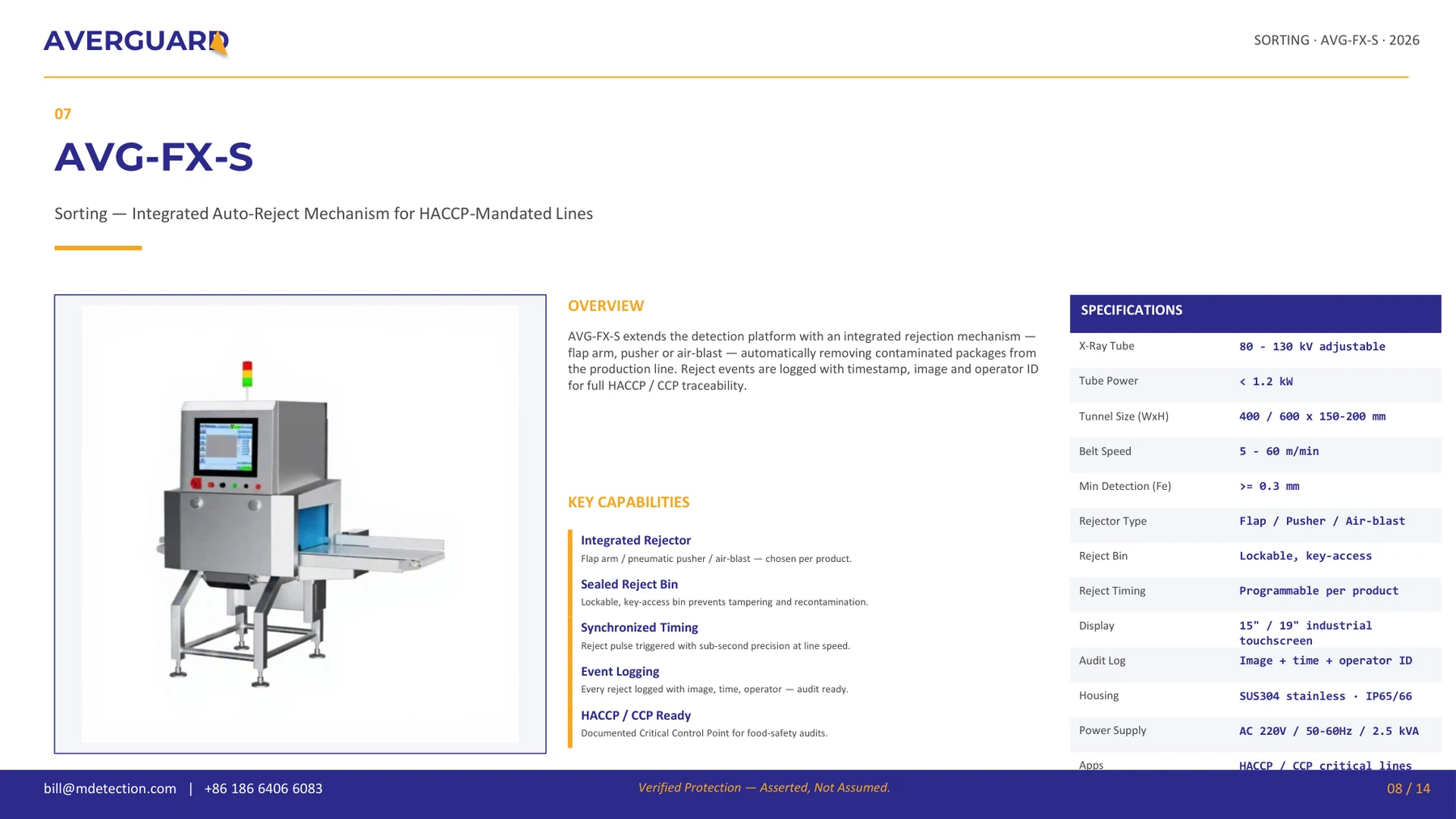
X-ray inspection detects by density rather than conductivity, so it finds glass, stone, bone and dense plastic alongside metal. The VXR-G2 states 0.3 mm SUS304 balls, 0.2 x 2 mm SUS304 wire and 1.0 mm glass and ceramic balls. The AVG-FX range adds deep-learning recognition covering metal, glass, stone, bone and hard plastic, at 0.3 mm or better for ferrous.
Packaging can decide it for you
Foil and metallised film defeats metal detection entirely, because the packaging itself swamps the field. X-ray is unaffected. If you pack in foil laminate, the decision has already been made regardless of what is in your hazard analysis.
Product effect versus density contrast
Metal detection struggles with wet, salty and frozen product because the product signal masks the contaminant, which is why multi-frequency and phase-adapted models exist. X-ray struggles differently: a low-density contaminant inside a low-density product gives poor contrast. Neither technology is universally better, and a supplier claiming one is has stopped advising.
Cost of ownership
X-ray systems cost more to buy, draw more power and are regulated as radiation sources in most markets, which brings approval requirements. A metal detector has none of that. If metal is genuinely your only hazard and your packaging is not foil, buying X-ray is buying a regulatory burden you do not need.
Many plants run both
A common arrangement is metal detection early to protect machinery, and X-ray at end of line as the critical control point covering the wider hazard list. That is more equipment, but it puts each technology where it actually performs.
Frequently Asked Questions
Is X-ray always more sensitive than metal detection
No. On fine ferrous contamination a good metal detector is often more sensitive. X-ray wins on hazard breadth, not on metal sensitivity.
We pack in foil. What are our options
X-ray. Metal detection cannot work through metallised packaging.
Do we need radiation approval for X-ray
In most markets yes. Send us your destination and we will tell you what we know before you order.
Can one machine do both jobs
An X-ray system detects metal as well, so in principle yes. Whether it matches a dedicated metal detector on fine ferrous contamination depends on your product.
What is the cheapest compliant option
It depends entirely on your hazard analysis. Send it to us and we will tell you honestly which technology you need.
Have a specific requirement
Send the dimensions, throughput and conditions. We will answer against your case rather than in general.